· reAPI Team
MAGI-2 vs MiniMax H3: 1080p vs 2K, Pricing and Benchmarks
Compare MAGI-2 vs MiniMax H3 on 1080p vs 2K resolution, 30s vs 15s duration, real reAPI batch & retry costs ($0.080/s vs $0.1125–$0.1825/s), and hybrid workflows.
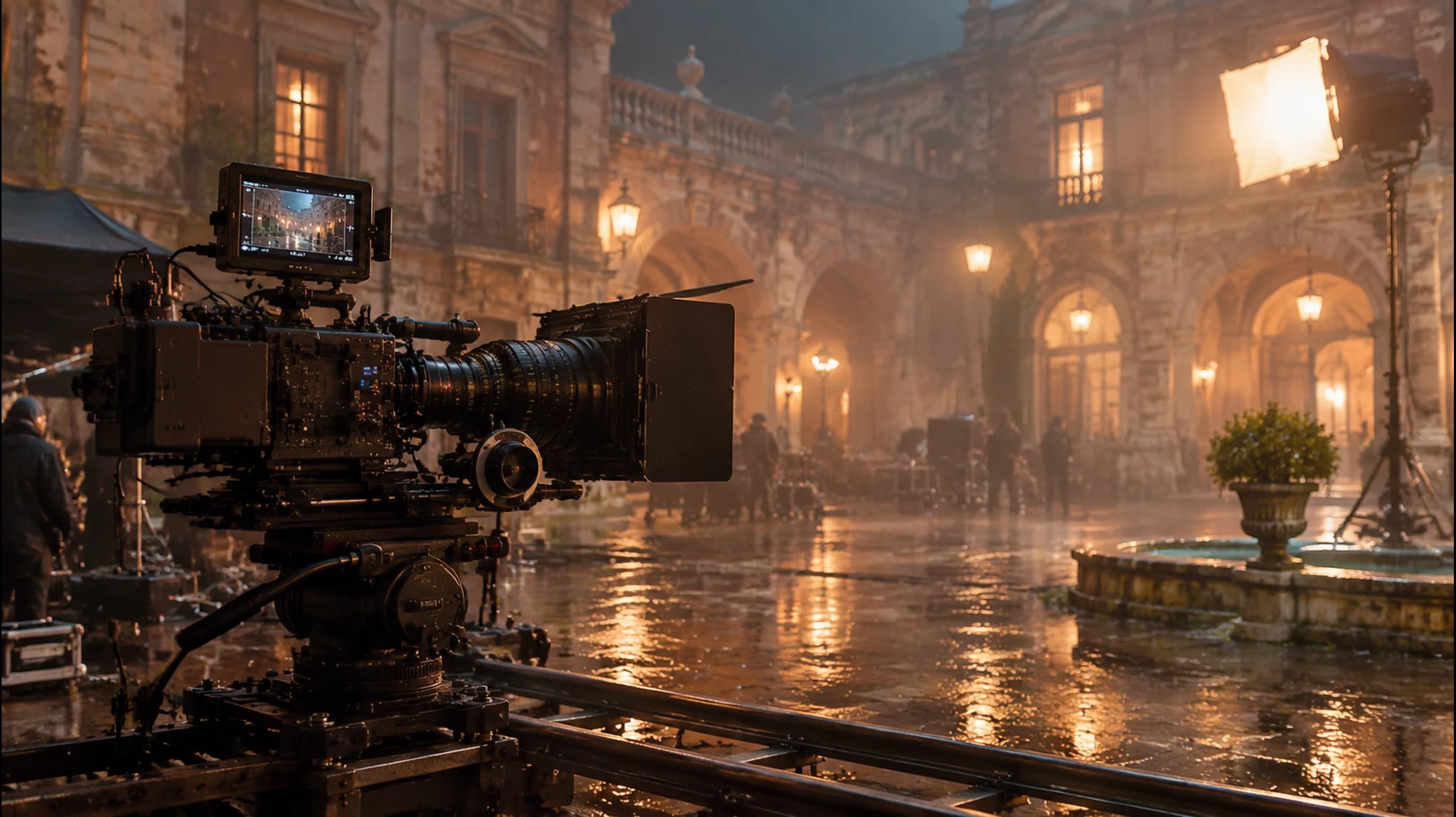
Choose MAGI-2 when you need 15-to-30-second single-pass storytelling, heavy multimodal references without surcharges, or the lowest flat 1080p cost ($0.080/s on reAPI). Choose MiniMax H3 when you need native 2K pixel crispness, expressive short-form human choreography, or a single auto-routed minimax-h3 endpoint on 6-to-15-second hero shots.[1][2][3]
Both models run live on POST https://api.reapi.ai/v1/videos/generations with synchronized native audio, first/last-frame control, and multimodal reference inputs—which is why MAGI-2 vs MiniMax H3 immediately became the central cost-versus-resolution tradeoff after Sand.ai's November 24, 2026 launch.[1][2] On paper they look interchangeable; in real production batches, reference-video billing rules, resolution ceilings, and retry math push them into very different roles.
Five Boundaries That Separate MAGI-2 and MiniMax H3
Most confusion in MAGI-2 vs MiniMax H3 evaluations comes from comparing 6-second silent demos instead of full production constraints. Five concrete specification boundaries separate their live contracts on reAPI:[1][2][3]
| Specification | MAGI-2 (Sand.ai) | MiniMax H3 / Hailuo 03 (MiniMax) |
|---|---|---|
| Architecture & scale | 480B total / ~28B active Multi-Head Latent MoE, 4T tokens[1] | Proprietary multimodal video architecture |
| Clip duration | 4–30 seconds (integer, default 5s)[3] | Up to 15 seconds (default 6s)[2] |
| Resolution options | 1080p (25 fps, 6 aspect ratios)[1] | 768p and 2K[2] |
| Native audio | Synchronized dialogue, foley, ambience & music (generate_audio toggle)[3] | Native synchronized audio |
| Reference caps | Up to 10 images, 5 videos, 5 audio clips[3] | Up to 9 images, reference videos & reference audio[2] |
| reAPI base rate | $0.080/s flat (80 credits/s)[3] | $0.1125/s (768p) / $0.1825/s (2K)[2] |
| Reference billing rule | $0 extra for all images, videos, and audio[3] | Input video seconds billed additively; images 6–9 add $0.055 each[2] |
| API routing | 3 explicit IDs (magi-2-text-to-video, magi-2-image-to-video, magi-2-reference-to-video) | 1 auto-routed ID (minimax-h3, plus minimax-h3-lite channel)[2] |
| Open-weight status | 114B Preview open[4]; 480B open weights announced upcoming[1] | Closed-weight hosted model |
Three of those rows change how you architect a real pipeline:
- 15 seconds vs 30 seconds decides whether you have to splice. A 20-to-30-second commercial or narrative beat fits inside one continuous MAGI-2 pass without mid-scene lighting drift or audio cuts. On MiniMax H3, anything past 15 seconds requires generating two separate clips and stitching them in post.
- 1080p vs 2K is a real delivery gap for product close-ups. MAGI-2 caps at 1080p (using a reference-re-injected spatiotemporal upscaler to keep small faces and on-screen text legible).[1] If a client brief mandates native 2K pixels for large displays or heavy crop-in post-production, MiniMax H3's 2K tier delivers more raw resolution.
- Reference-video billing silently changes unit economics. Community discussions on MiniMax H3 consistently flag cost sensitivity once you move past short text prompts—and on reference-to-video jobs, MiniMax H3 bills input reference video seconds on top of output seconds.[2]
Real Batch Economics and the Reference-Video Billing Trap
Multiplying per-second rates across realistic single shots and 50-clip campaign batches shows where MAGI-2 vs MiniMax H3 budgets diverge:
| Workload | MAGI-2 on reAPI (1080p) | MiniMax H3 on reAPI (768p) | MiniMax H3 on reAPI (2K) | Savings with MAGI-2 vs H3 2K |
|---|---|---|---|---|
| 6-second standard clip | $0.480 | $0.675 | $1.095 | 56% less ($0.615 saved) |
| 10s clip + 9 reference images | $0.800 | $1.345* | $2.045* | 61% less ($1.245 saved) |
| 10s clip + 5s reference video | $0.800 | $1.6875** | $2.7375** | 71% less ($1.9375 saved) |
| 15-second single-pass clip | $1.200 | $1.6875 | $2.7375 | 56% less ($1.5375 saved) |
| Batch of 50 ten-second ref-video ads | $40.00 | $84.38** | $136.88** | Save $96.88 per batch |
*Includes $0.220 surcharge for 4 reference images beyond MiniMax H3's 5 free images.
**MiniMax H3 bills 10s output + 5s input reference video = 15 billed seconds.
The Retry Break-Even Formula
Cheap per-second pricing only wins if the clips pass creative review. Use the break-even ratio before locking a model:
Break-even retry multiplier = (MiniMax H3 clip cost) / (MAGI-2 clip cost)On a 6-second text-to-video hero shot ($1.095 on MiniMax H3 2K vs $0.480 on MAGI-2 1080p), MAGI-2 remains cheaper as long as it takes fewer than 2.28 attempts for every single approved MiniMax H3 2K take. On a 10-second reference-video shot ($2.7375 vs $0.800), MAGI-2 stays cheaper even if you need up to 3.4 takes to nail the cut. Conversely, if a demanding physical-choreography shot passes on attempt #1 with MiniMax H3 2K while requiring 4 retries on MAGI-2 ($1.92 vs $1.095), MiniMax H3 wins both on cost and on 2K detail.
Motion Realism, Scripted Cuts and Benchmarks
Benchmarks and creator feedback point to complementary strengths rather than a single universal winner:
- MAGI-2's 480B scaling jump: Sand.ai reports that scaling its August 114B Preview checkpoint (~6B active) by 4x in parameters and 3x in data lifted its Artificial Analysis Video Arena v2.1 four-task average Elo by +151.8 points to 1150.3.[1] Its standout production strengths are 30-second lighting/identity continuity, explicit shot-cut timing, and single-stream lip-synced dialogue. Sand.ai also transparently documents four limits: extreme high-speed motion artifacts, overly smooth local 2D animation in wide shots, complex multi-layered soundscapes, and narrower emergent visual reasoning after aesthetic RL.[1]
- MiniMax H3's physical weight and 2K detail: Creators testing MiniMax H3 highlight grounded body weight, believable fabric and hair dynamics, and sharp 2K surface rendering on 6-to-15-second shots—making it a strong specialist for fashion, dance, and close-up product visuals where 768p feels soft and 1080p is not enough.[2]
Request-Shape Differences on the Unified reAPI Endpoint
Both models run on POST https://api.reapi.ai/v1/videos/generations with the same bearer token and task-polling contract (GET https://api.reapi.ai/v1/tasks/{task_id}), so switching between them takes one payload swap:
# MAGI-2: explicit route ID, 10s 1080p, $0.800
curl -X POST https://api.reapi.ai/v1/videos/generations \
  -H "Authorization: Bearer $REAPI_API_KEY" \
  -H "Content-Type: application/json" \
  -d '{
    "model": "magi-2-text-to-video",
    "prompt": "Slow dolly shot through a rain-lit courtyard at dusk, soft piano and rain ambience",
    "duration": 10,
    "quality": "1080p",
    "aspect_ratio": "16:9",
    "generate_audio": true
  }'
# MiniMax H3: single auto-routed ID, 6s 2K, $1.095
curl -X POST https://api.reapi.ai/v1/videos/generations \
-H "Authorization: Bearer $REAPI_API_KEY" \
-H "Content-Type: application/json" \
-d '{
"model": "minimax-h3",
"prompt": "Slow dolly shot through a rain-lit courtyard at dusk, soft piano and rain ambience",
"duration": 6,
"resolution": "2K",
"aspect_ratio": "16:9"
}'Notice the routing clarity tradeoff: MAGI-2 forces you to declare magi-2-image-to-video (first/last frames) vs magi-2-reference-to-video (character/motion conditioning) up front, preventing accidental mode misdetection when passing one image URL. MiniMax H3 keeps a single minimax-h3 ID and separates the two by field names (first_frame_url / last_frame_url vs reference_image_urls).[2][3]
Two-Model Hybrid Pipeline: How Production Teams Combine Both
Instead of forcing every shot onto one model, teams running both APIs on reAPI split workloads by shot role:
- Story beats, dialogue scenes & reference-heavy B-roll → MAGI-2 (
$0.080/s): Generate 10–30 second narrative scenes with up to 20 references and synchronized dialogue without paying extra per reference video second. - Short 6-second 2K hero product or choreography cutaways → MiniMax H3 (
$0.1825/s): Reserve MiniMax H3 2K for the 1–2 hero shots per edit where native 2K sharpness and subtle physical weight justify the higher per-second rate. - Need 4K mastering or MOV export? Add Seedance 2.5 to the same key—see our MAGI-2 vs Seedance 2.5 breakdown and where to use MAGI-2.
FAQ
Which model is cheaper on reAPI in MAGI-2 vs MiniMax H3?
MAGI-2 is cheaper across every duration and mode on reAPI: $0.080/s flat at 1080p compared with $0.1125/s (768p) and $0.1825/s (2K) on MiniMax H3.[2][3] On reference-video jobs, MAGI-2 saves up to 71% because MiniMax H3 bills input reference video seconds additively.
Does MAGI-2 output 2K resolution like MiniMax H3?
No. MAGI-2 outputs 1080p at 25 fps across six aspect ratios, while MiniMax H3 outputs 768p or native 2K.[1][2]
Can MiniMax H3 match MAGI-2's 30-second single-pass length?
No. MiniMax H3 caps single-pass clips at 15 seconds (6-second default), whereas MAGI-2 generates 4 to 30 seconds in one pass.[2][3]
Can I A/B test MAGI-2 vs MiniMax H3 with one API key?
Yes. Both models run on POST https://api.reapi.ai/v1/videos/generations, share one pay-as-you-go credit balance ($1 = 1,000 credits), and automatically refund failed tasks.[2][3]
Which model has an open-weight roadmap?
Sand.ai already open-sourced the August 2026 114B MAGI-2 Preview weights and announced upcoming open weights for the 480B flagship; MiniMax H3 is closed-weight hosted only.[1][4]
Picking Between MAGI-2 vs MiniMax H3 in Practice
Default to MAGI-2 for 1080p multi-shot storytelling, 15-to-30-second sequences, and reference-heavy campaigns where flat $0.080/s pricing cuts batch costs in half. Bring in MiniMax H3 selectively for 6-second native 2K hero shots where tactile motion and higher pixel density directly improve the final cut.
References
- Sand.ai. MAGI-2: A 480B Frontier Video Generation Model. Retrieved November 25, 2026 from sand.ai/blog/magi-2
- reAPI. MiniMax H3 Model Page & Pricing Specification. Verified November 25, 2026 at reapi.ai/models/minimax-h3
- reAPI. MAGI-2 Model Page & API Reference. Verified November 25, 2026 at reapi.ai/models/magi-2 and reapi.ai/docs/magi-2
- Sand.ai. MAGI-2 Preview Release & Model Card. Retrieved November 25, 2026 from sand.ai/blog/magi-2-preview