Anthropic
Claude Opus 5
From $2.40 per 1M tokens
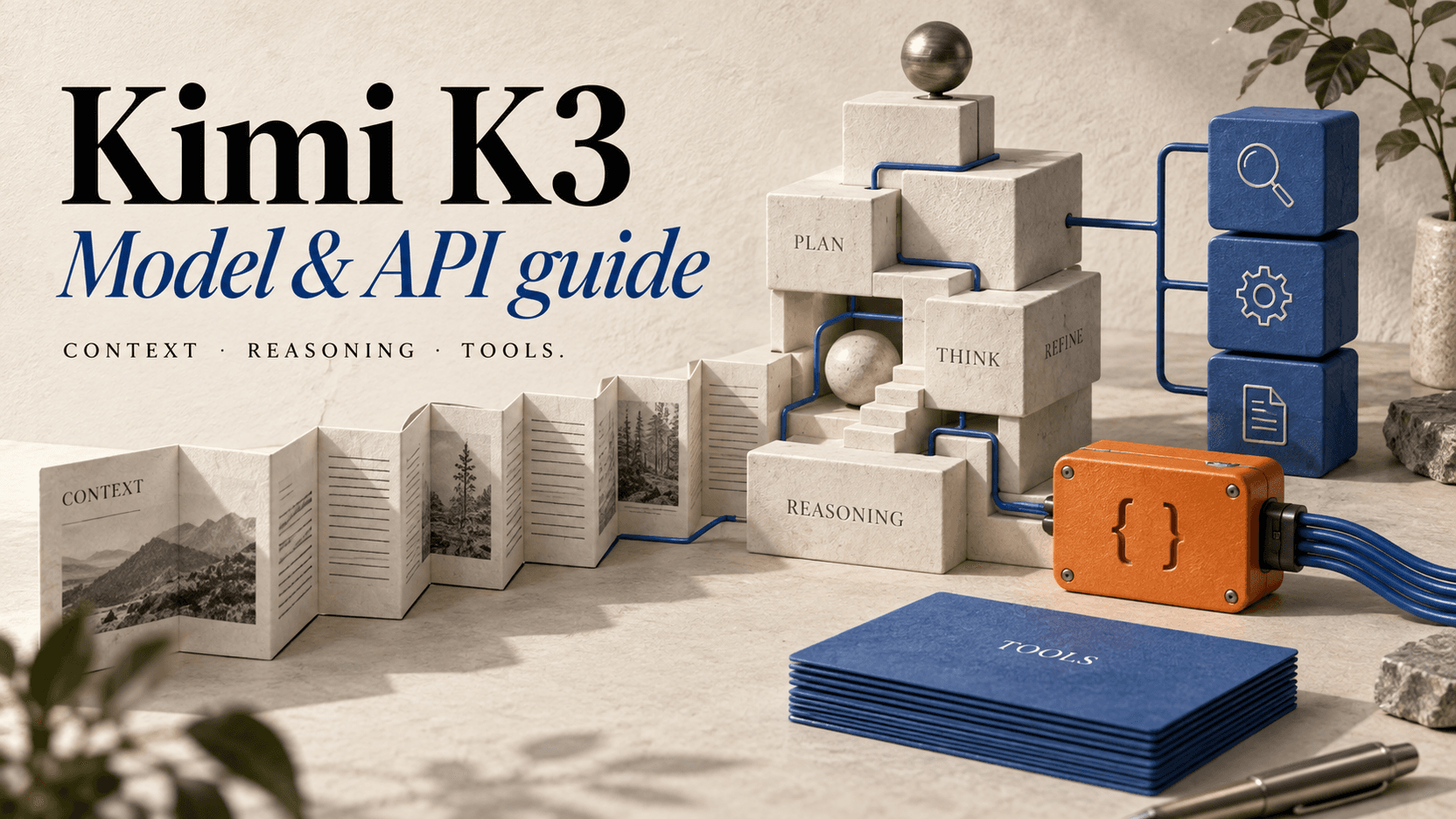
Kimi K3 is Moonshot's flagship model for long-horizon coding and end-to-end knowledge work. Kimi K3 reads a 1,048,576-token context window, always reasons, and takes a three-rung reasoning-effort dial that runs from low to max. Native vision covers images and video, the weights are open, and on reAPI Kimi K3 bills below Moonshot's published per-token rate on both input and output.
kimi-k3Chat models run on the api.reapi.ai gateway, which has its own console and its own key. Open the console to run Kimi K3 through the OpenAI-compatible Chat Completions surface.
Real-world workflows and production use cases you can build and ship with this model.

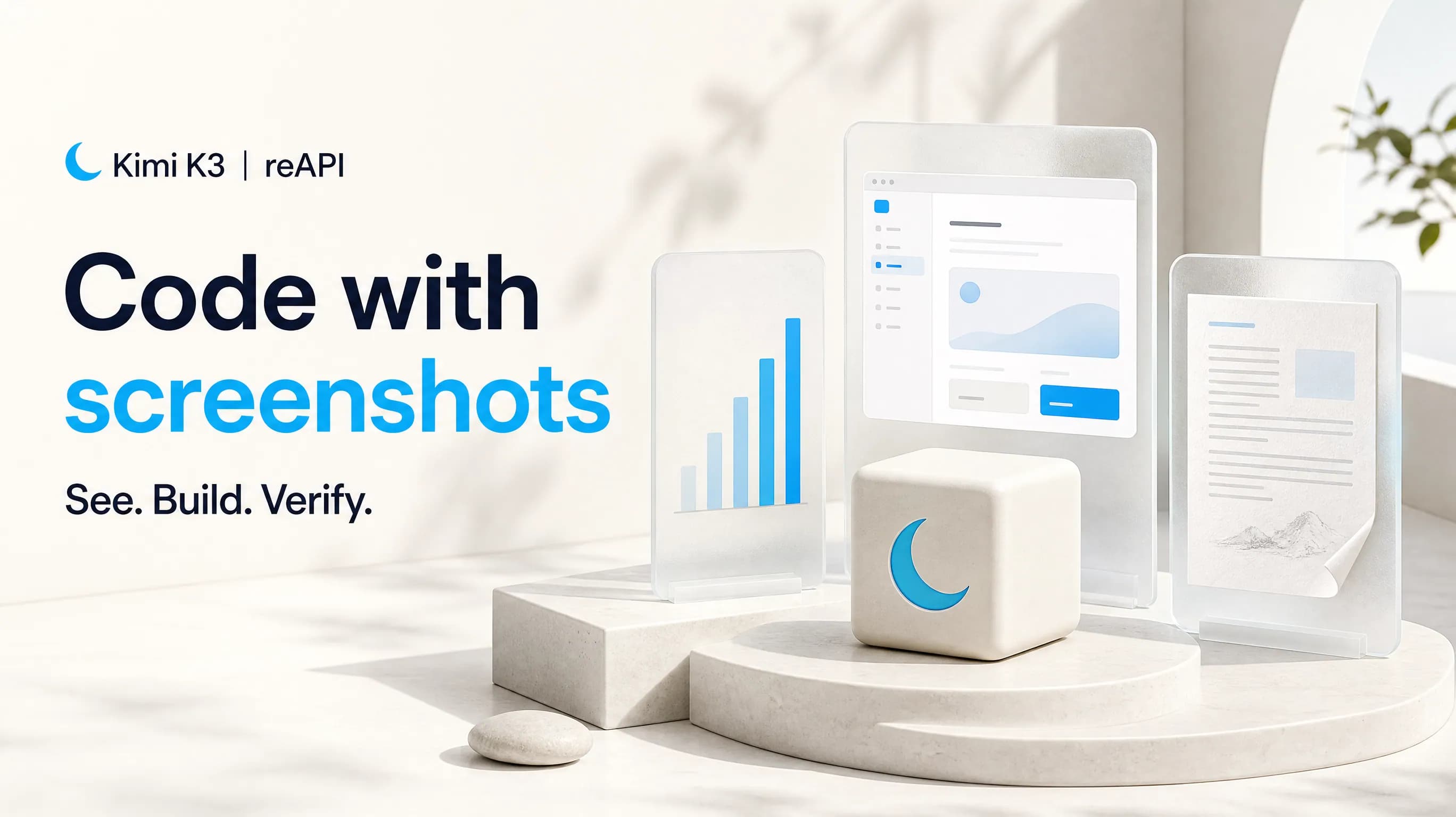
Moonshot positions Kimi K3 for long-horizon coding, and describes it running engineering tasks with minimal human supervision — working through large codebases and coordinating terminal tools. What separates Kimi K3 from a text-only coding model is that vision is native rather than bolted on: it takes screenshots and visual feedback as input, which Moonshot calls out specifically for game development, frontend engineering and CAD. That closes the loop a text-only model cannot close, because the model can look at what it just built and judge whether the layout is actually wrong before it edits again.
Read the API docs
The Kimi K3 context window is 1,048,576 tokens, and Moonshot's own FAQ says the rate is flat with no tiering by context length — so filling the window costs what any other token costs. A contract set, a research bundle or a year of filings goes to Kimi K3 whole, which removes the retrieval layer whose only job was working around a small context. Context caching then does the repeat work: it is automatic on Kimi K3, with no cache id, no TTL and no extra parameter, so a stable prefix in front of a changing question is the pattern to build around.

Two tool-calling controls arrived with this generation. A required tool choice forces at least one call on the turn, which is how you stop an agent from answering from memory when it was supposed to look something up — the K2 models reject that setting, Kimi K3 accepts it. And a tool can be introduced partway through a conversation by putting its full definition in a system message, so a large tool inventory does not have to be declared up front on every request. Structured outputs and a JSON Schema keep whatever Kimi K3 returns parseable at the end of the loop.
Credit-based — 1 credit = $0.001 USD. Pay only for completed generations.
| Category | Unit | Price |
|---|---|---|
| Token pricing | ||
| Input | 1M tokens | $2.5 |
| Output | 1M tokens | $12 |
Moonshot publishes a per-million-token rate for Kimi K3 input and output. On reAPI, Kimi K3 bills below it on both, and a full fifth below on output — no subscription underneath it, no minimum commitment, pay-as-you-go in USD against your gateway balance. The exact numbers are in the pricing table on this page.
Kimi K3 is served from a standard `/v1/chat/completions` endpoint, and Moonshot's own quickstart drives the model through the OpenAI SDK — so the compatibility is the vendor's design, not a shim. Adopting Kimi K3 is a base URL, a key and a model string. No SDK swap, and nothing about Kimi K3 needs a bespoke client.
The same api.reapi.ai key that calls Kimi K3 calls the Claude, GPT and Gemini families too. Putting Kimi K3 head to head with a closed frontier model, or failing over when one provider has a bad hour, is a model string rather than a second integration, a second invoice and a second set of credentials.
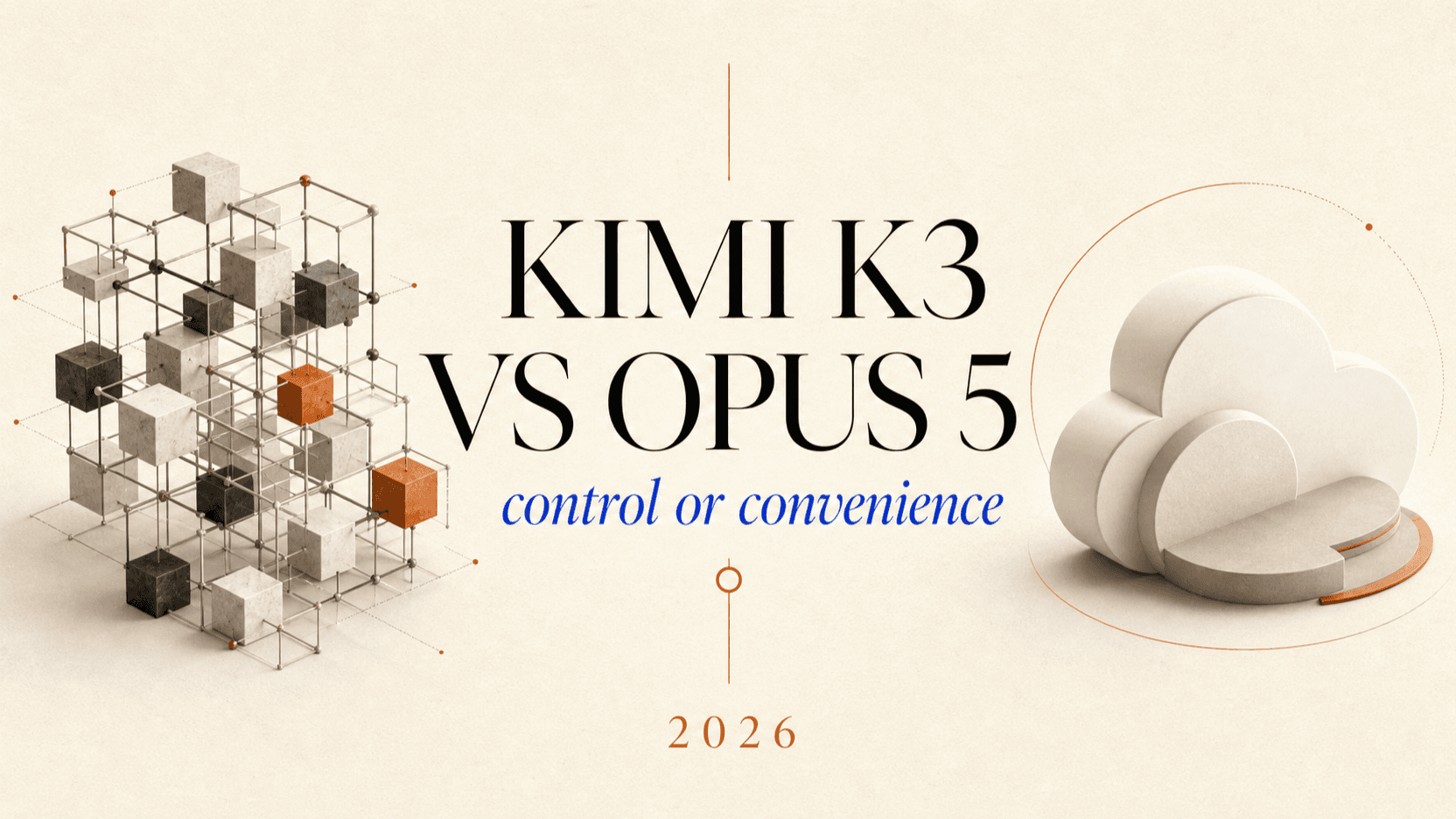
On reAPI these two land at effectively the same per-token rate, which makes price the least interesting part of the comparison. What differs is shape: Kimi K3 is the open-weight model that always reasons, hands its reasoning text back and takes video input, while Claude Opus 5 is the closed model with a finer effort ladder that keeps its reasoning to itself. Two of these rows are the ones that break code carried over from another provider — thinking cannot be switched off on Kimi K3, and its reasoning text has to be echoed back in multi-turn histories.
Comparison reflects behavior documented by each vendor at the time of writing. Rates are described as relationships rather than amounts; the live numbers for Kimi K3 are in the pricing table above.
Sign up at api.reapi.ai, open the console and generate an API key. That one key reaches Kimi K3 and every other model on the gateway, billed from a single balance.
OpenSet your base URL to api.reapi.ai and your key to the one you just created. Any client that already speaks OpenAI Chat Completions works unchanged — no SDK swap is needed to reach Kimi K3.
OpenSet the model field to `kimi-k3` and post your messages. Turn on streaming for long outputs, drop any temperature or top_p you were sending, and pick a reasoning effort — Kimi K3 always thinks, and the default rung is the most expensive one.
OpenCommon questions about this model.
Try it in the playground or grab an API key to integrate now.