Kuaishou
Kling 3.0 Turbo
From $0.126 per second
Required · guides motion, camera, style
1playground-input.webp
✓ 1 file added
Public URL · JPEG / PNG / WebP
MP4 / MOV · public URL · 3 to 30s
image · video
std · pro
Default yes
Default off
Try one of these prompts
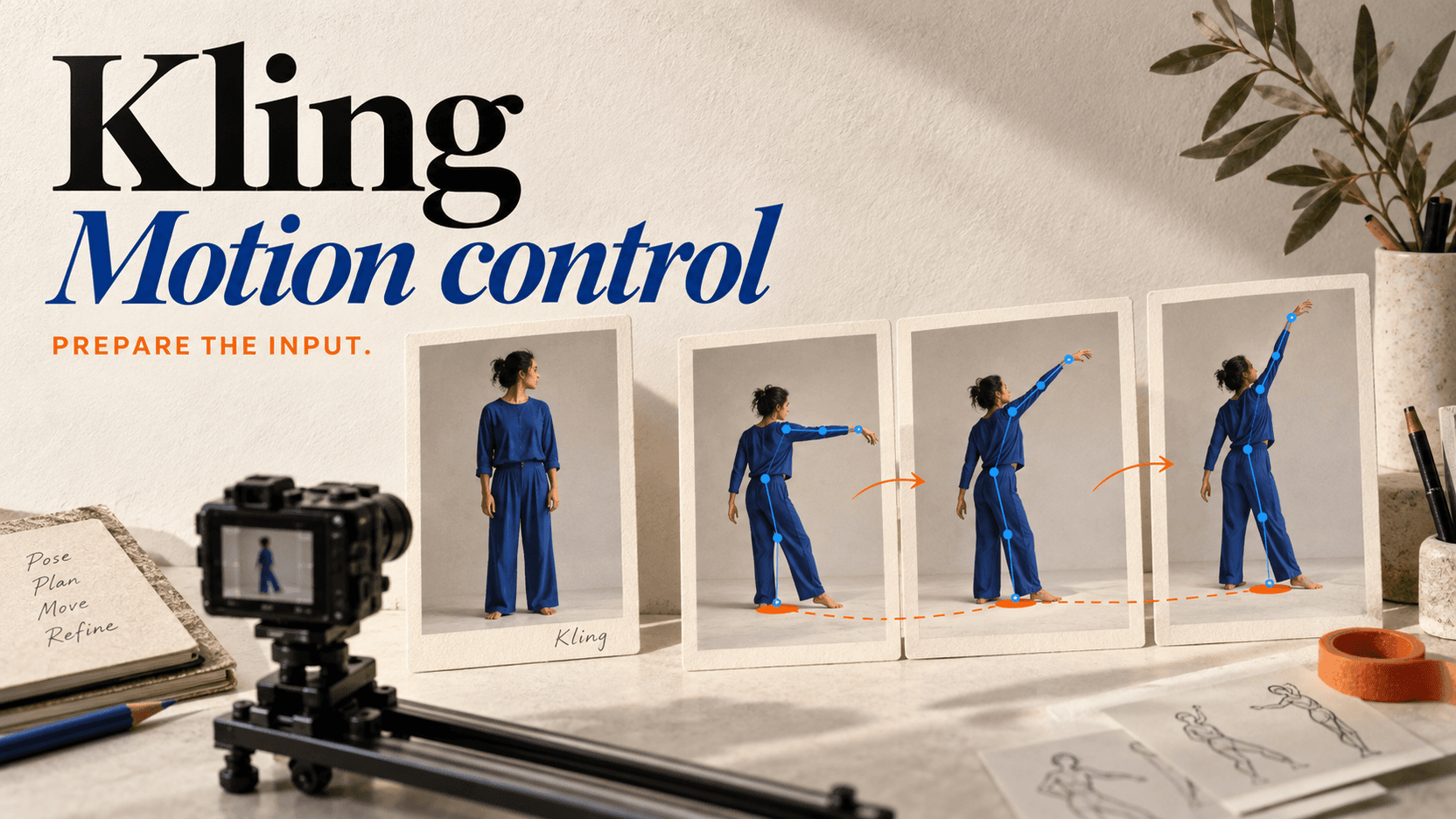
Kling Motion Control is Kuaishou's motion-transfer video model: you supply one reference image for the subject and one reference video for the movement, and it maps that movement onto your subject. reAPI serves both version tiers — kling-v3-motion-control and kling-v2-6-motion-control — on one async endpoint, each in std or pro quality, with a character-orientation switch that decides whether the framing follows the image or the video. Billing is per second of the source video's measured length.
Real-world workflows and production use cases you can build and ship with this model.
Upload a subject image and a short motion video. The Kling Motion Control API maps the reference motion onto your subject and returns a clip that keeps the original identity while adopting the movement, rhythm, and timing of the reference.
Generate a clipRecord a single reference performance once, then swap the reference image to apply the same choreography to different characters. Consistent motion, different subjects — useful for avatars, mascots, and recurring social formats.

Pick image orientation to anchor the facing to your reference photo, or video orientation to follow the reference clip and allow up to 30 seconds. Set keep_original_sound to carry the reference soundtrack into the output.
Credit-based — 1 credit = $0.001 USD. Pay only for completed generations.
One 5-second sample at the cheapest tier.
| Model | Category | Price |
|---|---|---|
| Kling v3 | Standard mode | $0.114 114 credits · 1 second |
| Pro mode | $0.151 151 credits · 1 second | |
| Kling v2.6 | Standard mode | $0.063 63 credits · 1 second |
| Pro mode | $0.101 101 credits · 1 second |
The Kling Motion Control API reads the subject from a reference image and the motion from a reference video, so the output keeps identity while adopting the reference movement. No keyframes, no rigging.
Kling Motion Control ships two tiers: Kling v3 maximizes motion fidelity and subject consistency, while Kling v2.6 is the budget tier with the same parameters. Switch tiers by changing one string — the request body is identical.
Kling Motion Control billing is per second of the source video, measured server-side from the actual clip length rather than a client estimate. Pick std or pro to trade cost for quality. Failed jobs refund automatically.
Both transfer motion from a driving video onto a target subject. Kling Motion Control takes a reference image plus a reference video, supports image or video orientation, and bills per second across two tiers. Here is how the two compare on publicly documented behavior.
Comparison reflects publicly documented behavior at the time of writing. Model behavior and pricing can change; check the pricing card above and the API docs for current values.
Sign up and grab a key from the dashboard. Free credits cover your first Kling Motion Control API calls — no card required.
OpenPOST to /api/v1/videos/generations with model = kling-v3-motion-control, an image_url, a video_url, character_orientation, and mode. The Kling Motion Control API returns a task ID immediately.
OpenGET /api/v1/tasks/:id until status is completed. Download the generated Kling Motion Control clip from output.video_urls[0] and ship it.
Opencurl -X POST https://reapi.ai/api/v1/videos/generations \
-H "Authorization: Bearer YOUR_API_KEY" \
-H "Content-Type: application/json" \
-d '{
"model": "kling-v3-motion-control",
"image_url": "https://example.com/subject.png",
"video_url": "https://example.com/motion-8s.mp4",
"character_orientation": "image",
"mode": "std"
}'Rejected synchronously with the failing field named. Check enum values, ranges, and URL fields — nothing is charged.
401 means a missing or invalid Bearer key; 402 means the reserve exceeds your balance. Manage keys and credits in the console.
Reference material and outputs pass automated moderation. Rejected tasks fail with a clear error and a full refund.
A task that reaches a failed state is never charged — the reserve refunds automatically. Keep the task id and retry when ready.
Common questions about this model.
Try it in the playground or grab an API key to integrate now.