Seedance 2.5 is live — 30-second cinematic video with native audio & real-person referencesfrom $0.071/s

FLUX 3 — One Multimodal Model for Video, Image and Audio

FLUX 3 is Black Forest Labs' multimodal foundation model, trained jointly on images, video, and audio in a single architecture. FLUX 3 writes video and sound together — up to 20 seconds in one generation — and follows keyframes, reference clips, and multilingual dialogue.

Input

Required · dialogue, ambience and on-screen text can all be described in one prompt

5

Integer, 5 to 20 seconds

Default hd - draft previews are hd only

Default auto - seven fixed ratios available

On by default - a silent clip is not cheaper

Estimated cost782 credits$0.782
Result

Try one of these prompts

What is the FLUX 3 API?

FLUX 3 is Black Forest Labs' multimodal foundation model, and its video capability is the part callable today: reAPI serves it as one async endpoint with three modes — text-to-video, image-to-video from up to 10 reference images, and video-to-video continuation from an existing clip. Clips run 5 to 20 seconds at HD or FHD across seven fixed aspect ratios plus auto, with generated audio on by default and a draft mode for cheap previews before the full render. Billing is per second, at a rate set by mode, resolution and whether draft is on.

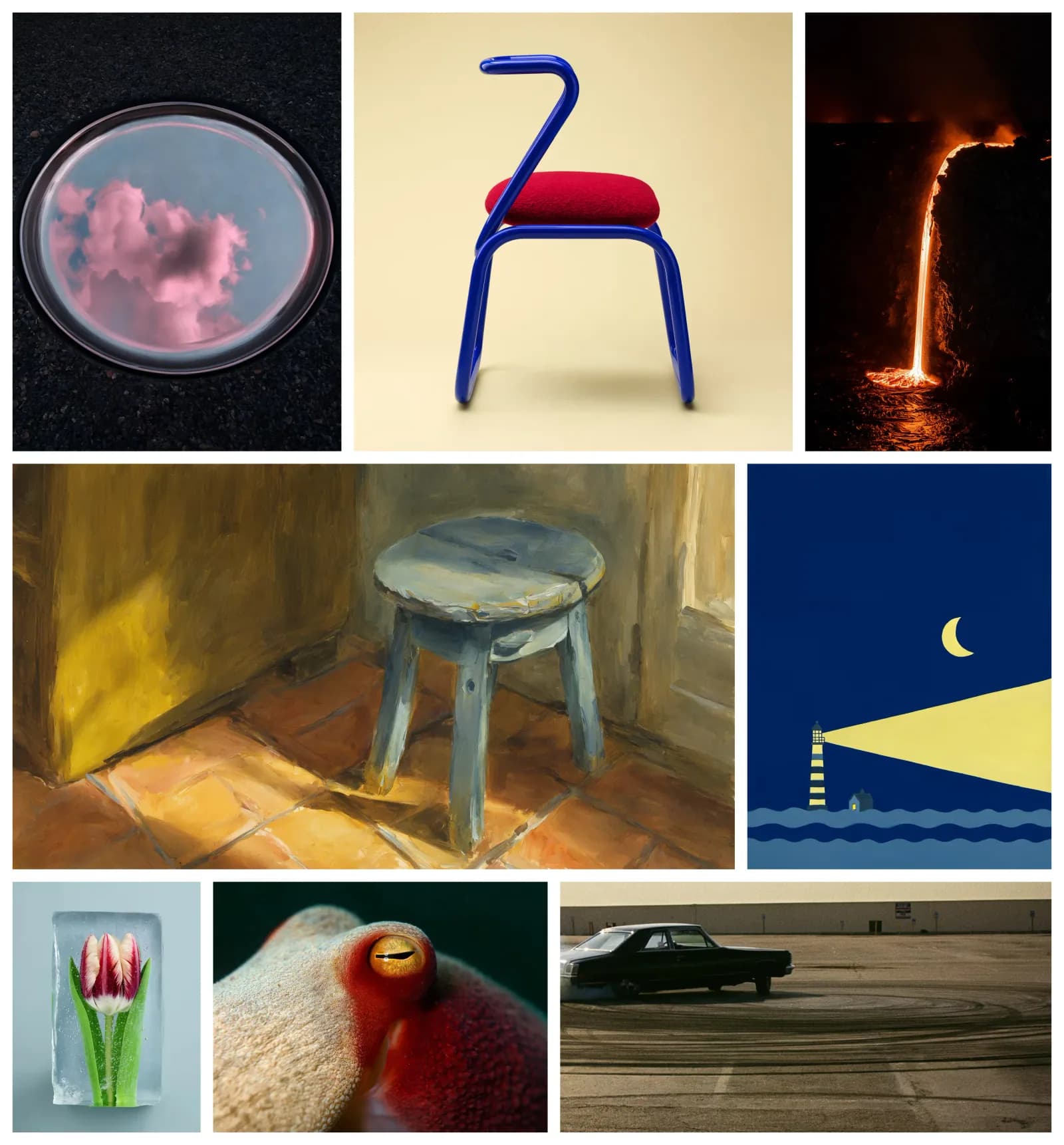
FLUX 3 sample images spanning photography, painting, flat illustration and product renders

What you can build with this model

Real-world workflows and production use cases you can build and ship with this model.

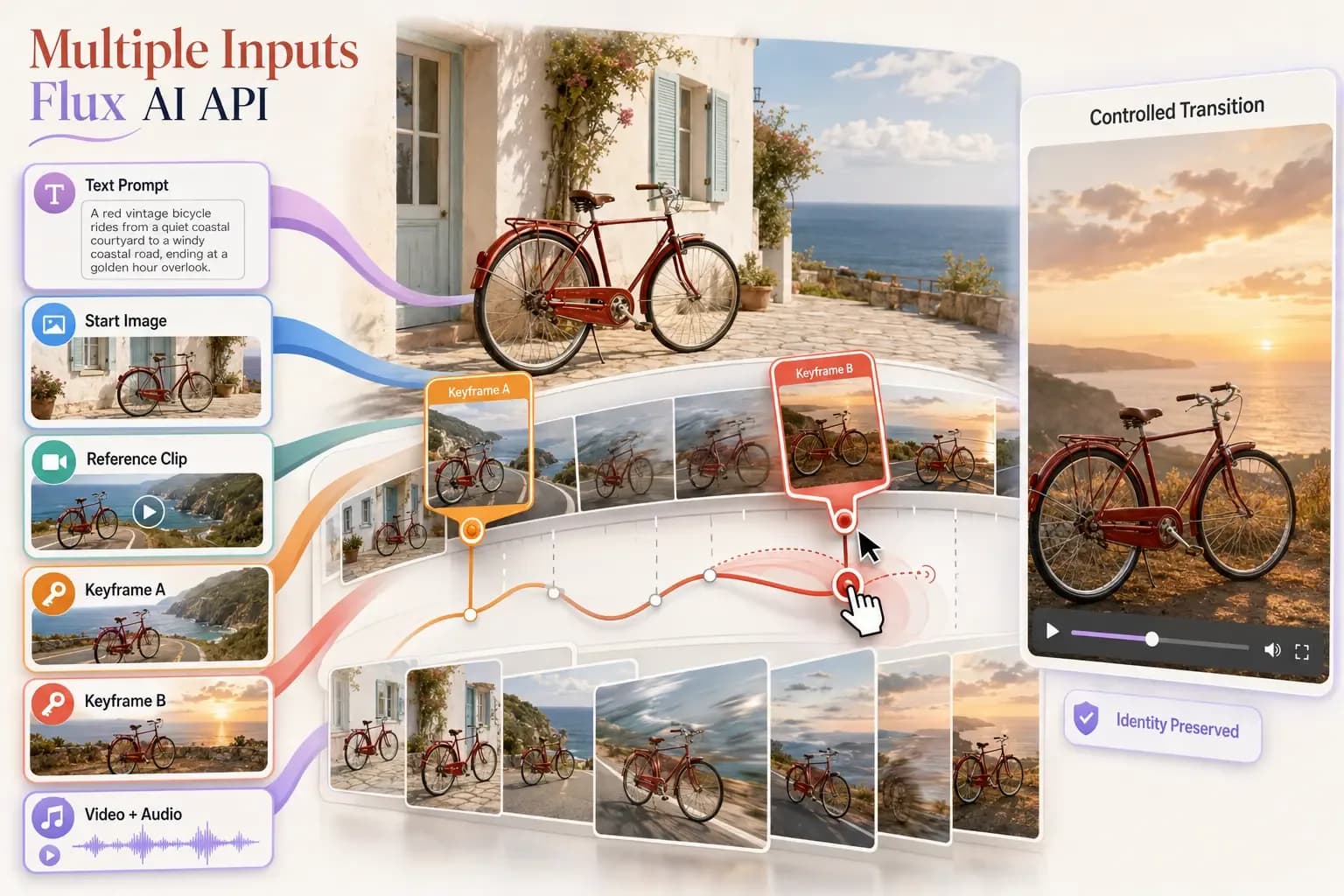
FLUX 3 multi-input control: prompt, start image, reference clip and keyframes driving one transition

Direct FLUX 3 with more than a prompt

Text is the starting point, not the whole instruction set. Hand FLUX 3 a first frame to animate, reference images that pin down a character, a source clip whose elements should carry into a new scene, or two keyframes that define where a transition begins and ends. FLUX 3 can also continue an existing video and its audio, so a shot can be extended instead of regenerated from scratch.

Read the FLUX 3 docs
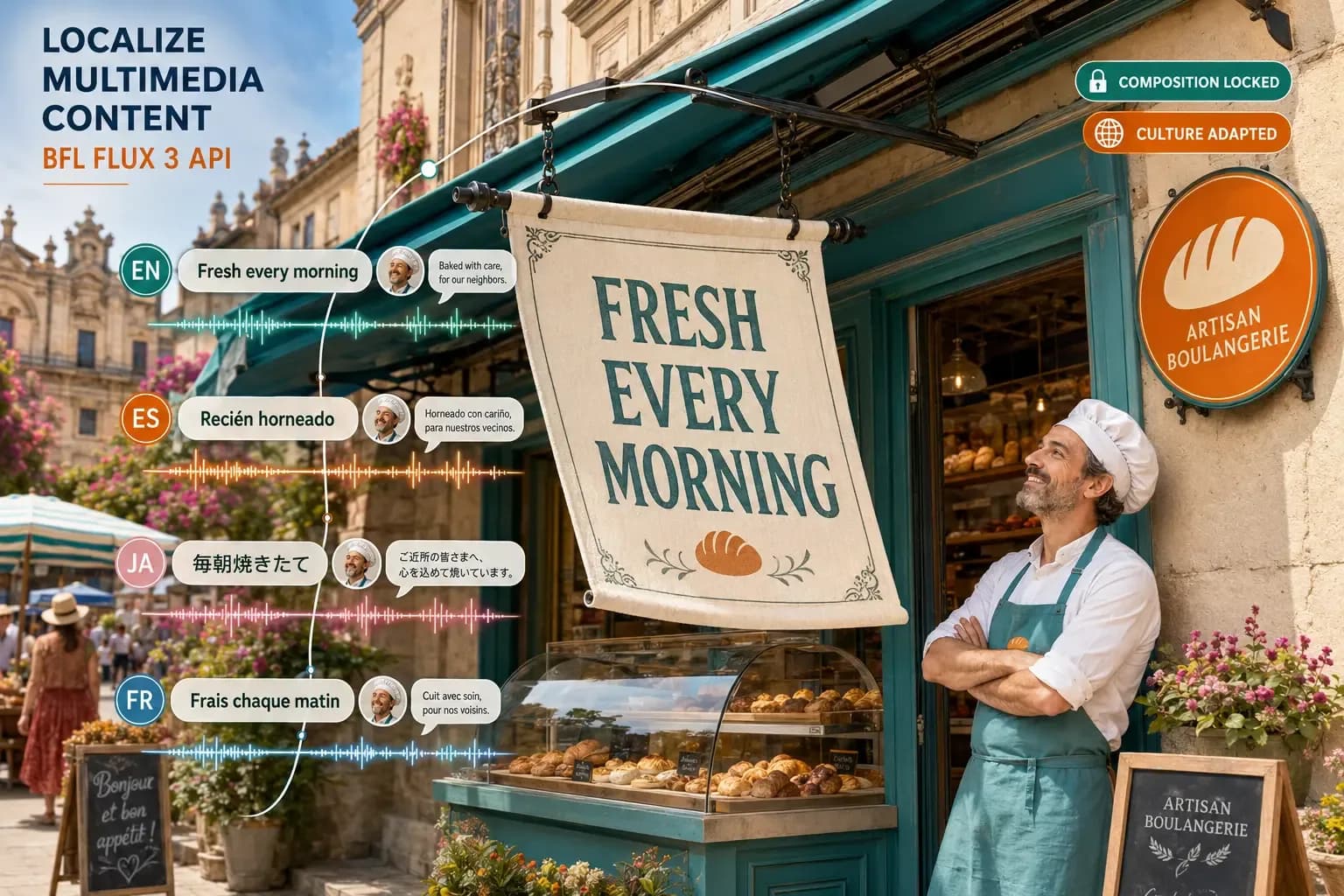

FLUX 3 localizing a bakery storefront scene across English, Spanish, Japanese and French

Localize a campaign without reshooting it

FLUX 3 handles multilingual dialogue and renders readable text inside the frame, so one creative direction can travel between markets. Signage, titles and animated typography are generated as part of the scene rather than composited on afterwards, and the spoken track is produced with the picture — which is where FLUX 3 is already strongest, according to Black Forest Labs' own early evaluations of facial expression and multilingual work.

FLUX 3 refining a perfume bottle product visual and extending it into motion

Take a product from still to motion

The same FLUX 3 backbone synthesizes and edits images across styles, aspect ratios and resolutions, then extends those stills into motion. Shape, colour, material and branding stay recognisable between the packshot and the clip, because both come out of one model instead of a still generator bolted to a separate video generator.

Pricing

Credit-based — 1 credit = $0.001 USD. Pay only for completed generations.

First test cost
$0.276276 credits

One 5-second sample at the cheapest tier.

Testing budget guide
Add credits
$10
≈ 36 tests
$50
≈ 181 tests
$100
≈ 362 tests
ModelCategoryPrice
flux-3-videoDraft preview - hd
$0.056
56 credits · 1 second
Continuation draft - hd
$0.111
111 credits · 1 second
Text or keyframes - hd
$0.157
157 credits · 1 second
Text or keyframes - fhd
$0.267
267 credits · 1 second
Video continuation - hd
$0.378
378 credits · 1 second
Video continuation - fhd
$0.488
488 credits · 1 second

Why reAPI

One foundation, not three stitched together

FLUX 3 learns from images, video and audio inside a unified architecture built on Self-Flow, Black Forest Labs' approach to aligning multimodal generation and understanding. The modalities constrain each other: the sound has to match the impact, the motion has to obey the mass.

Sound generated with the picture

Every FLUX 3 video output carries native audio from the same generation — dialogue, ambience and impacts land on the frame they belong to, instead of being timed back onto silent footage in post.

Iterate on the cheap tier

Most video models make every attempt cost the same, so exploration is expensive. FLUX 3 splits it: draft previews run at roughly a third of the rate, and finalizing re-renders that same draft at full quality using its own prompt, timing and inputs — you pay the full rate once, for the take you actually keep.

FLUX 3 vs Seedance 2.0

Black Forest Labs' own early evaluations put these two closest together of everything it compared — viewers preferred FLUX 3 in 52% of matchups, effectively a coin flip. The split is scope: both are callable on reAPI today, but Seedance 2.0 is a video model, while FLUX 3 is a broader multimodal foundation whose image and action stages are still rolling out.

Capability
FLUX 3
Seedance 2.0 on reAPI
Scope
One multimodal foundation across image, video, audio and action prediction.
Video generation with optional audio.
Clip length per generation
Up to 20 seconds with audio in a single pass.
4 to 15 seconds per request.
Input types
Prompt, starting frame, reference images, reference clip, reference audio, and keyframes for controlled transitions.
Prompt, images, first/last frame roles, reference video and reference audio.
Audio
Native audio on every video output, generated with the picture.
Audio generation is an explicit toggle per request.
Multi-shot continuity
Agentic chaining of clips into sequences lasting minutes, held together by visual references.
Return the last frame and feed it into the next request to continue a shot.
Availability
Live on reAPI, billed per second by mode and resolution, with a cheaper draft tier for iteration.
Live on reAPI today, billed per second by resolution.

Comparison reflects publicly documented behavior at the time of writing. The 52% preference figure is from Black Forest Labs' own preliminary evaluation of 10-second 720p text-to-video clips with audio, on a model it describes as still in development; sample size and methodology were not published, and it is not an independent benchmark.

Get ready for FLUX 3 in three steps

  1. step 01

    Create an API key

    Sign up at reAPI and generate a key. One key, one balance, and the same request shape across every model on the platform.

    Open
  2. step 02

    Read the FLUX 3 reference

    The FLUX 3 page tracks what Black Forest Labs has actually published — capabilities, input types and rollout stage — and gets the endpoint, parameters and rates the moment they are confirmed.

    Open
  3. step 03

    Ship on a live model today

    Video models with native audio are already callable on reAPI. Build the integration against one of those now, and switching to FLUX 3 later is a model id and a parameter map.

    Open
docs/api/flux-3

API reference

Drop-in code and the full parameter table.

curl -X POST https://reapi.ai/api/v1/videos/generations \
  -H "Authorization: Bearer YOUR_API_KEY" \
  -H "Content-Type: application/json" \
  -d '{
    "model": "flux-3-video",
    "prompt": "A rain-soaked cafe terrace at dusk, a tram rolls past",
    "duration": 5
  }'

Parameter validation failed

Rejected synchronously with the failing field named. Check enum values, ranges, and URL fields — nothing is charged.

Authentication or balance issue

401 means a missing or invalid Bearer key; 402 means the reserve exceeds your balance. Manage keys and credits in the console.

Content or material rejected

Reference material and outputs pass automated moderation. Rejected tasks fail with a clear error and a full refund.

Task failed or timed out

A task that reaches a failed state is never charged — the reserve refunds automatically. Keep the task id and retry when ready.

Frequently asked questions

Common questions about this model.

FLUX 3 is Black Forest Labs' multimodal foundation model. It jointly learns from images, video and audio within one architecture rather than treating them as separate systems, and BFL positions it as a step toward models that perceive, predict and act across physical and digital environments.

start building

Ready to ship?

Try it in the playground or grab an API key to integrate now.