
Is Wan 3.0 Open Source? Weights, API Access, and Local Use
Wan 3.0 has an API, but no official open weights as of August 23, 2026. See what is available, what is not, and when Wan 2.2 is the local option.
Wan 3.0 is available through APIs, but Alibaba has not published official Wan 3.0 model weights as of September 14, 2026. You cannot download the 3.0 video model from the official Wan repository and run the same release locally. If local weights are a hard requirement, Wan 2.2 remains the current official open-weight Wan generation.[1][2]
The confusion is reasonable: “Wan” has been associated with open video models, and search results often collapse every generation into the same product family. The version number changes the answer.
What is actually available
| Question | Answer on September 14, 2026 |
|---|---|
| Can I call Wan 3.0 through an API? | Yes |
| Are official Wan 3.0 weights published? | No official weights found |
| Is there an official Wan 3.0 ComfyUI workflow? | Yes, via Partner Nodes — but it calls the hosted model, not local weights |
| Can Wan 3.0 accept local files through an API? | Yes, after uploading them to public URLs |
| Which current Wan generation has official downloadable weights? | Wan 2.2 |
Alibaba's Wan 3.0 release describes a hosted multimodal video system that accepts text, images, audio, video, documents, and web pages and generates up to 30 seconds.[3] The official Wan GitHub organization, meanwhile, holds six repositories — Wan 2.1, Wan 2.2, Wan-Animate-2, Wan-Dancer, Wan-skills, and a Diffusers fork — and no Wan 3.0 weights repository. The Hugging Face organization tells the same story: 27 models, none above the 2.2 line.[1]
“No weights yet” is narrower than “closed forever.” It only describes the current release state. Alibaba could publish a smaller or differently licensed 3.0 checkpoint later. Until that happens, guides claiming to install Wan 3.0 locally should be checked for three common substitutions:
- They install Wan 2.2 under a page titled “Wan 3.0.”
- They call a hosted API from a local UI.
- They use an unrelated community model or wrapper with “3.0” in its name.
None of those is the same as running official Wan 3.0 weights on your GPU.
Local UI and local inference are different
ComfyUI can be the interface while inference happens remotely. A node can upload the inputs, submit an API task, poll it, and return the video to the local graph. The workflow looks local but the model is not resident on the machine.
This is exactly what ComfyUI ships for Wan 3.0 today. Its Partner Nodes carry official text-to-video, image-to-video and reference-to-video workflows, findable by searching “Wan 3.0” in the Template Library, and they run the model in the cloud — no local VRAM, but you do need to be signed in.[5] Reference media is addressed from the prompt as @Image1, @Video1 or @Audio1. So “there is an official Wan 3.0 ComfyUI workflow” and “you cannot run Wan 3.0 on your own GPU” are both true at once, and conflating them is the single most common mistake in guides on this topic.
That distinction matters for four reasons:
| Requirement | Hosted Wan 3.0 API | Local open weights |
|---|---|---|
| GPU purchase and setup | Not required | Required |
| Inputs leave your machine | Yes | Not necessarily |
| Access to current Wan 3.0 feature set | Yes | No official weights yet |
| Per-generation charge | Yes | Electricity and hardware instead |
If a policy says media must never leave a private network, a hosted API does not meet it. If the real requirement is simply “I do not want to maintain a video inference server,” API access is the easier route.
Why Wan 2.2 is not a drop-in copy of Wan 3.0
Wan 2.2 has official code and weights, including text-to-video, image-to-video, speech-to-video, character animation, and animation checkpoints in the official repository.[2] It is a strong local option, but it should not be described as a free local build of Wan 3.0.
Wan 3.0's hosted release adds a different input surface: up to 30-second output, document and public web-page input, larger multimodal reference handling, and native audio in the same request family. A local Wan 2.2 workflow may cover the final video task without accepting the same inputs or producing the same model behavior.
Choose the version by the non-negotiable constraint:
- Choose Wan 2.2 locally when privacy, offline use, fine-tuning, or control over the inference stack matters more than using the newest hosted model.
- Choose Wan 3.0 through an API when 30-second output, document/web input, or immediate access matters more than owning the weights.
- Wait when you specifically need Wan 3.0 weights. An API wrapper cannot satisfy that requirement.
What local deployment would require even after a weight release
A future checkpoint would answer only the first local-inference question. It would not make installation automatic. A production team would still need to establish:
- the exact license and permitted territories;
- supported precision and minimum VRAM;
- inference time at the intended resolution and duration;
- whether audio generation is included in the released checkpoint;
- storage for weights, caches, inputs, and outputs;
- a queue, health checks, retries, and capacity limits;
- an upgrade plan for new checkpoints and runtime dependencies.
Video models also make consumer-GPU claims slippery. “Runs on 24 GB” can mean a short low-resolution clip with aggressive offloading and a long wait. It does not automatically describe a server that can accept concurrent 30-second 1080P requests. Throughput and supported features matter as much as whether one sample reaches the last frame.
For privacy-sensitive work, local can still be the right choice even when it is slower. For a product with irregular volume, a hosted endpoint avoids paying for idle GPUs and the engineering around them. The decision should compare total workload cost and policy constraints, not a free download against one API call.
How to verify a claimed 3.0 checkpoint
Before downloading a large file from a community mirror, check the chain of evidence:
- Does the official Wan organization link to the repository or model card?
- Does the model card name Wan 3.0 explicitly, rather than a fine-tuned Wan 2.x base?
- Are weight files present, with checksums or a versioned release?
- Is there a license attached to those exact files?
- Do the documented inputs and outputs match the advertised 3.0 capability?
A filename is weak evidence. A wrapper can rename a Wan 2.2 checkpoint, and a quantization can inherit the base model's limits while marketing itself with a newer label. If the official organization does not acknowledge the artifact, treat it as a community claim and isolate it before loading. Model files can execute custom code through their runtime or dependencies; downloading from an unknown mirror is also a supply-chain decision.
What “Wan 3.0 API access” means in practice
The Wan 3.0 API on reAPI uses an asynchronous video endpoint. A request returns a task id; the application polls until an MP4 URL is available. The model id is wan3.0-video.[4]
{
  "model": "wan3.0-video",
  "prompt": "A paper boat travels through a flooded miniature city",
  "resolution": "720P",
  "duration": 10,
  "audio": true
}
Media fields require public HTTP(S) URLs rather than local paths or base64 data. Uploading a local file before submission does not turn the generation into local inference; it is still a hosted request.
How to check the status later
Do not rely on a blog title or an old social post. Check these three places:
- The official Wan GitHub organization for a repository or release tagged 3.0.
- The official Hugging Face (huggingface.co) organization for actual weight files and a model card.
- Alibaba's release or documentation for a license and hardware requirements.
A genuine open-weight release needs all three pieces to be useful: downloadable artifacts, a license, and enough inference instructions to run them. A demo page or API announcement is not a weight release.
References
- Wan-Video official GitHub organization, accessed September 14, 2026.
- Wan-Video, “Wan2.2” official repository, accessed September 14, 2026.
- Alibaba Cloud, “Wan 3.0: 30-Second AI Video Generation from Any Input”, 2026.
- reAPI Wan 3.0 API documentation, accessed August 23, 2026.
- ComfyUI, “Wan 3.0 Video Generation in ComfyUI” (Partner Nodes), accessed September 14, 2026.
Author

Categories
More Posts
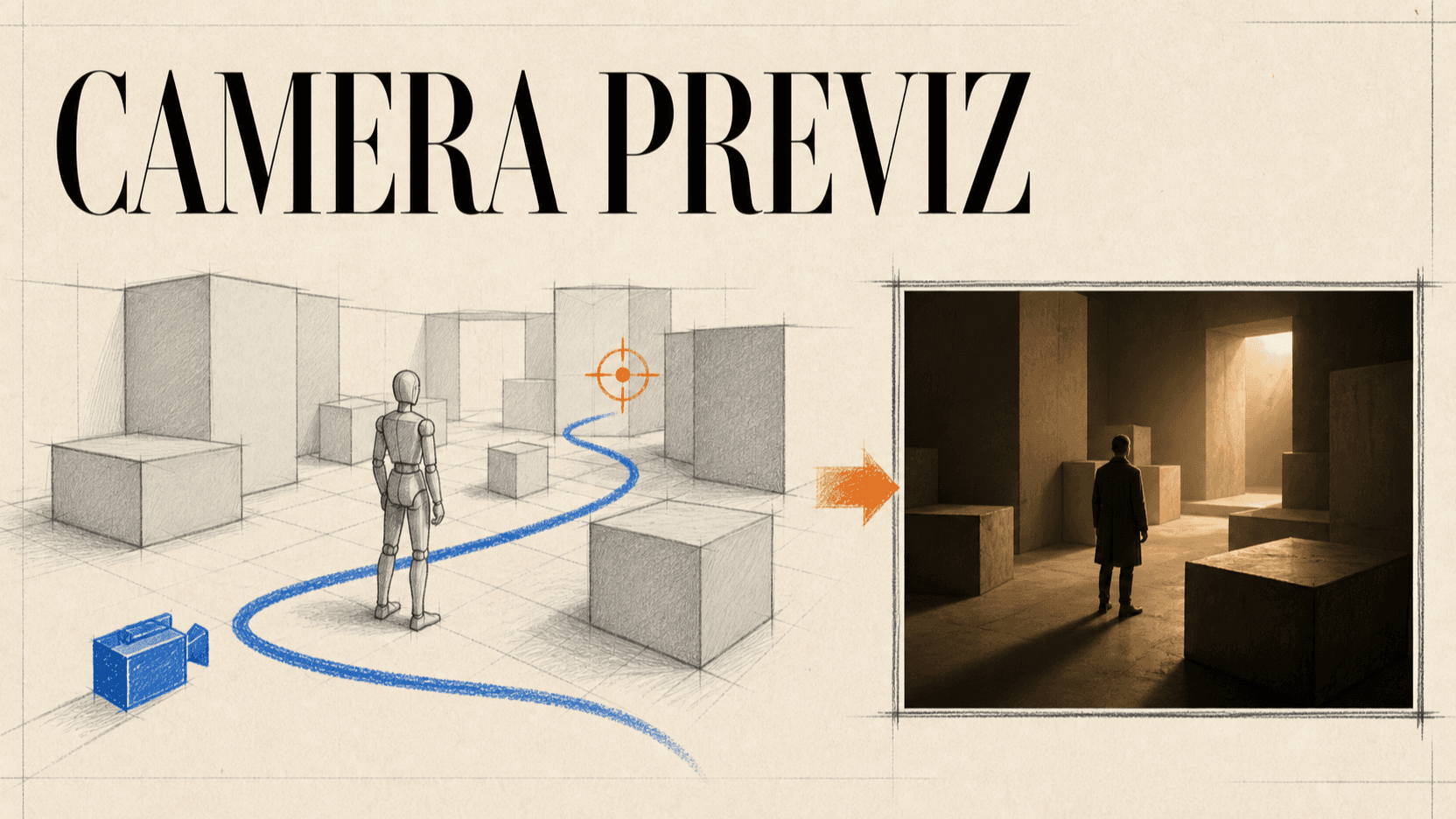
How to Control AI Video Camera Movement with Blender Previz
Build a simple Blender gray-box scene, animate a repeatable camera path, export a preview, and use it as motion guidance for AI video generation.
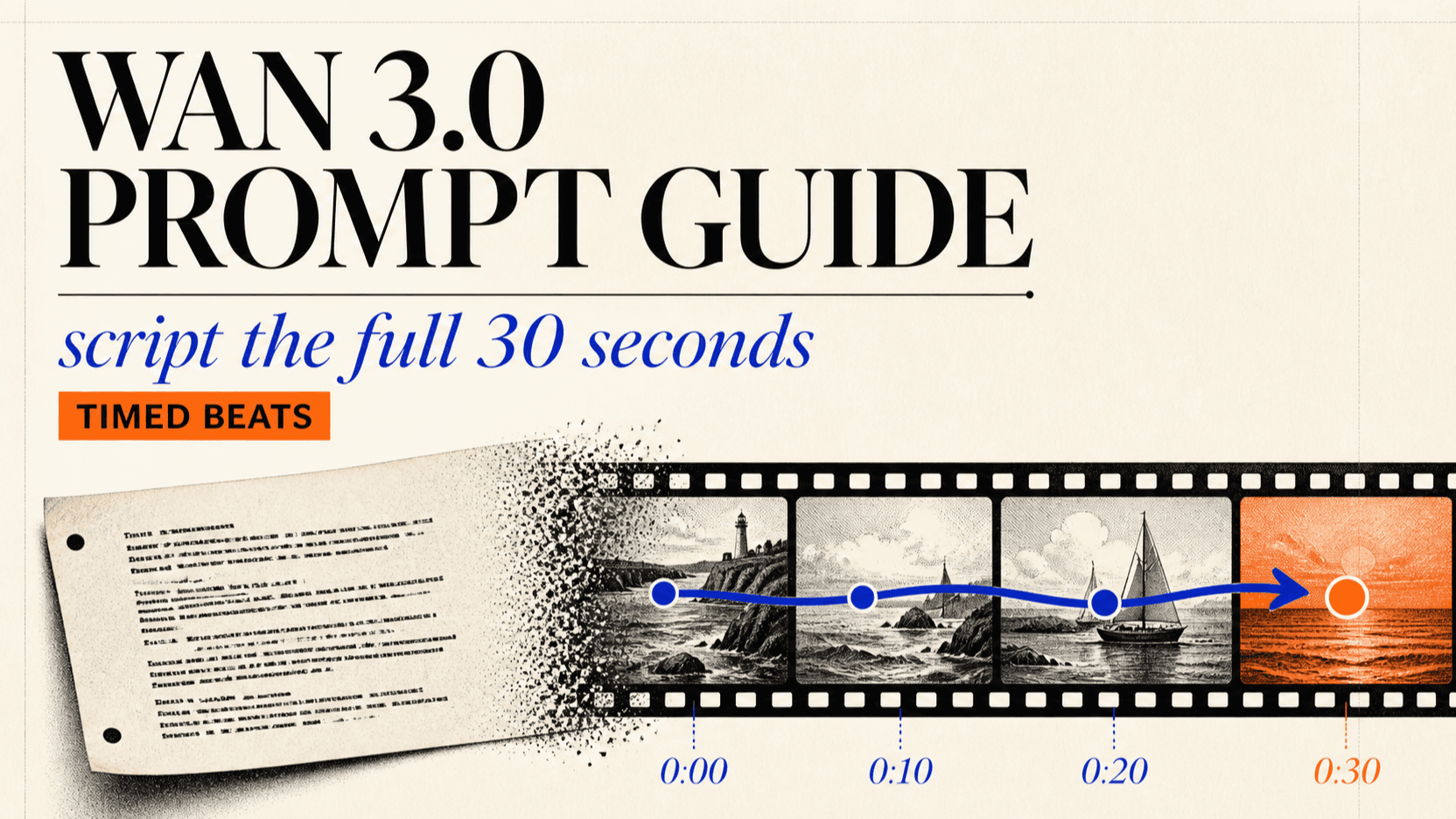
Wan 3.0 Prompt Guide: Write Coherent 30-Second Video Scripts
Learn a practical Wan 3.0 prompt structure for coherent 30-second video: timed beats, camera direction, reference roles, audio, examples, and fixes.
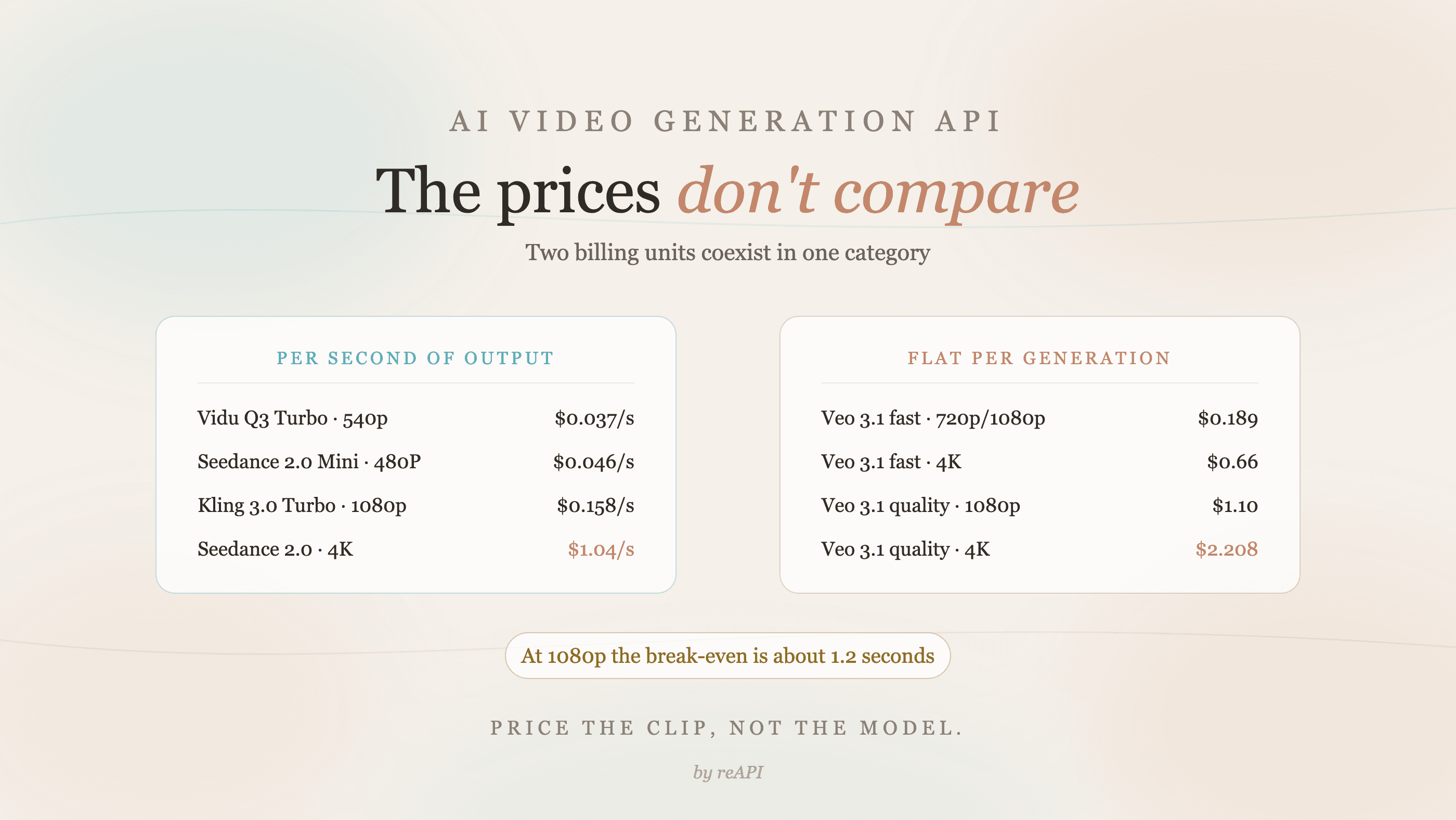
AI Video Generation API: Why the Prices Don't Compare
AI video generation API rates use two incompatible billing units: per second and flat per generation. Where the break-even sits and how to price a real clip.