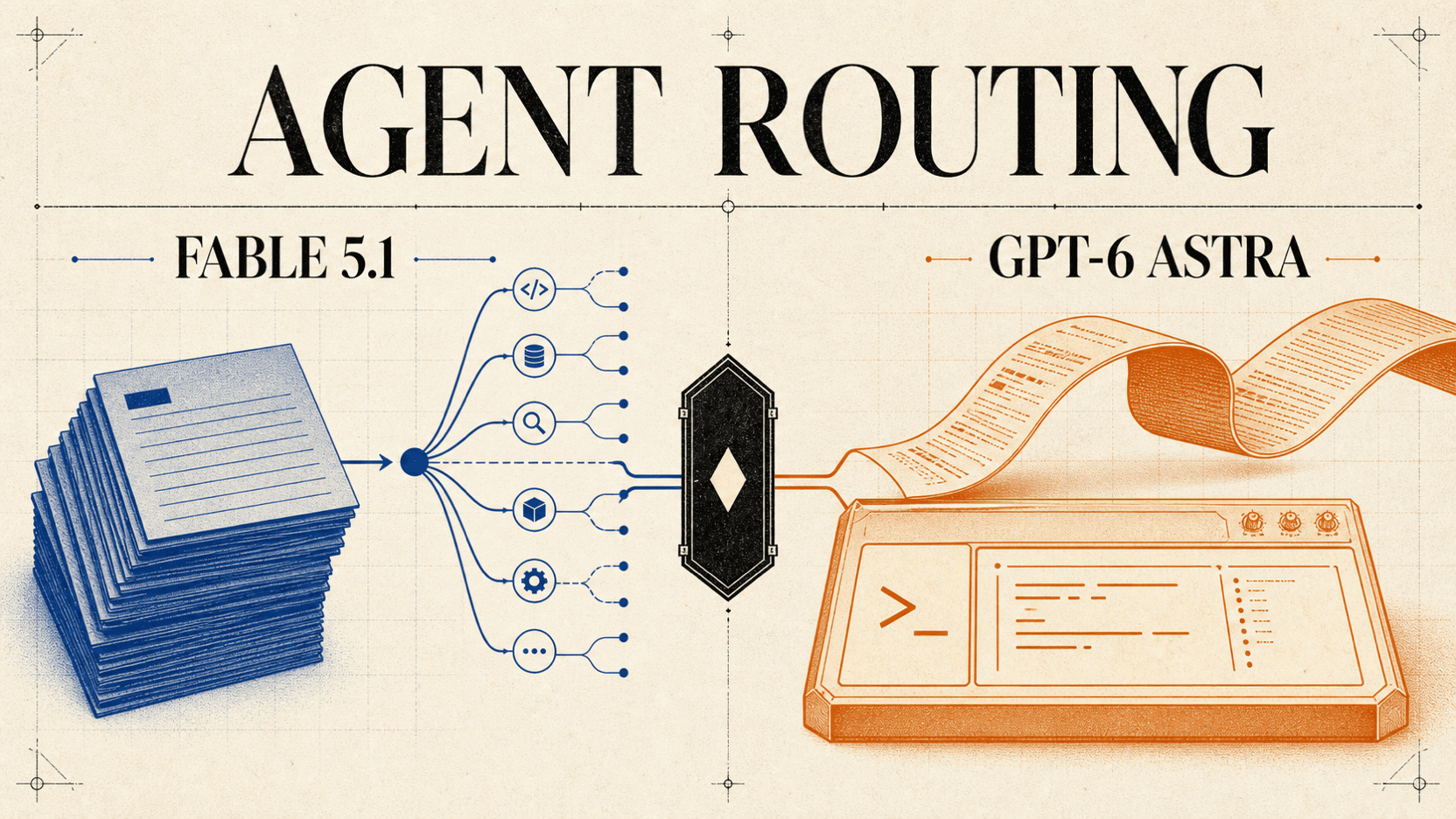
Claude Fable 5.1 vs GPT-6 Astra: Choose by Workload
Compare Claude Fable 5.1 and GPT-6 Astra by context, tools, caching, retention, and task fit—then run a fair evaluation on your own workload.
Claude Fable 5.1 and GPT-6 Astra have the same headline API prices and similarly large context windows, but they are not interchangeable. Fable 5.1 is usually the cleaner choice for an existing Anthropic Messages workflow, a cache-heavy long-running agent, or a job that regularly sends more than 272,000 input tokens. Astra deserves the first trial for Responses API agents, computer-use work, asynchronous tool loops, and workflows that benefit from steering while the model is still working. Neither is the automatic winner for coding, research, or “hard tasks” in general.
The useful question is therefore not “Which model is smarter?” It is “Which model completes this workload with fewer human interventions, at an acceptable latency and cost?” The Claude Fable 5.1 API guide and GPT-6 Astra API guide show the request details; this comparison supplies the routing decision around them.
Quick answer
- Start with Claude Fable 5.1 for an established Anthropic Messages agent, large reusable prompt prefixes, or strict thinking-block continuity.
- Start with GPT-6 Astra for a Responses API agent that needs asynchronous tools, mid-turn steering, or computer use.
- Both list $10/MTok input and $50/MTok output. Fable has cheaper cache reads; Astra charges a long-context premium above 272K input tokens.[2][5]
- Treat that as a shortlist, not a verdict. Route only after repeated tests show a lower cost per accepted task.
The shortest useful decision table
| Your actual constraint | Start with | Reason to test it first |
|---|---|---|
| Existing production flow uses Anthropic Messages and preserved thinking blocks | Fable 5.1 | The migration path and history rules are documented for that stack |
| Agent uses Responses API tools, background work, or mid-turn steering | Astra | Those controls are central to Astra's official API guidance |
| Most requests reuse a large, stable prefix | Fable 5.1 | Its published cache-read rate is lower |
| Requests often cross 272K input tokens | Fable 5.1 | Astra reprices the entire long request above that threshold |
| Computer interaction is the dominant job | Astra | OpenAI positions it for computer use and exposes computer-use tooling |
| Zero Data Retention eligibility is mandatory | Astra, subject to approval | OpenAI lists ZDR support for eligible API customers; Anthropic lists Fable 5.1 as a Covered Model with default 30-day retention and only limited exceptions |
| Output quality is hard to describe before seeing it | Test both | A task-specific acceptance rubric is more useful than category labels |
“Start with” is intentional. It identifies the sensible first branch, not the final production verdict.
What is actually comparable?
The specification sheets make these models look unusually close.
| Specification | Claude Fable 5.1 | GPT-6 Astra |
|---|---|---|
| API model ID | claude-fable-5-1 | gpt-6-astra |
| Context window | 1,000,000 tokens | 1,050,000 tokens |
| Maximum output | 128,000 tokens | 128,000 tokens |
| Input modalities | Text and images | Text and images |
| Output modality | Text | Text |
| Reasoning controls | low, medium, high, xhigh, max | low, medium, high, xhigh, max |
| Headline input price | $10 / 1M tokens | $10 / 1M tokens |
| Headline output price | $50 / 1M tokens | $50 / 1M tokens |
| Published cache-read price | $0.25 / 1M tokens | $1 / 1M tokens |
Those figures come from the vendors' model and pricing documentation.[1][2][4][5] They do not tell you how many tool turns a task will take, how often a reviewer will reject the answer, or whether an agent will damage an existing repository. Those variables usually determine the bill.
There is also one deceptively important difference in the pricing table. For Astra, an input longer than 272,000 tokens is charged at twice the standard input and cached-input rates, while output is charged at 1.5 times the standard output rate. The higher rates apply to the whole request, not only the portion above 272,000 tokens.[5] A 300,000-token repository task therefore does not follow the $10/$50 headline curve on Astra. Fable 5.1's published pricing page does not list an equivalent long-context multiplier.[2]
The API surface can decide before model quality does
Fable 5.1 uses the Anthropic Messages API and always-on adaptive thinking. It no longer accepts forced tool selection: tool_choice values that require any tool or name one specific tool return an HTTP 400 error. Automatic and disabled tool choice remain supported. Anthropic recommends strict tool schemas, an explicit instruction to call the tool, or Structured Outputs when the application needs valid structured data.[3]
Astra supports both Chat Completions and Responses, but OpenAI's model page says tool calling for Astra requires the Responses API. The Responses route also carries the model's asynchronous tool calling, mid-turn steering, and configuration updates.[4][6] An application that remains on Chat Completions cannot fairly evaluate those agent features.
This means a “same prompt” comparison may be operationally unfair. The text can match while the surrounding contract differs: tool schema, history representation, reasoning controls, retry behavior, and instructions injected by the agent framework. Compare complete working paths, not isolated request bodies.
Route by workload, not by company label
Long-lived coding agents
Start by asking what the agent must remember and what it is allowed to change.
Fable 5.1 has precise rules for carrying thinking blocks across turns. It can read compatible thinking blocks from earlier Claude models, but older models cannot consume Fable 5.1 thinking blocks. The conversation must also remain append-only: changing the system prompt, tool definitions, or earlier messages can invalidate later thinking blocks.[3] That is manageable when the agent already uses Anthropic's history model, but it can complicate fallback routing between model generations.
Astra is attractive when the coding harness is Responses-first and benefits from steering a long run without discarding work. OpenAI also describes configuration updates that can change reasoning effort between turns.[6] Do not infer that these controls automatically produce safer edits. Your evaluation still needs checks for scope creep, unnecessary rewrites, test failures, and reviewer corrections.
For either model, include maintenance tasks rather than only greenfield puzzles. A useful coding set contains:
- a one-file bug with a clear failing test;
- a cross-file change in an unfamiliar module;
- a request with an explicit “do not touch” boundary;
- a regression diagnosis where implementation is not authorized;
- a long-context task that requires finding one relevant fact among many files.
Research and professional documents
Astra's announcement emphasizes research and the creation of spreadsheets, presentations, documents, and other professional artifacts.[6] That makes it a sensible first candidate when the output is an artifact produced through OpenAI's supported tools rather than plain prose.
Fable 5.1 is a strong first candidate when the research agent already relies on a large, repeatedly cached source packet. Its cheaper cache reads can matter more than a small difference in the number of uncached prompt tokens. The model's one-million-token context also stays on the standard published rate card, even when a source bundle passes Astra's 272K threshold.[1][2]
Judge research outputs on citation coverage, whether claims are supported by the cited passages, and how the system behaves when sources disagree. Fluency should not outrank traceability.
Computer use
OpenAI presents computer use as a core Astra workload and publishes results for its computer-use evaluations.[6] That supports putting Astra in the first evaluation slot for browser and desktop control. It does not remove the need for a sandbox, confirmation gates, domain restrictions, and a record of every action.
Fable 5.1 can still participate in tool-driven workflows, but its inability to force a named tool changes how deterministic action steps must be designed. If every turn must emit one validated action, test strict schemas and explicit instructions under failure conditions before considering the migration complete.
Very long prompts
The context windows differ by only 50,000 tokens, but the billing curves differ earlier. Evaluate at three bands:
- below 100K, where ordinary task quality and output length dominate;
- 200K–272K, where cache behavior becomes increasingly important;
- above 272K, where Astra's long-context multiplier changes the economics.
Do not fill the context window merely because it exists. Retrieval, compaction, and a stable cached prefix can reduce both distraction and cost. A model comparison should include the same relevant evidence, not the same maximal dump of files.
Retention and governance
Anthropic lists Fable 5.1 as a Covered Model with default 30-day API retention. Zero Data Retention is not generally available for it, although Anthropic documents a narrow path for eligible enterprise customers that receive express authorization.[1] OpenAI lists Astra as supporting Zero Data Retention for eligible API customers.[4]
If retention policy is a hard procurement requirement, settle eligibility in writing before spending time on output comparisons. “Supports ZDR” is not the same as “every account has ZDR enabled.”
What the launch benchmarks can and cannot tell you
OpenAI's Astra announcement reports 64.6% for Astra and 52.6% for Claude Fable 5.1 on Terminal-Bench Science 0.1, alongside an estimate of roughly 31% lower API cost for Astra on that evaluation.[6] Anthropic's own Fable 5.1 announcement also reports 52.6% for its model on that benchmark.[7]
That is a relevant signal for tasks resembling the benchmark. It is not a neutral audit and it does not establish a lower cost for unrelated work. The cost estimate depends on the benchmark's token and tool-use pattern; a cache-heavy 400K-token agent can face the opposite pricing geometry. Record the publisher, model configuration, harness, date, and workload whenever a benchmark informs routing.
A fair test takes accepted work as its unit
Build a small evaluation from production tasks before changing the default model. Twenty carefully chosen tasks are often more informative than hundreds of synthetic prompts if they cover the costly failure modes.
Use a record like this for every run:
| Field | Why it matters |
|---|---|
| Task ID and input snapshot | Makes both paths receive the same evidence |
| Model, API, and effort | Prevents hidden configuration differences |
| Total input, cached input, and output tokens | Allows billing reconstruction |
| Tool calls and failed tool calls | Exposes orchestration overhead |
| Wall-clock time | Captures the user-visible delay |
| Human interventions | Counts clarification, steering, and recovery |
| Automated checks | Records tests, schema validation, or artifact checks |
| Reviewer verdict | Defines whether the output is accepted |
Run each task more than once. Then calculate:
acceptance_rate = accepted_runs / total_runs

cost_per_accepted_task = total_API_cost / accepted_runs

interventions_per_accepted_task = total_human_interventions / accepted_runs
Keep the rubric fixed before reading model names. For code, an accepted result might require all tests to pass, no prohibited files to change, and no high-severity review finding. For research, it might require complete citation support and zero fabricated sources. Latency and style can be secondary scores, but they should not silently override correctness.
The result may be a router rather than a winner. A practical policy could send ordinary repository edits to the cheaper accepted path, very long cached contexts to Fable 5.1, and computer-use tasks to Astra. Recheck the current Fable 5.1 model route and current Astra model route when deploying; gateway availability and rates should not be inferred from upstream list prices.
FAQ
Is GPT-6 Astra better than Claude Fable 5.1 for coding?
Not as a general rule. Astra's official results support testing it for difficult coding and computer-use work, while Fable 5.1 may fit an Anthropic-native, cache-heavy, long-context repository agent better. Use several representative maintenance tasks and score accepted changes, not prose preference.
Which model is cheaper?
They share the same standard input and output list prices. Fable 5.1 has the cheaper published cache-read rate, while Astra applies a long-context multiplier above 272K input tokens. Astra can still cost less on a particular task if it uses fewer tokens, tools, retries, or reviewer interventions.
Can I use the same tool-calling code for both?
No. Fable 5.1 rejects forced tool_choice, and Astra requires the Responses API for its tool-calling path. Normalize the application-level tool contract, then write and test a separate adapter for each API.
Which one has the larger context window?
Astra lists 1,050,000 tokens and Fable 5.1 lists 1,000,000. That 5% difference is less important than relevance, caching, history handling, and Astra's price change above 272,000 input tokens.
Does Fable 5.1 support Zero Data Retention?
Not by default. Anthropic documents a default 30-day retention period and says ZDR is unavailable except for expressly authorized eligible enterprise cases. Confirm the contract for the exact account and model.
Should I switch every request to the winner of my evaluation?
Only if the workload is genuinely uniform. Most production systems benefit from a default plus a few evidence-based exceptions. A routing rule is easier to audit when each exception names a measurable constraint: context size, tool surface, retention, latency, or acceptance rate.
Route the exception, not every request
A model switch becomes easier to defend when it is written as a narrow rule: “Use Fable 5.1 when cached input exceeds 200K,” or “Use Astra for the computer-use queue after the reviewer gate passes.” Those rules can be measured, priced, and reversed. “Use Astra because it won a benchmark” and “use Fable because it feels better in our codebase” cannot.
Keep one ordinary default, route the expensive exceptions, and rerun the acceptance set when either vendor changes the model, pricing, or API contract.
References
- Anthropic, Claude Fable 5.1 overview, accessed September 7, 2026.
- Anthropic, API pricing, accessed September 7, 2026.
- Anthropic, Migrating to Claude Fable 5.1, accessed September 7, 2026.
- OpenAI, GPT-6 Astra model documentation, accessed September 7, 2026.
- OpenAI, API pricing, accessed September 7, 2026.
- OpenAI, Introducing GPT-6 Astra, September 3, 2026.
- Anthropic, Introducing Claude Fable 5.1 and Mythos 5.1, September 1, 2026.
Author

Categories
More Posts
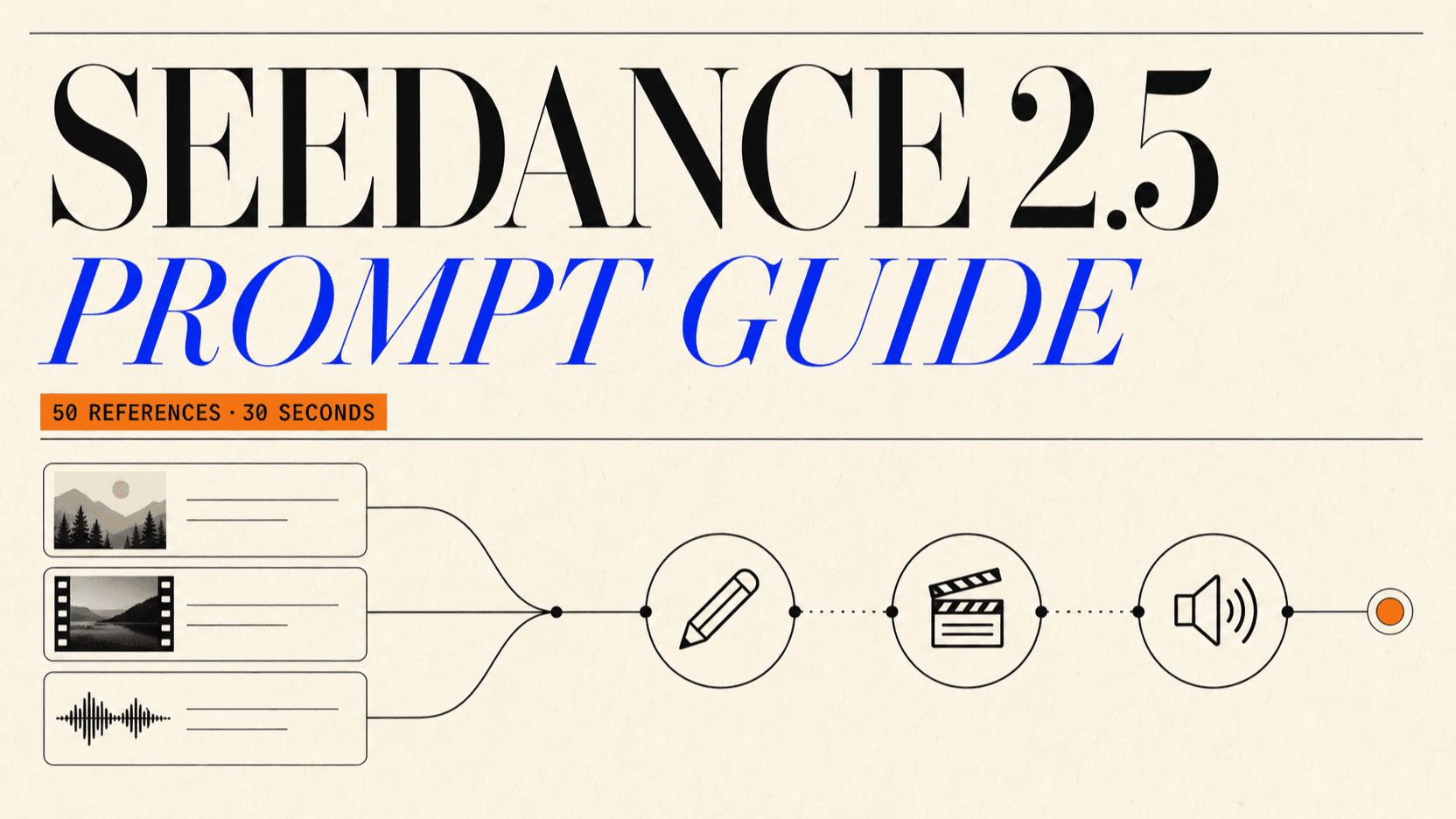
Dreamina Seedance 2.5 Prompt Guide: References & Timing
Write better Seedance 2.5 prompts with official reference limits, 30-second stages, timestamp control, editing, extension, and keyframe templates.

Kie AI Alternative: Pricing, Legit and Free Credits Compared
Looking for a Kie AI alternative? Compare kie.ai and reAPI prices for Seedance, Wan 3.0, GPT Image and Nano Banana, and see if Kie AI is legit or free.
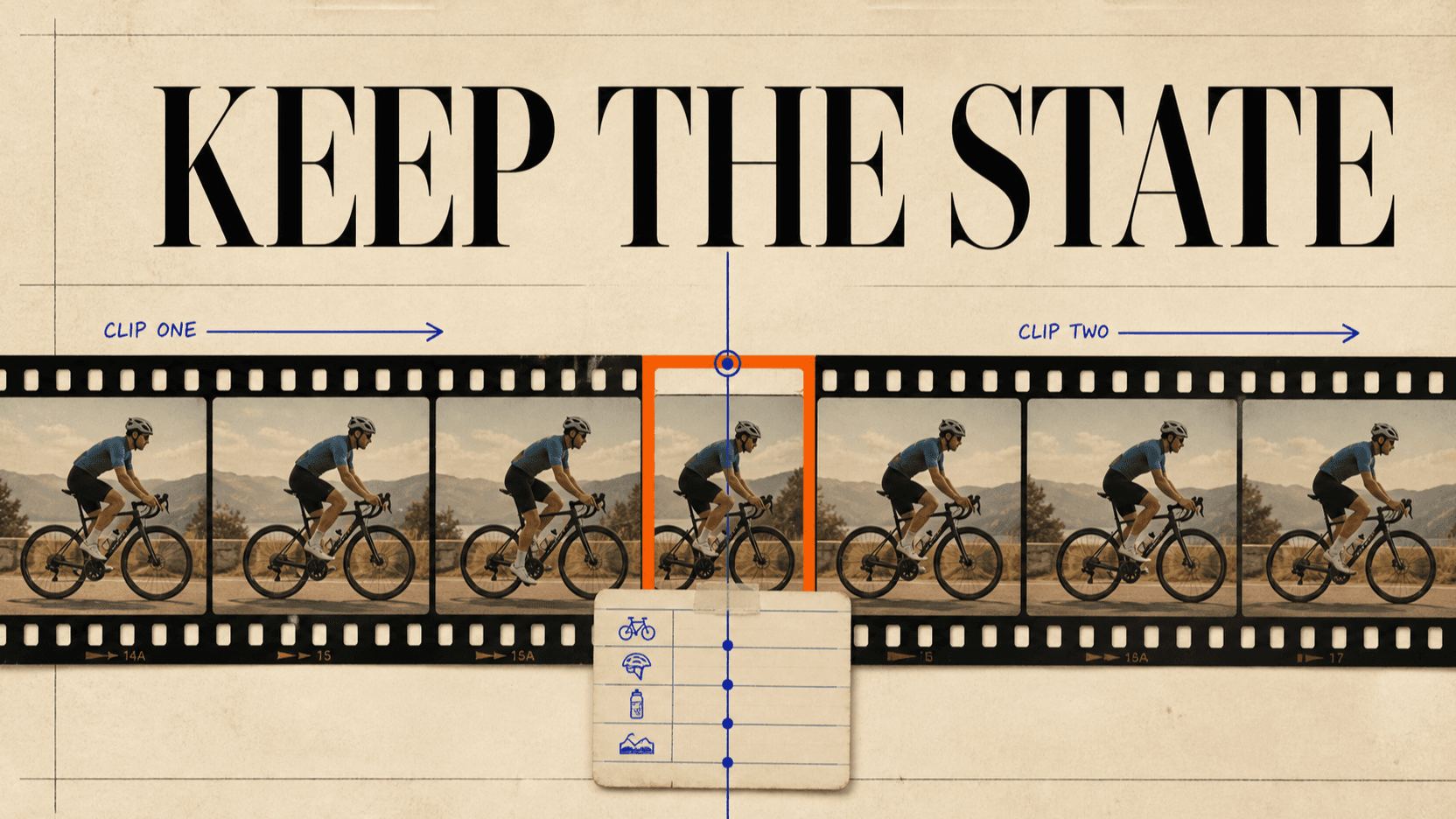
How to Keep AI Video Continuity Across Multiple Clips
Learn to extend AI video across multiple clips with a state ledger, boundary frames, continuation prompts, API calls, continuity checks, and repair rules.