GPT Image 2.5 API Cost: Flare, Sunburst and Flat Rates
GPT Image 2.5 API cost by quality tier: compare OpenAI token rates, reAPI flat pricing and provider quotes, with exact monthly budgets and billing caveats.
reAPI lists Standard Flare at $0.01725 per delivered image; its playground estimates $0.018, or 18 credits, for a single-image request[1]. GPT Image 2.5 API cost also depends on the billing method. OpenAI's calculator estimates $0.00588 for the output of a low-quality square image and $0.21072 at max, before input charges[2].
That spread makes quality worth choosing explicitly. reAPI Standard keeps a flat image rate across quality settings, sizes and reference-image counts; Official meters token usage[3]. Prices were checked on September 13, 2026. The comparisons below distinguish output-only estimates from provider quotes so you can use them in a monthly budget.
TL;DR
- Flare and Sunburst share OpenAI's token rate card, including $30 per million image-output tokens. Their actual token consumption can differ, so equal rates do not guarantee equal image bills[2].
- reAPI Standard Flare lists $0.01725 per image; Standard Sunburst displays $0.023. Higher quality and larger supported sizes do not change the Standard rate for the selected model[1][3].
- Replicate lists Flare low at $0.012 per output, below reAPI Standard. Its high tier is $0.128, and auto is $0.25. Set quality deliberately[4].
- Kie quotes $0.03 for 1K, $0.05 for 2K and $0.08 for 4K, without separate quotes for each OpenAI quality tier. Treat those as resolution prices, not evidence of matching output quality[5].
- At OpenAI's published output rate, the square-image estimate crosses Standard Flare's listed price between medium and high. Input tokens add to metered bills, and reAPI settles charges in credits[2][3].
Flare and Sunburst share token rates
OpenAI publishes the following GPT Image 2.5 pricing for both models. Every rate is in USD per million tokens[6][7].
| Token category | Flare | Sunburst |
|---|---|---|
| Text input | $5.00 | $5.00 |
| Cached text input | $1.25 | $1.25 |
| Image input | $8.00 | $8.00 |
| Cached image input | $2.00 | $2.00 |
| Image output | $30.00 | $30.00 |
The Flare vs Sunburst cost comparison therefore starts with usage. OpenAI's image-generation guide explicitly warns that token consumption can differ by model and quality setting. It recommends measuring the response's usage for your own prompts and dimensions[2].
Flare is OpenAI's choice for fast everyday image generation. Sunburst is positioned for work where editing precision matters most[6][7]. Try the same representative request on each before deciding whether the extra generation time serves your use case. The shared rate card alone cannot answer that decision.
OpenRouter's Flare provider table also lists $5 for text input, $8 for image input and $30 for image output per million tokens[8]. Those are model-usage rates. They do not establish an all-in account or payment cost.
What a 1024×1024 image costs at each quality tier
OpenAI's interactive calculator currently groups Flare and Sunburst under GPT Image 2.5 and displays these estimates for an explicit 1024×1024 output. We checked each quality control in the browser[2].
| Quality | Estimated output tokens | Image-output cost |
|---|---|---|
| low | 196 | $0.00588 |
| medium | 439 | $0.01317 |
| high | 1,756 | $0.05268 |
| xhigh | 3,122 | $0.09366 |
| max | 7,024 | $0.21072 |
Each cost is the displayed token count multiplied by $30 and divided by a million. This is an output-only estimate. Text prompts and reference images add their respective input-token charges; the calculator also excludes streaming partial images[2].
The medium-to-high step is especially consequential: output tokens rise from 439 to 1,756, exactly fourfold. Moving from high to xhigh follows a different ratio. A budget that treats each quality step as the same increase will misprice the workload.
Use this table to compare explicit settings, then inspect actual usage. It does not promise that every prompt or both models will settle at the displayed estimate. OpenAI makes that distinction on the same page[2].
Where flat pricing beats token metering
Comparing GPT Image 2.5 API cost across providers requires matching what each quote includes. The OpenAI column below excludes inputs. Standard Flare shows its listed rate before credit settlement. The Official column shows that channel's live single-image estimate for a 1024×1024 request at each quality setting, read off the model page; because it is token-metered, your own figure moves with prompt length, reference images and frame size. Kie's column repeats its 1K resolution quote; Kie does not publish a separate price for each quality row, so the repeated figure does not establish equivalent output quality[1][2][3][4][5].
| Quality | OpenAI output only | reAPI Standard Flare | reAPI Official | Kie 1K quote | Replicate Flare |
|---|---|---|---|---|---|
| low | $0.00588 | $0.01725 | $0.005 | $0.03 | $0.012 |
| medium | $0.01317 | $0.01725 | $0.01 | $0.03 | $0.047 |
| high | $0.05268 | $0.01725 | $0.04 | $0.03 | $0.128 |
| xhigh | $0.09366 | $0.01725 | $0.071 | $0.03 | $0.25 |
| max | $0.21072 | $0.01725 | $0.159 | $0.03 | $0.50 |
For the listed-rate comparison, $0.01725 divided by $30 per million equals 575 output tokens. Medium's 439 tokens sit below that threshold; high's 1,756 sit above it. Thus the output-only crossover falls between medium and high. Input charges can make a metered request exceed the flat rate sooner.
Official crosses Standard at the same place. Its estimates bill 5 and 10 credits at low and medium, against 18 credits for a single Standard Flare image, then rise to 40, 71 and 159 credits at high, xhigh and max[1]. So the metered channel is the cheaper choice for drafts and everyday output, and the flat rate is the cheaper choice once you need high or better. Check the live quote for your own settings before committing, since the final charge follows reported usage[3].
Replicate's $0.012 low tier costs less than Standard Flare's listed price and its $0.018 single-image estimate. At high through max, both OpenAI's output-only figures and reAPI Official's estimates exceed Kie's $0.03 resolution quote: Official runs $0.04, $0.071 and $0.159 across those three tiers. If you need high or better and Kie's available settings meet your requirement, Official is the more expensive choice and Standard Flare's flat $0.01725 is the one worth comparing instead. A lower quote is useful only if the resulting image meets the same need.
fal publishes another useful reference: its measured square text-to-image examples cost $0.0060 at low, $0.0133 at medium and $0.0528 at high. These include a short prompt, so they have a different scope from the output-only column. fal's low and medium examples are below Standard Flare's listed rate[9].
Size changes the comparison too. Standard retains the selected model's flat rate across supported sizes, while Kie's quoted resolution price steps upward. Token-metered estimates must use the actual width and height; do not apply the square-image table to every image described as 1K or 4K[2][3][5].
What quality: "auto" means for your bill
Auto has no universal per-image price. OpenAI says the automatic setting depends on the generated image and asks for explicit quality and size when using its calculator[2].
Provider billing rules still apply. Replicate explicitly lists auto at $0.25 per output image, the same posted price as xhigh. A request that leaves quality at its default therefore has a different quoted cost from one that selects low[4].
On reAPI Standard, choosing auto does not change the selected model's flat rate. On Official, the charge depends on token usage[3]. For a repeatable budget comparison, pin both quality and size, keep reference inputs consistent, and compare the completed requests. Change one setting at a time so the resulting cost difference is interpretable.
Budgeting a month of GPT Image 2.5 API cost
reAPI has no monthly subscription requirement or monthly minimum for this model[1]. Monthly spend follows the requests you make. The calculations below assume the stated number of delivered images and unchanged prices; they are scenarios, not measured monthly invoices.
Start with the flat-rate options. The first row is simple multiplication of the Flare listed rate. The next rows use the playground's single-image and ten-image request estimates, which account for whole-credit settlement[1][3].
| Budget basis | 1,000 images | 10,000 images |
|---|---|---|
| Standard Flare listed-rate subtotal, before settlement | $17.25 | $172.50 |
| Standard Flare: $0.018 estimate per single-image request | $18.00 | $180.00 |
| Standard Flare: $0.173 estimate per ten-image request | $17.30 | $173.00 |
| Standard Sunburst listed-rate subtotal at $0.023/image | $23.00 | $230.00 |
| Kie at the $0.03 1K quote | $30.00 | $300.00 |
| Replicate Flare low at $0.012/image | $12.00 | $120.00 |
| Replicate Flare high at $0.128/image | $128.00 | $1,280.00 |
Kie and Replicate totals multiply their published quotes, without promotional top-ups or negotiated discounts[4][5]. The small difference between Flare's rate subtotal and request estimates is why the request count belongs in a budget alongside the image count.
For token metering, multiplying OpenAI's square-image estimates gives the following output-only monthly subtotals[2]:
| Quality | 1,000 images | 10,000 images |
|---|---|---|
| low | $5.88 | $58.80 |
| medium | $13.17 | $131.70 |
| high | $52.68 | $526.80 |
| xhigh | $93.66 | $936.60 |
| max | $210.72 | $2,107.20 |
Add text-input and image-input charges using actual usage. If you call image generation through OpenAI's Responses API, include the mainline model's token usage as well[2]. Budget successful variations and edits even when you later discard them; reAPI's failure refund applies to failed generations[3].
FAQ
How much does GPT Image 2.5 cost per image?
On reAPI, Standard Flare lists $0.01725 and Standard Sunburst displays $0.023. A single Flare request estimates 18 credits, or $0.018[1]. With token billing, the GPT Image 2.5 cost per image depends on usage; OpenAI's low square-image output estimate is $0.00588 before inputs[2].
Do Flare and Sunburst cost the same?
Their OpenAI token rates match, but equal rates do not guarantee equal per-image consumption[2]. reAPI's Standard selectors currently show different per-image prices for the two models[1].
Is GPT Image 2.5 more expensive than GPT Image 2?
OpenAI says their token rates match. Total request cost still depends on consumption, so that does not establish a universal price increase or saving[6][7]. If you are moving an existing integration, keep the request settings from the GPT Image 2 API guide available for comparison.
What does quality: "auto" bill?
There is no universal low-tier guarantee. OpenAI's auto behavior depends on the generated image, while Replicate explicitly quotes $0.25 per auto output[2][4]. On reAPI Standard, quality does not alter the flat rate[3].
Does image size change the price?
It changes token-metered estimates and Kie's resolution quotes. reAPI Standard keeps its selected model's image rate across supported sizes[2][3][5]. Check the size rules and parameters before comparing custom dimensions.
Do reference images add to the bill?
They contribute input tokens under token billing. Standard's per-image rate does not change with reference count[3]. fal's published editing examples are higher than its corresponding text-to-image examples because they include a reference image[9].
Is there a free tier for GPT Image 2.5?
OpenAI's model pages mark the API Free tier as unsupported[6][7]. reAPI describes a small starter credit grant for new accounts, rather than an ongoing free tier[1].
What happens to the charge if a generation fails?
reAPI refunds failed generations automatically. Only delivered images are charged; the amount reserved at submission is an estimate, with Official finalized against reported token usage[3]. This describes reAPI's policy, not a promise about every provider.
Choose the settings before committing the budget
For low-quality drafts, compare metered quotes and Replicate's low rate before choosing Standard. For high-quality work or larger images, Standard's flat pricing deserves a close look. Use the same dimensions and reference inputs when comparing results.
Start on the reAPI model page, choose Flare or Sunburst, and review the estimate for the intended request. A useful GPT Image 2.5 API cost budget records both delivered images and settled charges. Those are the figures you can compare when your workload changes.
References
- reAPI. GPT Image 2.5: model selectors, pricing and request estimates. Retrieved September 13, 2026 from reapi.ai/models/gpt-image-2-5.
- OpenAI. Image generation: cost and latency; interactive output-token calculator. Retrieved September 13, 2026 from developers.openai.com/api/docs/guides/image-generation.
- reAPI. GPT Image 2.5: parameters and billing. Retrieved September 13, 2026 from reapi.ai/docs/gpt-image-2-5.
- Replicate. GPT Image 2.5 Flare: pricing. Retrieved September 13, 2026.
https://replicate.com/openai/gpt-image-2.5-flare. - Kie. GPT Image 2.5: English model pricing. Retrieved September 13, 2026.
https://kie.ai/gpt-image-2-5. - OpenAI. GPT-Image-2.5 Flare model. Retrieved September 13, 2026 from developers.openai.com/api/docs/models/gpt-image-2.5-flare.
- OpenAI. GPT-Image-2.5 Sunburst model. Retrieved September 13, 2026 from developers.openai.com/api/docs/models/gpt-image-2.5-sunburst.
- OpenRouter. GPT Image 2.5 Flare: provider rate table. Retrieved September 13, 2026.
https://openrouter.ai/openai/gpt-image-2.5-flare. - fal. GPT Image 2.5: measured generation and editing prices. Retrieved September 13, 2026.
https://fal.ai/gpt-image-2.5.
Author

Categories
quality: "auto" means for your billBudgeting a month of GPT Image 2.5 API costFAQHow much does GPT Image 2.5 cost per image?Do Flare and Sunburst cost the same?Is GPT Image 2.5 more expensive than GPT Image 2?What does quality: "auto" bill?Does image size change the price?Do reference images add to the bill?Is there a free tier for GPT Image 2.5?What happens to the charge if a generation fails?Choose the settings before committing the budgetReferencesMore Posts
Seedream 5 Pro Content Filters: What They Block
Seedream 5 Pro content filtering runs in several layers, and a refusal rarely says which one fired. What each layer blocks and which limits never move.
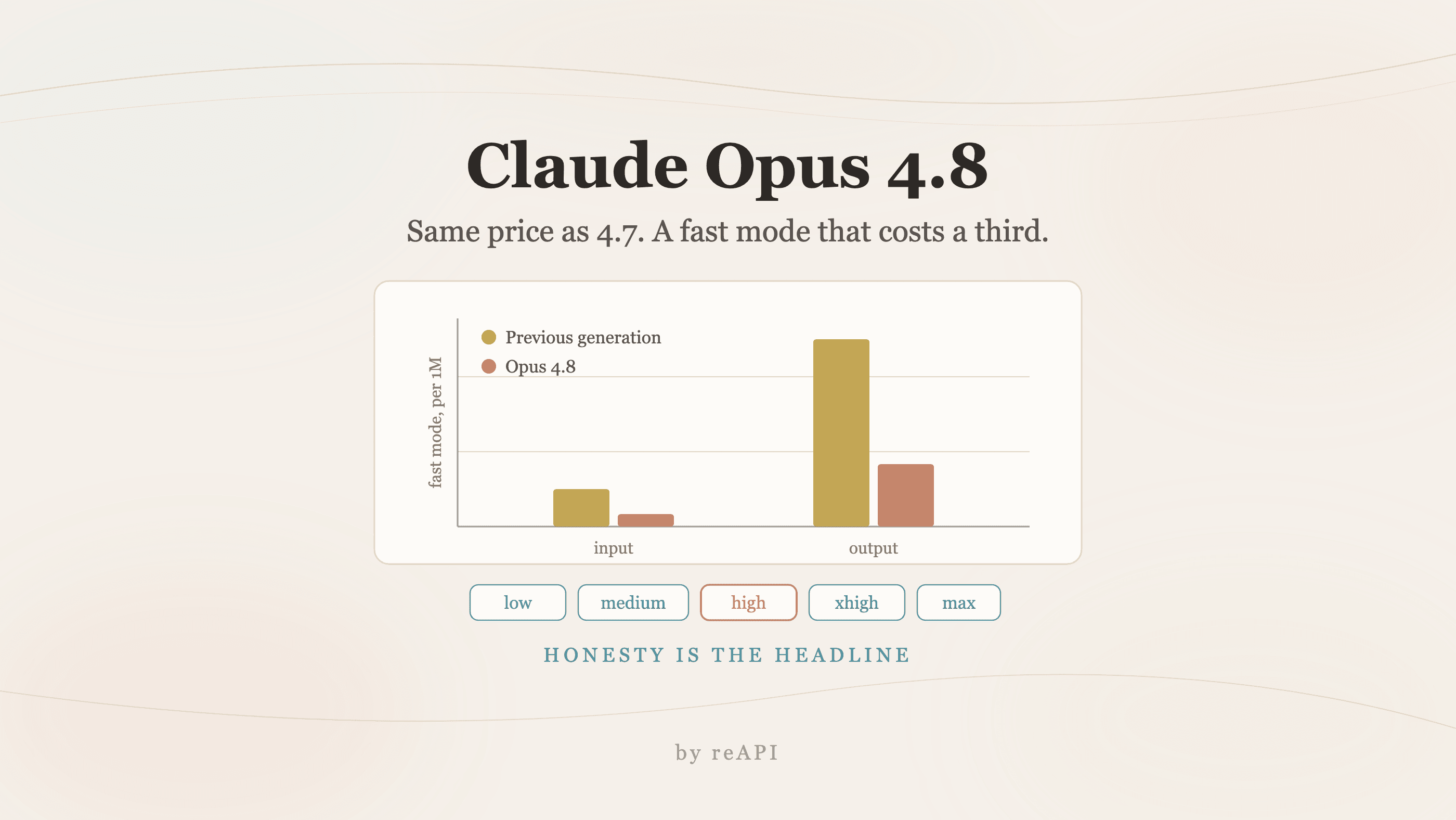
How to Use Claude Opus 4.8: Coding, Honesty, and Cost
How to use Claude Opus 4.8: the official benchmark table, the honesty gain, Dynamic Workflows, the effort default that moved, and what to plan when migrating.
Is Wan 3.0 Open Source? Weights, API Access, and Local Use
Wan 3.0 has an API, but no official open weights as of August 23, 2026. See what is available, what is not, and when Wan 2.2 is the local option.