Seedance 2.5の機能:30秒動画と50の参照素材
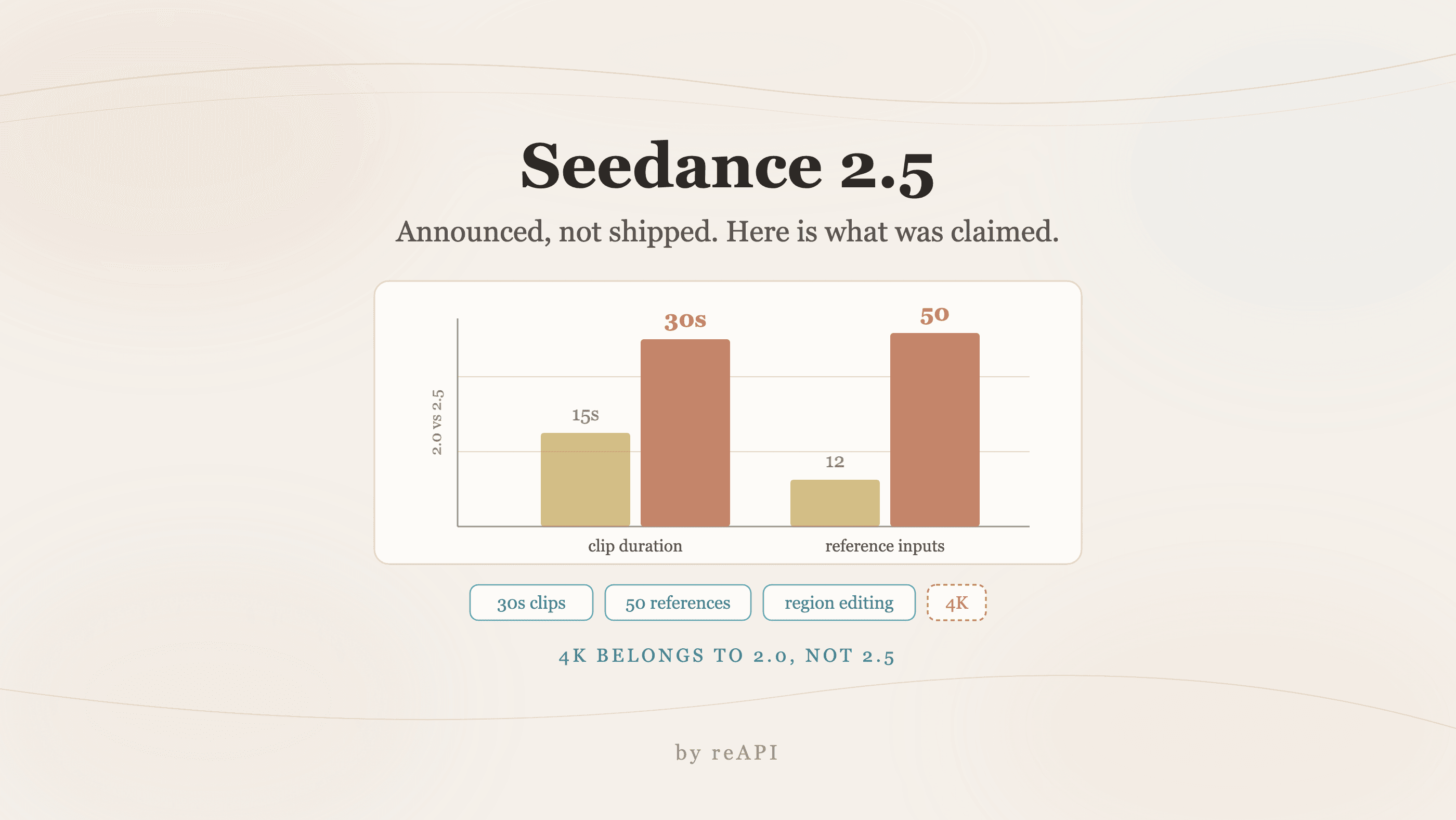
Seedance 2.5は30秒動画、最大50参照素材、リージョン編集に対応。4K対応はSeedance 2.0の機能です。reAPIで利用可能で、料金とドキュメント付き。
2026年6月23日、北京のVolcano Engine FORCE会議でByteDanceはSeedance 2.5(Doubaoビデオモデルの次期バージョン)をプレビューしました。Seedance 2.5の主な機能は、単一の連続した30秒動画の直接生成、1回の生成内で最大50個のマルチモーダル参照素材に対応、そしてリージョンレベルの編集です[1]。
6月のイベントはプレビューであり、リリースではありませんでした。その後状況は変わりました。2026年8月17日現在、Seedance 2.5はreAPIでdoubao-seedance-2.5-faceとして呼び出し可能であり、480p、720p、1080p出力と公開された本番料金に対応しています[3][4]。Seedance 2.5リリースステータスガイドは、発表からAPIアクセスへの遷移を追跡しています。
以下の機能説明は、ByteDanceの発表内容から独立して測定された結果を分けています。APIの利用可能性はこれらの主張をテスト可能にしますが、ベンダーのデモを独立したベンチマークに変えるわけではありません。
TL;DR
- 3つの発表された柱: 30秒単一クリップ(15秒から)、最大50のマルチモーダル参照素材(12から)、そしてリージョンレベルの編集と3Dプレビず[1]。
- ネイティブ4Kは含まれていません。 ネイティブ4Kパイプラインは同じイベントで発表されたSeedance 2.0ラインに属します。複数のメディアが両者を混合しました[1]。
- APIアクセスはreAPIでライブです: モデルID
doubao-seedance-2.5-faceを使用します。出力は480p、720p、または(2026年8月以降)1080pです[3][4]。 - 前身がすでにリード。 Seedance 2.0はArtificial AnalysisのText-to-Video Arenaで、オーディオ対応モデルの中で1,219のEloで#1です[2]。
- reAPI料金は公開されています: ソース動画なしで480pは$0.118589/s、720pは$0.266824/sです。ソース動画ありの料金は480pで$0.071153/s、720pで$0.160094/sです[3]。
ByteDanceが実際に発表したこと
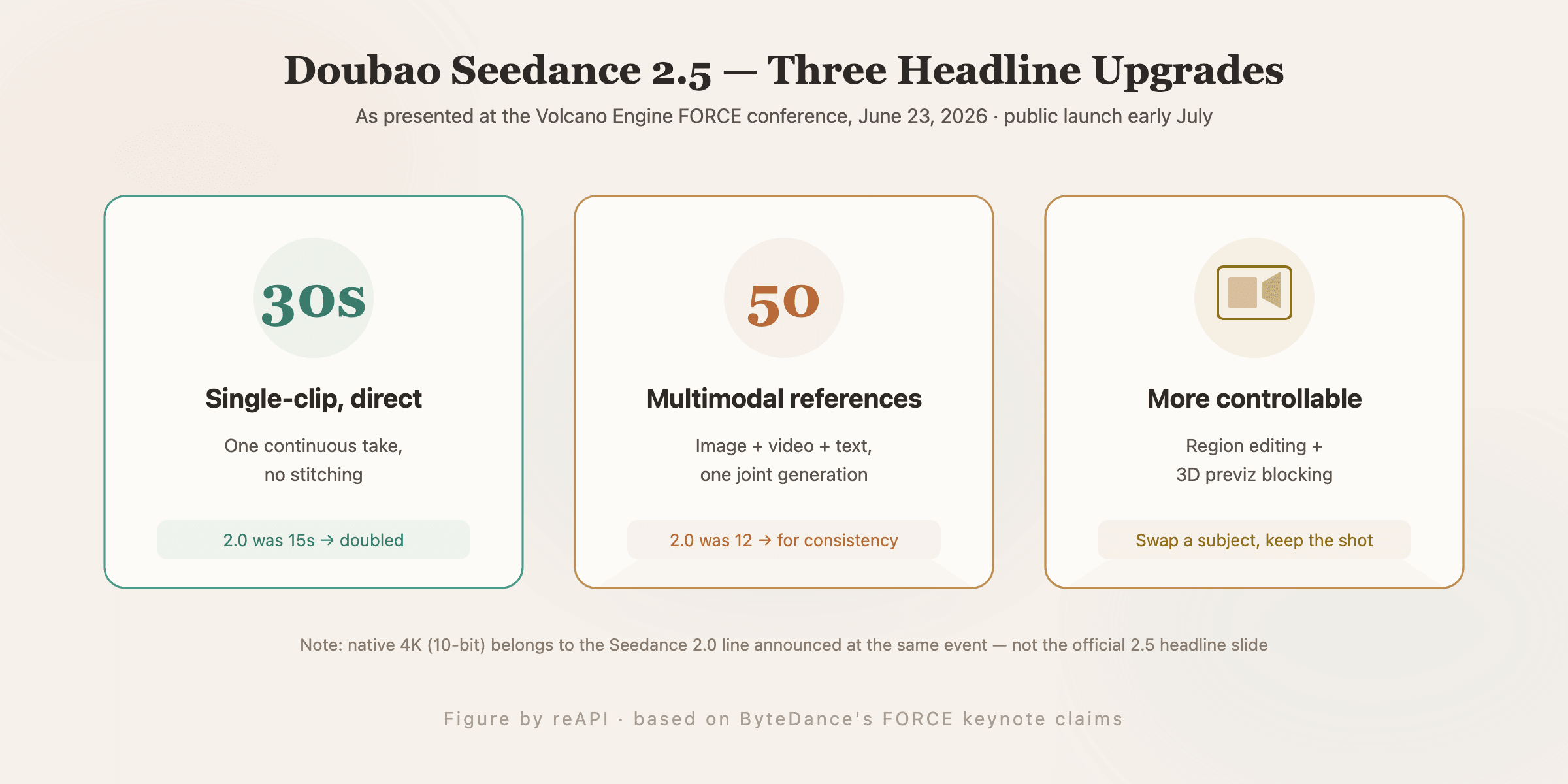
| 機能 | Seedance 2.0 | Seedance 2.5 |
|---|---|---|
| 単一クリップ期間 | 15秒 | 30秒、直接生成 |
| 参照素材 | 画像9個 + ビデオ3個 + オーディオ3個 | 画像30個 + ビデオ10個 + オーディオ10個 |
| 編集制御 | 限定的 | リージョンレベル編集 + 3Dプレビズ |
キーノートによれば、30秒クリップは複数の短いクリップを繋ぎ合わせるのではなく、1つのネイティブ生成として作成されます[1]。ライブのreAPI契約は、50参照の上限を30の画像、10の動画、10のオーディオクリップとして文書化しています[4]。
なぜ30秒が言うほど簡単でないのか
最大クリップ長を15秒から30秒に倍増させることは段階的に聞こえます。ビデオ生成では、それはより難しい問題の1つです。
ほとんどのモデルは数秒間品質を保ちますが、その後ドリフトします。キャラクターは微妙に外観を変え、照明がシフトし、動きは物理的な妥当性を失います。一般的な回避策は複数の短いクリップを生成して繋ぎ合わせることですが、これはすべての接合点で見える継ぎ目と連続性エラーを導入します[1]。
キュレーションされたデモの外で成立していれば、コヒーレントな30秒のテイクを直接生成することは、実際の制作税を取り除きます。ByteDanceがステージで名付けた形式(映画とTV前景化、広告、短編アニメーションドラマ)では、継続的な30秒は、使用可能なショットと手動修正が必要なクリップの違いです。
正直な注意点:単一の30秒クリップは上限です。完全なウィンドウ全体での継続的な品質は、独立したテストが確認する必要があります。
50参照は一貫性の取り組み
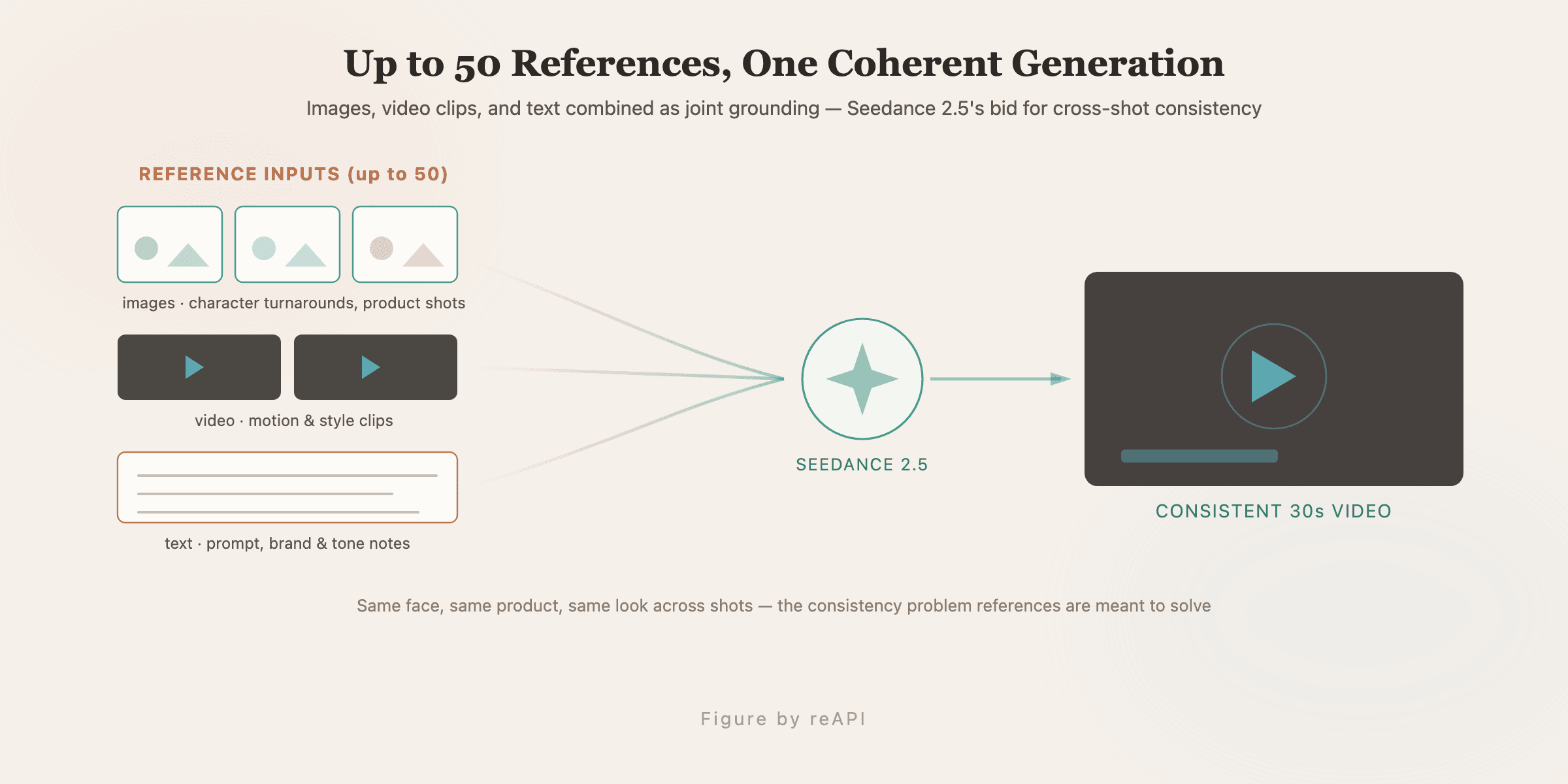
50参照入力への飛躍は、プロフェッショナルな仕事に最も関連するアップグレードです。リクエストは最大30の画像、10の動画、10のオーディオクリップを携帯できますが、より小さく明確に割り当てられたセットは通常、制御が容易です[4]。
実際には、これは一貫性への入札です。キャラクターのターンアラウンド、製品ショット、ブランドカラー、スタイルフレームをモデルに供給します。そうすれば、シーケンス全体で同じ顔、同じパッケージング、同じルックを保つための大幅に多いアンカリングが得られます。
広告主にとって、ショット全体での文字と製品忠実度が全体の仕事です。ロゴでドリフトするモデルは、モーションがいかに映画的であっても使用不可能です。
リージョン編集と3Dプレビズ
3番目の柱は制御です。ByteDanceはリージョンレベルの編集をデモしました:元のモーション、カメラの動き、照明を変更せずに、既存のショット内の被写体、背景、または製品を置き換えます[1]。
それはイテレーションに重要です。クリップ全体を再生成して残りが生き残ることを願う代わりに、1つの要素を交換して既に承認されたすべてを保つことができます。製品を異なるマーケットにローカライズするか、モデルを交換する場合、その対象編集は多くの場合、全体の仕事です。
キーノートはまた、3Dホワイトモデル前視覚化も示しました。これにより、クリエイターは全生成をコミットする前に、ラフな3Dシーンでショットとカメラの動きをブロックアウトできます[1]。これはストーリーボードとカメラブロッキングを生成ステップに引き込み、試行錯誤に任せません。
明確にする価値のある4Kの混乱
ネイティブ4K(4K 10-Bitを含む)はFORCEで議論されましたが、Seedance 2.0ラインに属し、期間、参照、編集制御で導くSeedance 2.5見出しスライドではありません[1]。
複数のメディアが4Kを2.5仕様シートに折り込みました。公式資料が示しているものなので、私たちはそれらを分けて保つこと、そして誤ったモデルに属するspecが正確にそれが購買決定に生き残る種類のエラーであるため。Seedance 2.5について知っていることについての前の記事は、同じプレスが主張する4K仕様にフラグを立てました。
出荷バージョンがどこに立つか
この記事は、独立したSeedance 2.5ベンチマークを引用しません。コンテキストについては、以下の7月スナップショットは、Seedance 2.0がニュートラルなブラインド人間選好リーダーボードのどこに立ったかを記録しています。
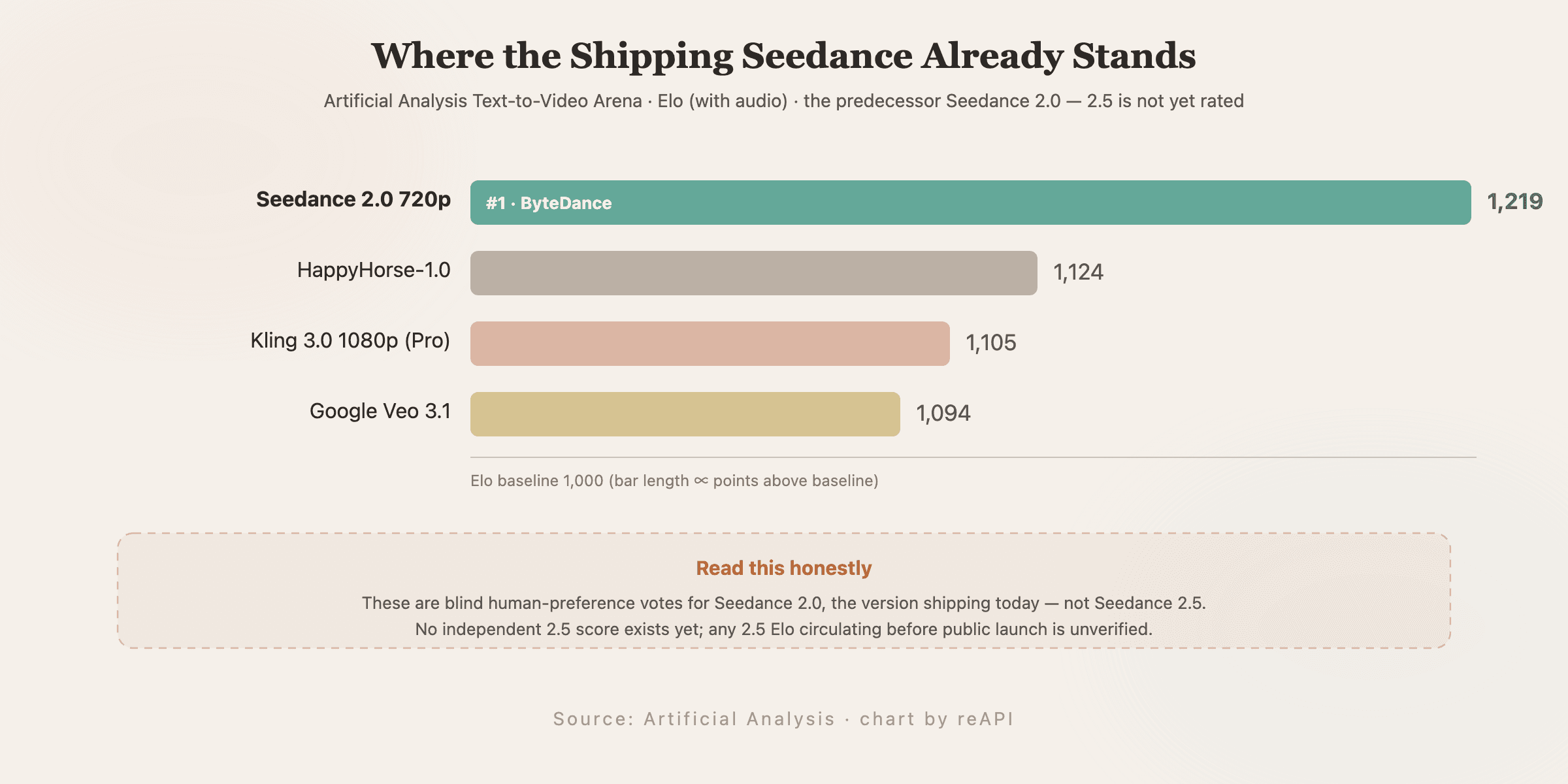
| モデル | Text-to-Video Arena Elo |
|---|---|
| Seedance 2.0 (720p) | 1,219 |
| HappyHorse-1.0 | 1,124 |
| Kling 3.0 1080p Pro | 1,105 |
| Google Veo 3.1 | 1,094 |
Seedance 2.0は現在、オーディオ対応モデル間で#1に位置し、Image-to-Videoボードも導いています[2]。アリーナの配置は、サンプルプロンプトの集約された人間選好を反映しており、すべてのブリーフでの保証された勝利ではなく、ましてや2.5番号ではありません。
それが伝えることは、2.5が構築する基準が既に分野の前線にあるということであり、アップグレードが証明する必要があるもののバーを上げます。
料金情報
reAPIでは、Seedance 2.5はソース動画が添付されていない場合、480pで1秒あたり$0.118589、720pで1秒あたり$0.266824の費用がかかります。5秒720pプロンプトまたは画像参照生成では、クレジット丸め後に1,335クレジットまたは$1.335を予約します[3]。
ソース動画ジョブはより低いレート(480pで$0.071153/s、720pで$0.160094/s)を使用しますが、異なる時計で実行されます。請求対象秒数は、出力秒数にソース動画の合計期間の丸め込みを加えたもの、またはceil(5 / 3 ×出力秒数)のより大きい方です[4]。割引レートに出力期間のみを乗じるのではなく、完全なリクエスト形状を比較してください。
これらのアップグレードが対象にする人
これはホビー向けの機能ではありません。一貫性と反復が仕事である人をターゲットにしています。
広告主とブランドチームが最も適切な適合です。50参照の上限は、キャンペーンが製品、ロゴ、すべてのショットでスポークスパーソンを保つことができるように存在し、リージョン編集は広告のローカライズを編集に変えず、リシュートに。
前視覚化チームは3Dホワイトモデルブロッキングとより長いテイクを取得します。これにより、ストーリーボードが生成ステップに入ります。
短編アニメーションスタジオは、連続した30秒クリップが有効にする正確なマルチショットナラティブ一貫性を必要とします。
ボリュームを生成するパフォーマンスマーケターは、コストポスチャが保たれるなら受け益します。なぜなら、多くのオンブランド変種を生成することの経済は決定的にシフトするからです。
具体的なケースを考えてください。消費者電子機器ブランドは4つのマーケットで同じ20秒のヒーロースポットが必要です。ドリフト傾向のある短編クリップモデルでは、その4つはほぼ最初からの生成と手動連続性修正です。参照スタックが製品を固定し、リージョン編集がタレントとパッケージングコピーのみをスワップする場合、バージョン2から4は最初の編集になります。同じモーション、同じ照明、別のマーケット。
このワークフローが、退屈なアップグレード、参照と編集が、見出しの30秒よりも重要である可能性がある理由です。
それが生きているので今テストすることは
3つの具体的なチェックは重要です。なぜなら、発表デモはキュレートされ、本番アクセスは繰り返し可能なテストを可能にするからです:
- 30秒クリップは最初から最後まで一貫性を保つか、 または、より短いモデルが快適ゾーンの外にドリフトされた場合と同じように、18秒でドリフトが表示されるか?
- 50参照は実際に保つか キャラクターとブランドをショット全体にわたって、またはマージナル参照は上限の前に貢献を停止しますか?
- リージョン編集はフレームの残りを手付かずのままにするか、 照明とカメラモーションを含めて?
これらのチェックが繰り返可能な結果を持つまで、能力の上限をベンダー仕様ではなく品質保証として扱ってください。
FAQ
Seedance 2.5は何に使われますか?
一貫性が求められる映像制作です。ショットをまたいで製品・ロゴ・出演者を同じ見た目に保つ広告キャンペーン、3Dホワイトモデルでブロッキングするプリビズ、30秒の連続テイクが必要なショートアニメーション、ブランドに沿ったバリエーションの大量制作などが代表例です。最大50件の参照素材と領域編集が、こうした作業を現実的にします。[1][4]
Seedance 2.5は今利用可能ですか?
はい。reAPIでは、呼び出し可能な本番モデルIDはdoubao-seedance-2.5-faceです。480p、720p、1080pの出力をサポートしています[3][4]。
Seedance 2.5は本当に30秒の動画を生成しますか?
ByteDanceはSeedance 2.0の15秒上限の倍である単一の連続した30秒クリップを指定します[1]。ライブreAPIルートはテストのためにこの期間を利用可能にしますが、完全なテイク全体の出力品質はプロンプトと参照に依存しています[4]。
Seedance 2.5はネイティブ4Kをサポートしていますか?
現在のreAPIルートではありません。Seedance 2.5は480p、720p、1080pをサポートします。4KにはSeedance 2.0を使用してください[4]。
Veo、Kling、Soraとどのように比較されますか?
この記事は、現在の独立したSeedance 2.5ベンチマークを引用しません。その比較テーブルは、2.5スコアではなく、引用された7月のSeedance 2.0リーダーボードスナップショットを記録しています[2]。
Seedance 2.5は何個の参照素材を取ることができますか?
reAPIで最大50:30画像、10動画、10オーディオクリップ[4]。
ByteDanceはFORCEで他に何を発表しましたか?
画像のためのSeedream 5.0、オーディオのためのSeed-Audio 1.0、テキストのためのDoubao 2.1 Pro、そして1日あたり約180兆トークンが処理されるプラットフォーム図を含む[1]。
reAPIを通じて今日Seedance 2.5を使用できますか?
はい。ビデオ生成エンドポイントにdoubao-seedance-2.5-faceを送信します。ライブモデルページは両方の解像度段階を公開し、APIドキュメントはリクエストと課金ルールをカバーしています[3][4]。
ライブリリースを明確に読む
Seedance 2.5は、現在のモデルが既に独立したビデオアリーナを導くチームからの自信のある主張のセットです。それが導くアップグレードは、一貫性と反復が1つの映画的なクリップよりも重要であるプロフェッショナル制作に対して正しいものです。
磨かれたステージデモとあなたのプロンプトで30秒全体で品質を保つモデルの間のギャップは、ライブAPIが今明かすことができるものです。公開された制限を制約として扱い、代表的なフッテージで上記のテストリストを実行し、4K出力が2.5ワークフローよりも重要な場合はSeedance 2.0を選択してください。
参考文献
- Volcano Engine. Seedance and the Doubao model family, announced at the FORCE conference. Retrieved July 2026 from volcengine.com
- Artificial Analysis. Text-to-Video Arena leaderboard. Retrieved July 2026 from artificialanalysis.ai/text-to-video/arena
- reAPI. Seedance 2.5 — live model page and production pricing. Retrieved August 17, 2026 from reapi.ai/models/seedance-2-5
- reAPI. doubao-seedance-2.5-face — model ID, supported resolutions, request schema, and source-video billing. Retrieved August 17, 2026 from reapi.ai/docs/seedance-2-5
参考になる記事
- reAPI. Seedance 2.5 release status. reapi.ai/blog/seedance-2-5-release-status
- reAPI. Seedance 2.5 status: API access, pricing, and limits. reapi.ai/blog/seedance-2-5-what-we-know-2026
- reAPI. Seedream 5.0 Pro and Seedance 2.5 workflow. reapi.ai/blog/seedream-5-0-pro-seedance-2-5-workflow
他の記事
著者

カテゴリ
他の記事

MiniMax H3ライセンス:地域・売上・条件
MiniMax H3はオープンウェイトですがApacheやMITではありません。販売地域の制限、$20M売上閾値、帰属ルール、セルフホスティングチェックリストをご紹介します。
Seedance 2.0とは?使い方を解説(2026年版)
Seedance 2.0の概要、公式サイト、利用可能な全プラットフォーム、APIの呼び出し方を解説。2026年7月に確認済みです。
70Bモデルを4GB GPUで動かす:AirLLM実用ガイド
70Bの大規模言語モデルは4GB GPUで本当に動くか?AirLLMのレイヤーストリーミング方式、必要なハードウェア、実装方法と性能課題を解説します。