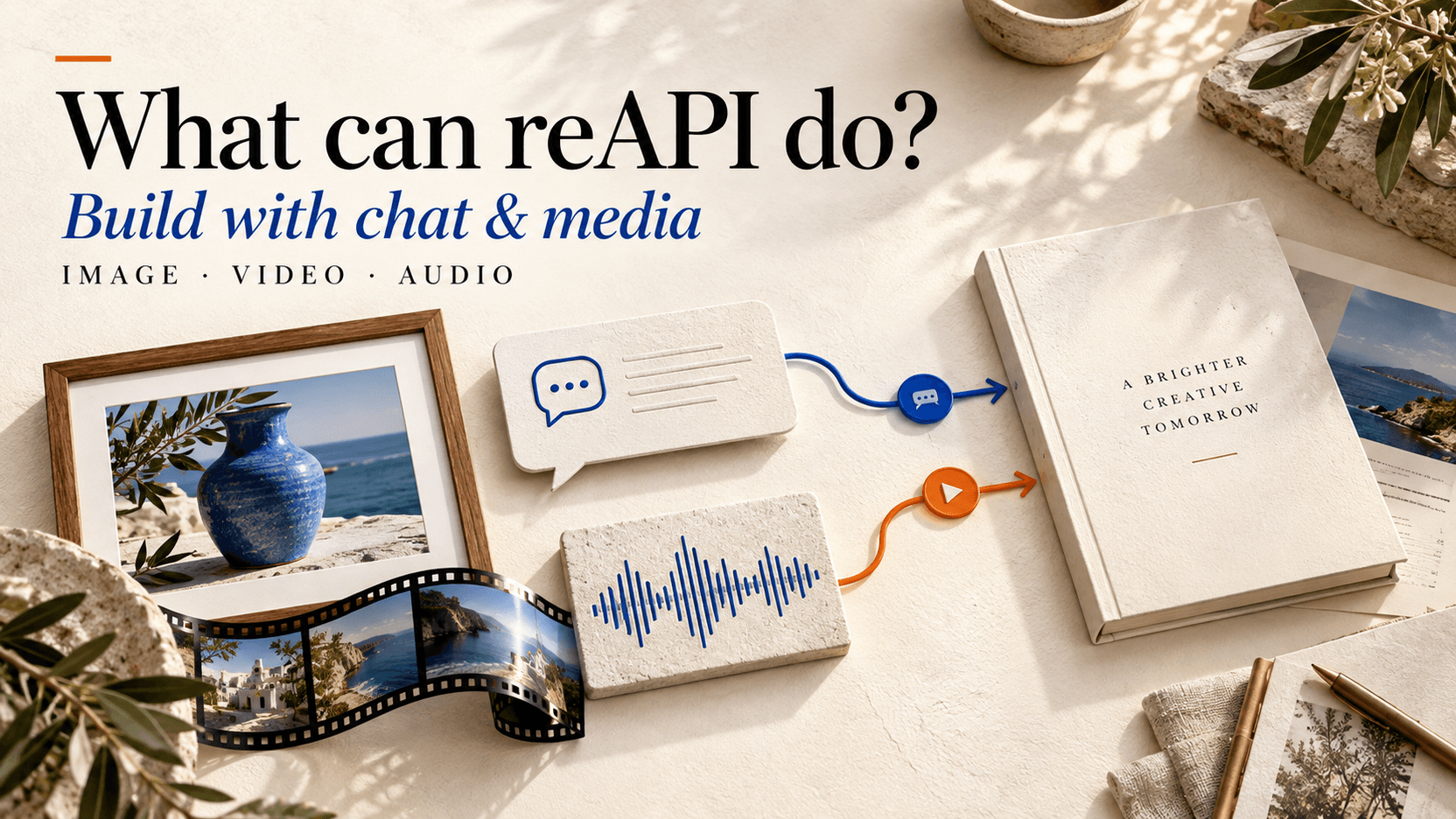
Was kann reAPI? Anwendungsfälle für Bild, Video und LLMs
Was kann reAPI heute? Getrennte Chat- und Medien-APIs decken Bild-, Video-, Audio- und Sprachmodelle ab – mit Praxisfällen und Setup-Checkliste.
Die meisten KI-Projekte brauchen nicht nur ein Modell, sondern mehrere: ein Chatmodell zum Schlussfolgern, ein Bildmodell für Assets, ein Videomodell für Clips und vielleicht zusätzlich ein Sprachmodell. reAPI stellt sie über zwei Gateways bereit: OpenAI-kompatiblen Chat unter https://api.reapi.ai/v1 und Medienaufgaben unter https://reapi.ai/api/v1. Die Gateways haben getrennte Schlüssel und Guthaben; Preise und Abrechnungseinheiten werden für jedes Modell veröffentlicht. Dieser praktische Überblick zeigt, was reAPI heute leistet, für wen es geeignet ist und wie du es einsetzt.
Was ist reAPI?
reAPI ist eine Plattform für generative KI mit mehr als 200 Chat-, Bild-, Video- und Audiomodellen. Vorhandener OpenAI-Code kann das Chat-Gateway nach dem Austausch von Base-URL und Schlüssel nutzen, während Bild und Video als asynchrone Aufgaben über das Medien-Gateway laufen. Jedes Gateway hat einen eigenen Workspace, eigene Zugangsdaten und ein eigenes Guthaben.
Eine API für Text, Bild, Video und Audio
Bei reAPI geht es um breite Abdeckung, ohne jeden Modellanbieter einzeln zu integrieren. Die beiden Gateways decken Folgendes ab:
- Text und Schlussfolgern: GPT-5, Claude Opus 4.8, Gemini.
- Bild: GPT-Image-2, Gemini 3 Pro Image, Imagen 4, Seedream 5.0.
- Video: Veo 3.1, Seedance 2.0, Wan 2.7, Kling.
- Audio und Musik: Mureka V9 und verschiedene Sprachwerkzeuge.
Innerhalb eines Gateways wechselst du zwischen unterstützten Modellen, indem du einen Modell-String änderst, statt einen neuen Anbieter einzubinden.
Von Grund auf OpenAI-kompatibel
Das Chat-Gateway folgt den Konventionen von OpenAI. Die meisten OpenAI-Clients funktionieren daher, wenn nur Base-URL und Schlüssel geändert werden. Dein bereits für OpenAI geschriebener Code erreicht dann unterstützte Chatmodelle wie Claude und Gemini. Medienmodelle verwenden die separate asynchrone Task-API.
Passt in Automatisierungsabläufe
Weil die Chat-Schnittstelle das OpenAI-Format verwendet, lässt sich reAPI in jedes Werkzeug einbinden, das einen OpenAI-kompatiblen Endpunkt akzeptiert – von Agent-Frameworks bis zu No-Code-Automatisierungsplattformen. Richte das Werkzeug auf die Chat-Base-URL von reAPI, füge einen Chat-Schlüssel ein und es kann die unterstützten Chatmodelle aufrufen. Die Medienendpunkte folgen einem Submit-then-poll-Muster, das zu Warteschlangen und geplanten Aufgaben passt.
Für wen reAPI gedacht ist
- SaaS-Start-ups, die KI-Funktionen ergänzen, ohne für jede Fähigkeit einen anderen Anbieter anzubinden.
- Unternehmensteams, die einen gebündelten Modellzugang in getrennten Chat- und Medien-Workspaces möchten.
- Entwickler von KI-Automatisierungen, die Modelle in Workflows und No-Code-Plattformen einbauen.
- KI-Produktentwickler, die Modelle austauschen müssen, sobald neue erscheinen.
- Agenturen und Marketingteams, die Bilder und Videos zu vorhersehbaren Kosten pro Ergebnis produzieren.
Fünf Dinge, die du heute mit reAPI bauen kannst
1. Kundenseitige KI-Funktionen in einem SaaS-Produkt
Füge deiner Anwendung einen Chatassistenten, einen Bildgenerator und eine Kurzvideo-Funktion hinzu, ohne jeden Modellanbieter einzeln zu integrieren. Weil der Chat OpenAI-kompatibel ist, braucht der Assistent nur eine andere Base-URL; Bild und Video rufen die separaten Medien-Task-Endpunkte auf. Verwende jeweils den Schlüssel und das Guthaben des betreffenden Gateways. Erscheint innerhalb desselben Gateways ein besseres Modell, richtest du den Aufruf darauf aus, ohne neuen Anbietervertrag und ohne neue Integration.
2. Produktion von Content und Marketingmaterial
Erzeuge Produktbilder, Social-Media-Assets und kurze Videoclips zu veröffentlichten modellspezifischen Preisen. GPT-Image-2 beginnt bei $0.0066 pro Bild. Seedance 2.0 Mini in 480p kostet ohne Quellvideo $0.038 pro Ausgabesekunde oder mit Quellvideo $0.024 pro Abrechnungssekunde; dabei zählt die Ausgabezeit plus die aufgerundete Gesamtdauer der Quellvideos. Ein Team kann mit einem Chatmodell ein Storyboard erstellen und anschließend einen separat finanzierten Medien-Workspace nutzen, um Standbilder zu rendern und die wichtigsten Aufnahmen zu animieren.
3. Agenturarbeit für viele Kunden
Lass die Mediengenerierungen aller Kunden über den Medien-Workspace laufen und ordne die Nutzung über einzelne Schlüssel zu. Nutze für Angebote die veröffentlichte Rate und Abrechnungseinheit des jeweiligen Modells. So entfällt der Abgleich eines separaten Kontos für jedes vorgelagerte Modell.
4. Forschung und Prototyping
Vergleiche Modelle ohne Wegwerfkonten. Teste GPT-5 gegen Claude Opus 4.8 im A/B-Vergleich, indem du nur einen String änderst, und probiere auf dieselbe Weise ein anderes Bildmodell aus. Neue Konten erhalten kostenlose Credits, sodass die Bewertung ohne Vorabkosten beginnt.
5. KI-Automatisierung und No-Code-Workflows
Verbinde das OpenAI-kompatible Chat-Gateway von reAPI mit einer Automatisierungsplattform, um etwa eingehende Dokumente zusammenzufassen. Vorschaubilder und Clips laufen über das separate REST-/Task-Medien-Gateway mit eigenem Key und Guthaben; das Chat-Gateway verwendet einen anderen Key und ein anderes Guthaben. Das Submit-then-poll-Muster für Medien eignet sich für geplante und ereignisgesteuerte Aufgaben.
Ein typischer Rollout
Teams beginnen in der Regel klein und erweitern schrittweise. In der ersten Woche läuft eine einzelne Funktion über einen Schlüssel: ein Chatassistent, der auf die Base-URL von reAPI zeigt, oder ein Bildendpunkt in einem vorhandenen Formular. Weil die Chat-Schnittstelle OpenAI-kompatibel ist, bedeutet diese erste Integration einen Wechsel der Base-URL und keine Neuentwicklung.
Danach kann ein Team weitere Modelle im selben Gateway ergänzen oder beim Hinzufügen einer anderen Modalität den zweiten Workspace einrichten. Ein Supportwerkzeug, das Tickets zusammenfasst, kann über das separat authentifizierte Medien-Gateway einen Generator für Vorschaubilder ergänzen; eine Medien-Pipeline kann ein weiteres Bild- oder Videomodell ohne neues Konto beim vorgelagerten Anbieter nutzen.
Auch die veröffentlichten modellspezifischen Preise helfen. Die jeweils geltende Abrechnungseinheit bleibt bei wachsendem Volumen sichtbar, sodass sich eine im Pilotprojekt getestete Funktion auch im größeren Maßstab kalkulieren lässt.
reAPI vs. OpenRouter vs. CometAPI
Alle drei bieten Zugriff auf Modelle mehrerer Anbieter. Unterschiede bestehen beim API-Design, bei der Tiefe der Modalitäten, der Preisgestaltung und dem Einstieg.
| reAPI | OpenRouter | CometAPI | |
|---|---|---|---|
| Modalitäten | Bild, Video, Audio, Chat | Hauptsächlich Text, etwas multimodal | Text, Bild, Video, Audio |
| Preisgestaltung | Veröffentlichte Preise je Modell und Aufgabe | Durchgereichter Tarif + 5,5 % Gebühr beim Credit-Kauf | Rund 20 % unter offiziellen Tarifen |
| Videogenerierung | Kuratiert (Veo, Seedance, Wan, Kling) | Teilweise, per Routing | Ja (Sora, Veo, Kling) |
| Kostenloser Einstieg | Kostenlose Credits | Kleines Kontingent + kostenlose Modelle | Test-Credits |
| Am besten für | Medien plus LLMs, veröffentlichte Preise | Breite Auswahl an Textmodellen | Einheitlicher vergünstigter Zugriff |
OpenRouter reicht den Tarif des Anbieters durch und erhebt beim Kauf von Credits eine Gebühr von 5,5 % (mindestens $0.80)[2]. CometAPI liegt preislich etwa 20 % unter den offiziellen Tarifen[3]. Der Vorteil von reAPI ist die kuratierte Tiefe bei Medien, vor allem bei Video, zusammen mit führenden LLMs und veröffentlichten modellspezifischen Preisen.
Wann reAPI die richtige Wahl ist
reAPI passt am besten, wenn ein Projekt mehr als ein Modell verwendet und du vorhersehbare veröffentlichte Preise ohne getrennte Upstream-Integrationen möchtest. Wenn du immer nur ein Textmodell direkt aufrufst, ist die Konsolidierung weniger wichtig. Chat und Medien benötigen weiterhin ihre jeweiligen Schlüssel und Guthaben.
Setup-Checkliste für deine erste Integration
- Melde dich für Chat bei api.reapi.ai an, erstelle einen Chat-Schlüssel und richte einen OpenAI-Client auf
https://api.reapi.ai/v1. - Erstelle für Bild und Video einen Medien-Schlüssel auf reapi.ai, sende POST-Anfragen an
https://reapi.ai/api/v1und frage anschließendGET /api/v1/tasks/{id}ab. - Lade das Guthaben des für die Anfrage verwendeten Workspaces auf und überwache es dort.
- Halte Chat- und Medien-Schlüssel getrennt; sie authentifizieren nicht gatewayübergreifend.
- Implementiere auf deiner Seite Wiederholungsversuche; reAPI dedupliziert nicht und erstattet fehlgeschlagene Aufgaben automatisch.
FAQ
Was kann reAPI, was eine API eines einzelnen Anbieters nicht kann?
reAPI deckt mehrere Modalitäten und Modelle mehrerer Anbieter ab, ohne für jeden vorgelagerten Anbieter ein eigenes Konto oder eine eigene Integration zu benötigen. Chat und Medien bleiben getrennte reAPI-Workspaces mit eigenen Schlüsseln und Guthaben.
Eignet sich reAPI für die Videogenerierung?
Ja. reAPI bietet eine kuratierte Videoauswahl mit Veo 3.1, Seedance 2.0, Wan 2.7 und Kling. Jedes Modell veröffentlicht seine Abrechnungseinheit; Seedance 2.0 wird nach Dauer und Konfiguration statt pauschal pro Video berechnet.
Kann reAPI meine OpenAI-Integration ersetzen?
Für den Chat ja. Der meiste OpenAI-Client-Code funktioniert nach dem Wechsel der Base-URL auf https://api.reapi.ai/v1 und mit einem Schlüssel des Chat-Workspaces. Medienmodelle verwenden https://reapi.ai/api/v1 und einen separaten Medien-Schlüssel statt des OpenAI-Clients.
Funktioniert reAPI mit No-Code- und Automatisierungswerkzeugen?
Jedes Werkzeug, das einen OpenAI-kompatiblen Endpunkt akzeptiert, kann die Chatmodelle von reAPI über dessen Base-URL aufrufen. Die Mediengenerierung verwendet Submit-then-poll-Endpunkte, die zu geplanten oder ereignisgesteuerten Workflows passen.
Wie halte ich die Kosten vorhersehbar?
Medien und Chat veröffentlichen modellspezifische Preise und belasten getrennte Workspace-Guthaben. Fehlgeschlagene Medienaufgaben werden automatisch erstattet, sodass du nicht für ein fehlgeschlagenes Rendering zahlst.
reAPI praktisch einsetzen
In einem Satz: reAPI bietet Zugriff auf Modelle mehrerer Anbieter über ein OpenAI-kompatibles Chat-Gateway und ein separates asynchrones Medien-Gateway mit veröffentlichten Preisen je Modell und Aufgabe. Erstelle den passenden Schlüssel für den benötigten Workspace, verwende das Guthaben dieses Gateways und teste den Anwendungsfall, der deiner Arbeitslast am nächsten kommt.
Weiterführende Informationen
- reapi.ai/models — alle Bild-, Video-, Audio- und Chatmodelle durchsuchen.
- Was ist reAPI? — Plattform, Preise und Funktionsweise.
- Die besten Alternativen zu fal.ai — wie reAPI im Medienbereich abschneidet.
Quellen
- reAPI. API-Überblick — Base-URL, Authentifizierung und asynchrone Aufgaben. Abgerufen im Mai 2026 von reapi.ai/docs/api
- OpenRouter. Dokumentations-FAQ — durchgereichte Preise und Credit-Gebühren. Abgerufen im Mai 2026 von openrouter.ai/docs/faq
- CometAPI. Preise — Modelltarife unter den offiziellen Preisen. Abgerufen im Mai 2026 von cometapi.com/pricing
Autor

Kategorien
Weitere Beiträge

Background-Removal-API: Kosten pro verwertbarem Bild
Background Removal API Preise ab Live-Kalkulation, dann abgelehnte Ausgaben, Wiederholungen, Speicher und Review addieren für echte Bildkosten.

FLUX 3 Image bearbeiten: Referenzbilder und Bounding Boxes
FLUX 3 Image gezielt bearbeiten: Referenzbilder ordnen, Bounding Boxes im Prompt nutzen, Koordinaten verstehen und unveränderte Bildbereiche sorgfältig prüfen.

MiniMax-H3-Lizenz: Territorium, Schwelle, Bedingungen
MiniMax H3 ist Open-Weight, aber nicht Apache oder MIT. Territoriale Ausschlüsse, $20M Umsatzschwelle, Attributierungspflicht und Selbsthosting-Checkliste.