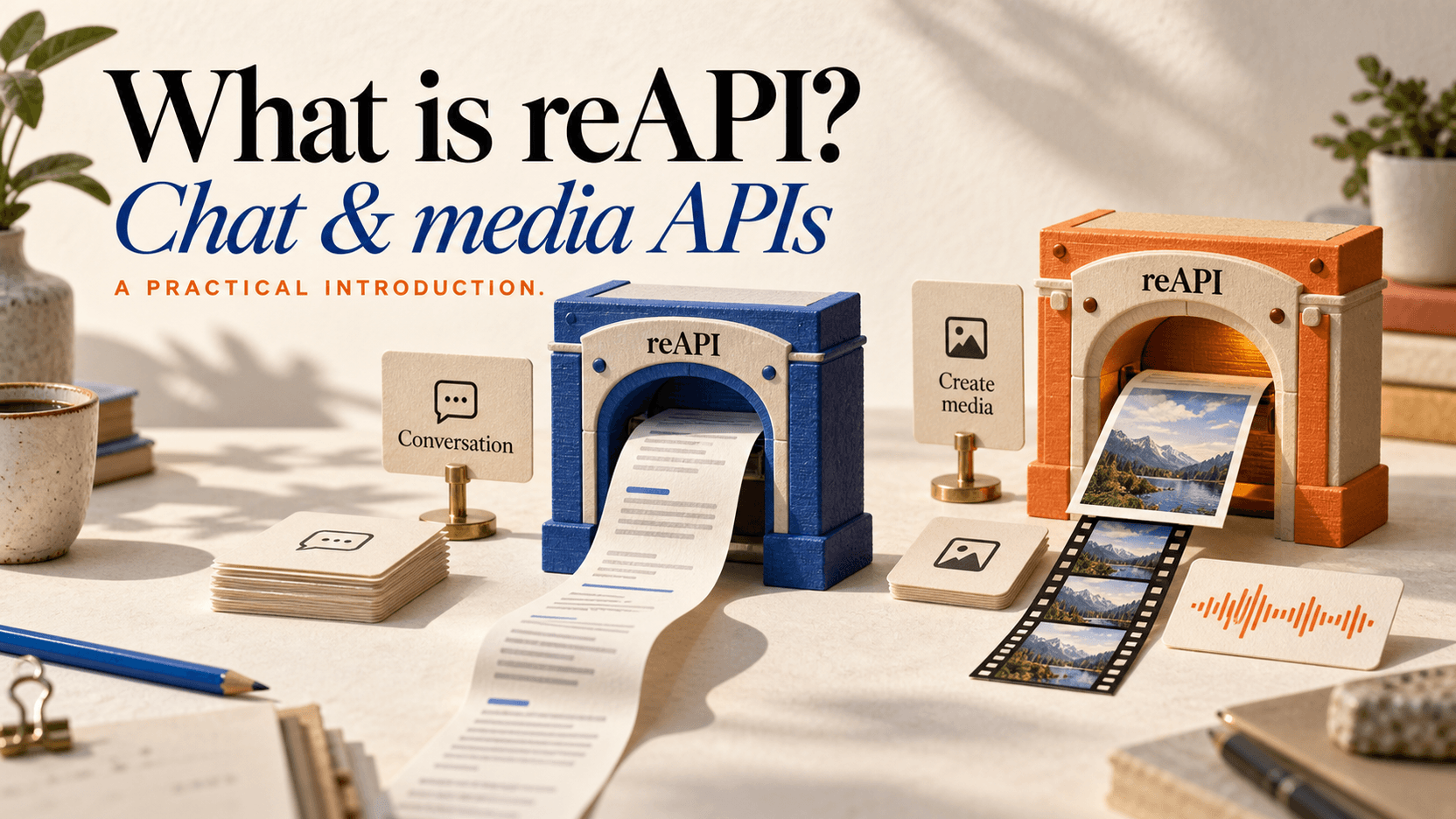
Was ist reAPI? Modelle, Preise und Nutzung 2026
reAPI bietet Chat- und Medien-APIs für über 200 Bild-, Video-, Audio- und Sprachmodelle. Erfahren Sie, was sie bietet, kostet und wie der erste Aufruf gelingt.
reAPI bietet Zugang zu generativer KI in allen Modalitäten. Chat und Medien verwenden getrennte Gateways, Schlüssel und Guthaben: Das Chat-Gateway nutzt das OpenAI-Format, während das Medien-Gateway Bild-, Video- und Audioaufgaben verarbeitet. Zusammen decken sie mehr als 200 Modelle ab, ohne dass für jeden Modellanbieter eine eigene Integration nötig ist.
Dieser Leitfaden erklärt, was reAPI ist, welche Modelle verfügbar sind, was die Nutzung kostet und wie Sie Ihren ersten Aufruf ausführen. Alle unten gezeigten Endpoints und Codebeispiele gehören zur echten API. Nach dem Erstellen eines Schlüssels können Sie sie kopieren und direkt ausführen.
Was ist reAPI?
reAPI ist eine KI-Modellplattform mit zwei API-Gateways:
- Chatmodelle:
https://api.reapi.ai/v1, synchron und OpenAI-kompatibel. - Bild, Video und Audio:
https://reapi.ai/api/v1, asynchron. Sie senden einen Auftrag, erhalten sofort eine Task-ID und fragen den Status ab, bis die Aufgabe abgeschlossen ist.
Jedes Gateway hat einen eigenen Workspace, API-Schlüssel und ein eigenes Guthaben. Ein auf einem Gateway erstellter Schlüssel authentifiziert nicht am anderen.
So deckt eine Anbieterbeziehung GPT-5, Claude Opus 4.8 und Gemini für Text sowie Veo 3.1, Seedance 2.0 und GPT-Image-2 für Medien ab – ohne vier getrennte Anbieterbeziehungen.
Zentrale Funktionen und Vorteile
- Zwei zweckgebundene Gateways. Eines dient dem OpenAI-kompatiblen Chat, das andere asynchronen Medienaufgaben.
- OpenAI-kompatibler Chat. Vorhandener OpenAI-Code lässt sich direkt weiterverwenden; ändern Sie lediglich Basis-URL und Schlüssel.
- Modellspezifische Live-Preise. Preis und Abrechnungseinheit hängen vom Modell und der Aufgabe ab; maßgeblich ist die aktuelle Preistabelle.
- Alle Modalitäten. Text, Bild, Video und Audio sind über die beiden Gateways verfügbar.
- Verbrauchsabhängige Credits. Kein Abonnement und kein Mindestumsatz; 1 Credit entspricht $0.001, und neue Konten erhalten kostenlose Start-Credits.
- Automatische Erstattung bei Fehlern. Schlägt eine Generierung fehl, werden die Credits unmittelbar nach dem Fehlstatus zurückgebucht – ohne Support-Ticket.
So funktioniert reAPI
Jede Anfrage wird mit einem Bearer-Token authentifiziert:
Authorization: Bearer rk_live_xxxxxxxxxxxxErstellen Sie den passenden Schlüssel für das Gateway, das Sie aufrufen. Chat-Schlüssel stammen von api.reapi.ai; Medien-Schlüssel erstellen Sie auf der Seite API Keys von reapi.ai. Schlüssel und Guthaben gelten nicht über beide Workspaces hinweg.
Chat-Anfragen liefern ihre Antwort wie bei OpenAI in einem einzigen Durchlauf. Medienanfragen sind asynchron, weil das Rendern von Bildern und Videos einige Sekunden bis Minuten dauern kann:
POST /api/v1/images/generations   →   { task_id, status: "processing" }
        │
        ▼
GET  /api/v1/tasks/{task_id}       →   processing → completed / failed
                                          │
                                          ▼
                                   output.image_urls
reAPI ruft das Upstream-Modell für jede von Ihnen gesendete Anfrage genau einmal auf. Es gibt keine Idempotenz-Deduplizierung: Jeder erfolgreiche POST erstellt eine Aufgabe und belastet Credits. Dadurch wird keine Anfrage unbemerkt übersprungen, und eine fehlgeschlagene Aufgabe wird automatisch erstattet.
Ein Chatmodell im OpenAI-Format aufrufen
Da die Chat-Schnittstelle OpenAI-kompatibel ist, funktioniert das offizielle OpenAI-SDK mit nur zwei Änderungen: der Basis-URL und dem Schlüssel.
from openai import OpenAI

client = OpenAI(
    base_url="https://api.reapi.ai/v1",
    api_key="YOUR_CHAT_API_KEY",
)

resp = client.chat.completions.create(
    model="gpt-5.5",
    messages=[
        {"role": "user", "content": "Tell me what reAPI does in one sentence."},
    ],
)
print(resp.choices[0].message.content)
Ersetzen Sie model durch claude-opus-4-8 oder ein Gemini-Modell; der Rest des Aufrufs bleibt identisch. Dasselbe Muster funktioniert im Node-SDK und in allen OpenAI-kompatiblen Werkzeugen.
Ein Bild generieren
Senden Sie zuerst den Auftrag und fragen Sie anschließend seinen Status ab:
curl https://reapi.ai/api/v1/images/generations \
  -H "Authorization: Bearer rk_live_xxx" \
  -H "Content-Type: application/json" \
  -d '{
    "model": "gpt-image-2",
    "prompt": "a cute red panda eating bamboo, photorealistic",
    "size": "1:1"
  }'
Die Antwort kommt sofort mit einer Task-ID und status: "processing" zurück. Fragen Sie den Status ab, bis die Aufgabe abgeschlossen ist:
curl https://reapi.ai/api/v1/tasks/task_018f5a3a1b6e7d9f8c2b4d6e8f0a2c4e \
  -H "Authorization: Bearer rk_live_xxx"
Sobald status den Wert completed hat, finden Sie das Bild unter output.image_urls[0]; es wird auf dem CDN von reAPI bereitgestellt. Fragen Sie ungefähr alle ein bis zwei Sekunden ab. Bildaufgaben sind meist nach wenigen Sekunden fertig.
Ein Video generieren
Videos folgen demselben Muster aus Senden und Abfragen, allerdings über den Video-Endpoint:
curl https://reapi.ai/api/v1/videos/generations \
  -H "Authorization: Bearer rk_live_xxx" \
  -H "Content-Type: application/json" \
  -d '{
    "model": "doubao-seedance-2.0-face",
    "prompt": "a drone shot flying over a coastal city at sunset",
    "resolution": "720p"
  }'
Videos benötigen länger als Bilder; passen Sie die Abfragefrequenz entsprechend an. Die Aufgabe erreicht completed, und das Ergebnis liegt unter output.video_urls[0]. Die für ein Modell gültigen Anfragefelder sind auf der jeweiligen Modellseite dokumentiert.
Was kostet reAPI?
reAPI wird nach Verbrauch abgerechnet, ohne Abonnement und ohne Mindestumsatz. Credits sind die Abrechnungseinheit: 1 Credit entspricht $0.001 und wird pro Aufruf verbraucht. Neue Konten beginnen mit kostenlosen Credits, sodass die erste Anfrage nichts kostet.
Medien verwenden modellspezifische Abrechnungseinheiten, etwa pro Bild, Generierung oder Video-Sekunde:
| Modell | Typ | Ab |
|---|---|---|
| GPT-Image-2 | Bild | $0.0066 / Bild |
| Seedance 2.0 Mini (480p) | Video | $0.038 / Ausgabesekunde ohne Quellvideo; $0.024 / Abrechnungssekunde mit Quellvideo (Ausgabezeit plus aufgerundete Gesamtdauer der Quellvideos) |
| Veo 3.1 Fast | Video | $0.207 / Generierung |
Chatmodelle werden pro Token zu den veröffentlichten modellspezifischen Preisen abgerechnet. Fehlgeschlagene Aufgaben werden automatisch vollständig erstattet, sodass Sie nur für Ausgaben bezahlen, die Sie tatsächlich erhalten.
Zuverlässigkeit und Abrechnung, verständlich erklärt
Bevor Sie auf reAPI aufbauen, sollten Sie einige Regeln der Plattform kennen.
Die Medienabrechnung verwendet Credits: Ein Credit entspricht $0.001 und wird vom Guthaben des Medien-Workspaces abgezogen; eine Monatsgebühr oder einen Mindestumsatz gibt es nicht. Die Chat-Nutzung wird separat im Chat-Workspace abgerechnet. Sobald eine Medienaufgabe mit einem Fehler endet, erfolgt die Erstattung automatisch und atomar, noch bevor eine Statusabfrage den Fehler sehen kann. Sie wird genau einmal ausgeführt.
reAPI ruft das Upstream-Modell für jede Anfrage genau einmal auf, ohne Idempotenz-Deduplizierung. Das hält die Abrechnung transparent: Sie zahlen für die von Ihnen ausgeführten Aufrufe, werden nie unbemerkt doppelt belastet und keine Anfrage wird stillschweigend übersprungen. Für sichere Wiederholungen sollten Sie jeden Payload auf Ihrer Seite nur einmal senden oder nach der automatischen Erstattung erneut übermitteln.
Anfragen sind pro Benutzer auf fünf pro Sekunde begrenzt; Statusabfragen zählen dazu. Fragen Sie deshalb ungefähr alle ein bis zwei Sekunden ab. Generierte Dateien werden auf dem reAPI-CDN bereitgestellt. Kopieren Sie Inhalte, die Sie langfristig benötigen, nach Abschluss der Aufgabe in Ihren eigenen Speicher.
reAPI im Vergleich zum direkten Anbieteraufruf
Beim direkten Zugriff benötigen Sie für jeden Anbieter ein eigenes Konto, einen Schlüssel, ein SDK und eine Rechnung. reAPI bündelt diesen Zugang in seinen Chat- und Medien-Workspaces.
| Anbieter direkt aufrufen | reAPI | |
|---|---|---|
| Konten und Schlüssel | Einer pro Anbieter | Getrennte Chat- und Medien-Workspaces |
| Abrechnung | Eine Rechnung pro Anbieter | Getrennte Chat- und Medienguthaben |
| Preise | Offizielle Preise | Veröffentlichte Preise je Modell und Abrechnungseinheit |
| Modellwechsel | Neue Integration pro Anbieter | Zeichenfolge ändern |
| Fehlgeschlagene Aufrufe | Je nach Anbieter behandelt | Automatisch erstattet |
Modelle auf reAPI
Der Katalog deckt alle Modalitäten ab. Eine Auswahl der verfügbaren Modelle:
- Chat und Reasoning: GPT-5.5, GPT-5.4, Claude Opus 4.8, Claude Sonnet 4.6, Gemini.
- Bild: GPT-Image-2, Gemini 3 Pro Image, Imagen 4, Seedream 5.0.
- Video: Veo 3.1, Seedance 2.0, Wan 2.7, Kling, HappyHorse 1.0, PixVerse V6, Vidu Q3.
- Audio und Musik: Mureka V9 sowie Sprachwerkzeuge für Bereinigung, Trennung und Konvertierung.
Durchsuchen Sie den vollständigen Katalog unter reapi.ai/models. Dort finden Sie für jedes Modell das Anfrageschema und den Preis.
Wer nutzt reAPI?
Die Plattform eignet sich für jedes Team, das mehr als ein Modell verwendet:
- SaaS-Produkte, die KI-Funktionen ergänzen, ohne für jede Fähigkeit eine eigene Anbieterintegration aufzubauen.
- Content- und Marketingteams, die Bilder und Videos zu veröffentlichten modellspezifischen Preisen generieren.
- Agenturen, die Kundenprojekte über planbare Guthaben mit nutzungsabhängiger Abrechnung abrechnen.
- Forschende, die Modelle per A/B-Test vergleichen, indem sie eine Zeichenfolge statt eines Kontos ändern.
FAQ
Ist reAPI mit OpenAI kompatibel?
Ja, für Chat. Richten Sie einen OpenAI-Client mit einem im Chat-Workspace erstellten Schlüssel auf https://api.reapi.ai/v1, und Ihr vorhandener Code funktioniert. Bild und Video verwenden die asynchronen Task-Endpoints unter https://reapi.ai/api/v1 mit einem separaten Medien-Schlüssel.
Wie viel kostet reAPI?
Die Abrechnung erfolgt nach Verbrauch, ohne Abonnement. Ein Credit entspricht $0.001; Preise und Abrechnungseinheiten unterscheiden sich je Modell und Aufgabe, und neue Konten erhalten kostenlose Credits. Die aktuelle Preistabelle ist maßgeblich; GPT-Image-2 beginnt zum Beispiel bei $0.0066 pro Bild.
Welche Modelle unterstützt reAPI?
Mehr als 200 Chat-, Bild-, Video- und Audiomodelle, darunter GPT-5, Claude Opus 4.8, Gemini, Veo 3.1, Seedance 2.0, Wan 2.7 und GPT-Image-2. Die vollständige Liste finden Sie unter reapi.ai/models.
Benötige ich getrennte Schlüssel für Chat und Medien?
Ja. Chat und Medien sind getrennte Workspaces mit getrennten Schlüsseln und Guthaben. Ein Chat-Schlüssel authentifiziert nicht am Medien-Gateway und ein Medien-Schlüssel nicht am Chat-Gateway.
Was passiert, wenn eine Generierung fehlschlägt?
Die Credits werden automatisch und vollständig erstattet, sobald die Aufgabe mit einem Fehler endet. Die Erstattung erfolgt einmalig und noch bevor eine Statusabfrage den Fehler erkennt, sodass Sie nie für ein fehlgeschlagenes Rendering bezahlen.
Dedupliziert reAPI wiederholte Anfragen?
Nein. Jeder erfolgreiche POST an einen Generierungs-Endpoint erstellt absichtlich eine neue Aufgabe und verbraucht Credits, damit kein Upstream-Aufruf unbemerkt übersprungen wird. Sorgen Sie auf Ihrer Seite für sichere Wiederholungen.
Wie lege ich los?
Erstellen Sie für Medien ein Konto auf reapi.ai und legen Sie unter API Keys einen Medien-Schlüssel an. Melden Sie sich für Chat bei api.reapi.ai an und erstellen Sie dort einen Chat-Schlüssel. Senden Sie anschließend die oben passende Anfrage.
Weiterführende Informationen
- reapi.ai/docs/api — vollständige API-Konventionen und Task-Referenz.
- Was kann reAPI für Sie tun? — Anwendungsfälle für Bild, Video und LLMs.
- Die besten Alternativen zu fal.ai — Vergleich von reAPI mit einer reinen Medien-API.
Erste Schritte mit reAPI
reAPI nimmt Ihnen die Arbeit zwischen Ihrer Anwendung und einem Modell ab. Verwenden Sie https://api.reapi.ai/v1 mit einem Schlüssel des Chat-Workspaces für OpenAI-kompatiblen Chat oder https://reapi.ai/api/v1 mit einem Schlüssel des Medien-Workspaces für Bild-, Video- und Audioaufgaben. Die Workspaces haben getrennte Guthaben; erstellen und finanzieren Sie deshalb denjenigen, der zur benötigten API passt.
Autor

Kategorien
Weitere Beiträge

OpenRouter Preise: Gebühren, Limits der Gratis-Modelle und eine günstigere Option
OpenRouter Preise erklärt: Tokens zum Listenpreis, 5.5% Gebühr auf Credits, Tageslimits der kostenlosen Modelle, Verfall und Erstattung von Credits und wo reAPI pro Token weniger kostet.
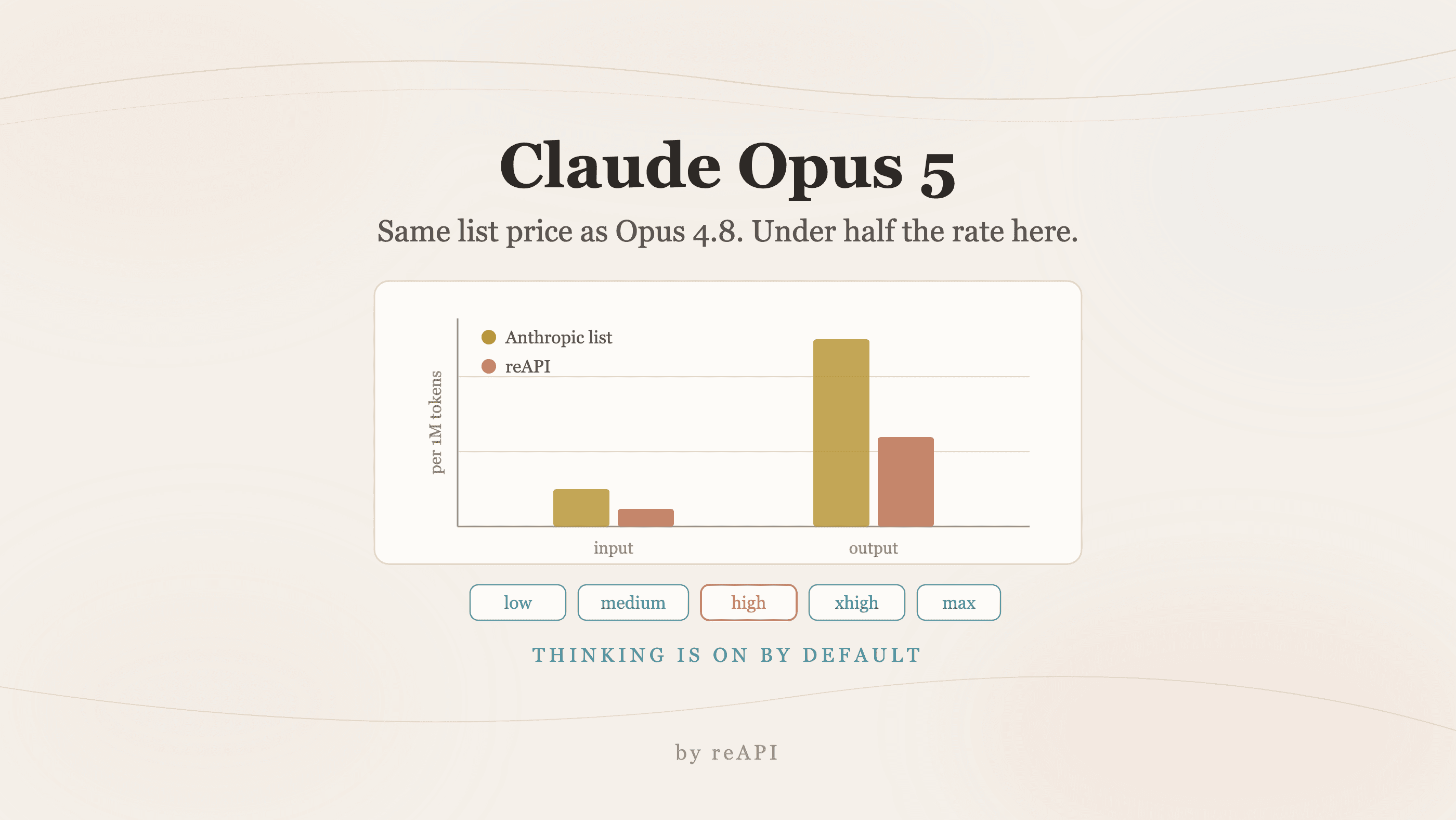
Claude Opus 5: Benchmarks, Effort-Stufen und Kosten
Claude Opus 5 nutzen: offizielle Benchmark-Tabelle, die Effort-Leiter die deine Rechnung bestimmt, zwei Breaking-API-Changes und Migrationschritte.

fal.ai-Alternativen 2026: 5 Plattformen im Vergleich
Auf der Suche nach fal.ai-Alternativen 2026? Vergleiche Replicate, Together AI, RunPod, Hugging Face und reAPI bei Modellen, Preisen, Tempo und API-Design.