Claude Opus 5: Benchmarks, Effort-Stufen und Kosten
Claude Opus 5 nutzen: offizielle Benchmark-Tabelle, die Effort-Leiter die deine Rechnung bestimmt, zwei Breaking-API-Changes und Migrationschritte.
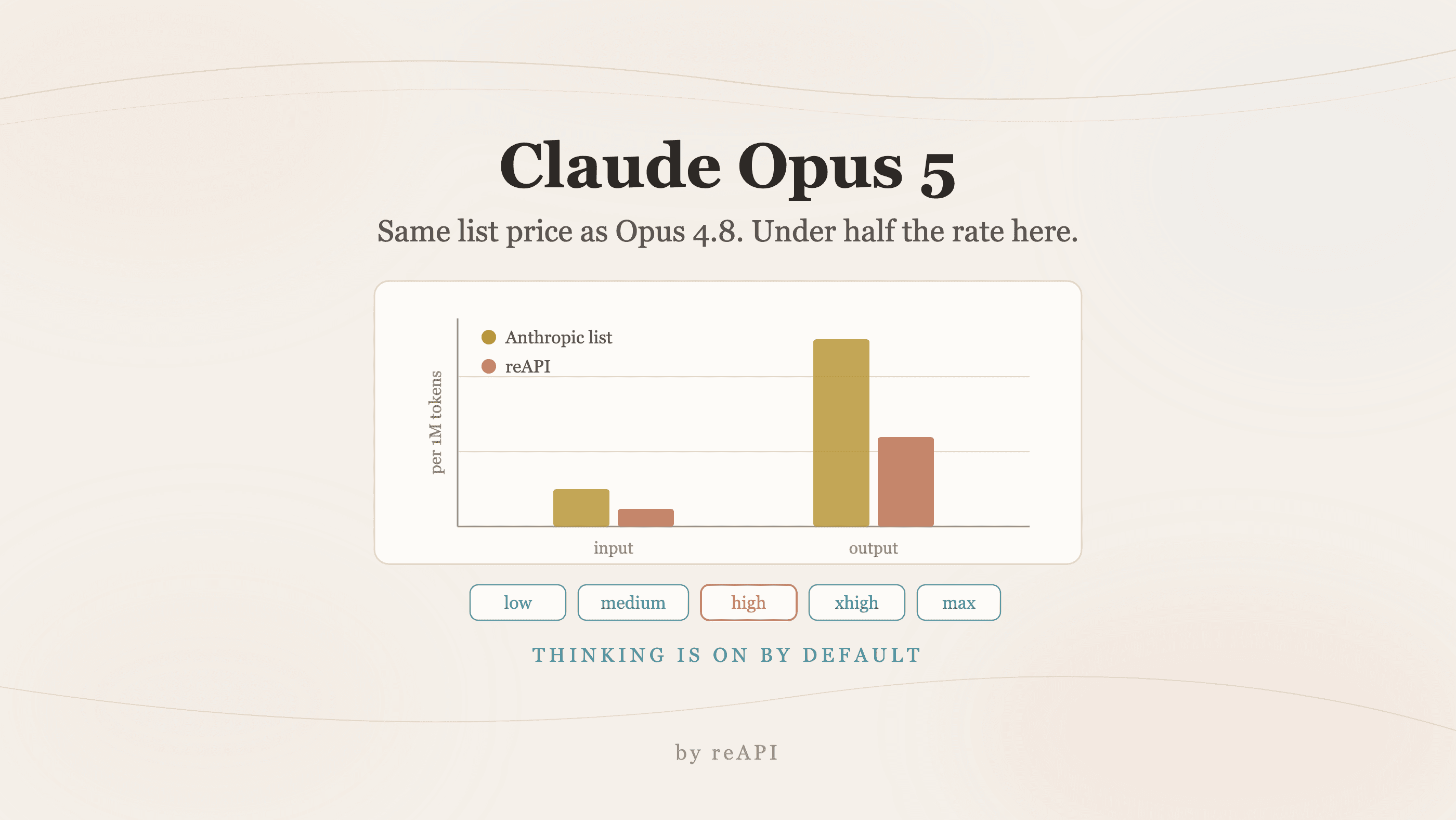
Anthropic hat Claude Opus 5 am 24. Juli 2026 gestartet und nennt es einen Qualitätssprung über Claude Opus 4.8 hinaus[6]. Der Preis ist exakt derselbe wie beim Modell, das es ersetzt: 5 $ pro Million Input-Token und 25 $ pro Million Output-Token[3]. Wie man Claude Opus 5 gut nutzt, hat also fast nichts mit der Preisliste zu tun, die sich nicht bewegt hat, und fast alles mit einem Regler zu tun, den die meisten Teams nie anfassen.
Dieser Regler heißt Effort. Statt eines Wertes pro Benchmark veröffentlicht Anthropic Score-versus-Kosten-Kurven über alle fünf Effort-Stufen[1]. Der Spread zwischen der billigsten und der teuersten Sprosse dieser Kurven ist breiter als alles, das ein Prompt-Rewrite zurückholt, und die offizielle Empfehlung ist, die Leiter gegen eigene Evals zu durchsuchen, statt alles hochzufahren[2].
TL;DR
- Gleiche Listenpreise, anderes Modell. 5 $ / 25 $ pro Million Tokens, unverändert seit Opus 4.8[2]. Bei reAPI läuft dasselbe Modell für 2,40 $ / 12,00 $, das sind 48 % des veröffentlichten Satzes von Anthropic.
- Thinking ist jetzt standardmäßig an. Bei Opus 4.8 bedeutete Auslassen des
thinking-Felds kein Thinking. Bei Opus 5 denkt dieselbe Anfrage[2]. Damax_tokensThinking plus Response-Text zusammen deckelt, führen mitgebrachte enge Budgets zu Abbruch. - Thinking ausschalten ist gedeckelt bei Effort
high. Das Senden vonthinking: {"type": "disabled"}mitxhighodermaxgibt 400 zurück, je Anfrage geprüft[2]. - Opus 5 gewinnt nicht alles. Anthropics eigene Tabelle zeigt es verlierend gegen GPT-5.6 Sol bei agentic coding auf DeepSWE v1.1: 68,8 % gegen 72,7%[1].
- Erbe Effort-Einstellungen nicht. Anthropic sagt,
lowundmediumerzeugen jetzt starke Qualität mit Bruchteilen der Tokens und Latenz, und rät, mit dem Defaulthighzu starten und dich in beide Richtungen gegen eigene Evals zu bewegen[2]. - Priority Tier deckt das nicht ab, und es sitzt in seinem eigenen Rate-Limit-Bucket, nicht im gemeinsamen Opus-Pool[5][4].
Was Claude Opus 5 ist
Anthropic positioniert Claude Opus 5 für komplexes agentic Coding und Enterprise-Arbeit[2]. Die API-Kennung ist claude-opus-5, kein Datum-Suffix zum Anhängen.
| Eigenschaft | Claude Opus 5 |
|---|---|
| API-Modell-ID | claude-opus-5 |
| Context-Fenster | 1 M Tokens, sowohl Standard als auch Maximum |
| Max Output | 128k Tokens |
| Listenpreis | 5 $ / 25 $ pro Million Input / Output Tokens |
| Fast Mode | 10 $ / 50 $, nur Claude API |
| Thinking | Standardmäßig an, adaptiv |
| Effort-Stufen | low, medium, high, xhigh, max, Standard high |
| Prompt-Cache Minimum | 512 Tokens, runter von 1.024 |
Es gibt keine kleinere Context-Variante[2]. Das 1-M-Fenster ist, was du bekommst. Über die Claude API hinaus ist das Modell auf Amazon Bedrock als anthropic.claude-opus-5 verfügbar, auf Google Cloud als claude-opus-5, und auf Microsoft Foundry[2]. Fast Mode ist die Ausnahme: es läuft nur auf der Claude API, nicht auf einer der drei Cloud-Plattformen[2].
Die vollständige offizielle Benchmark-Tabelle
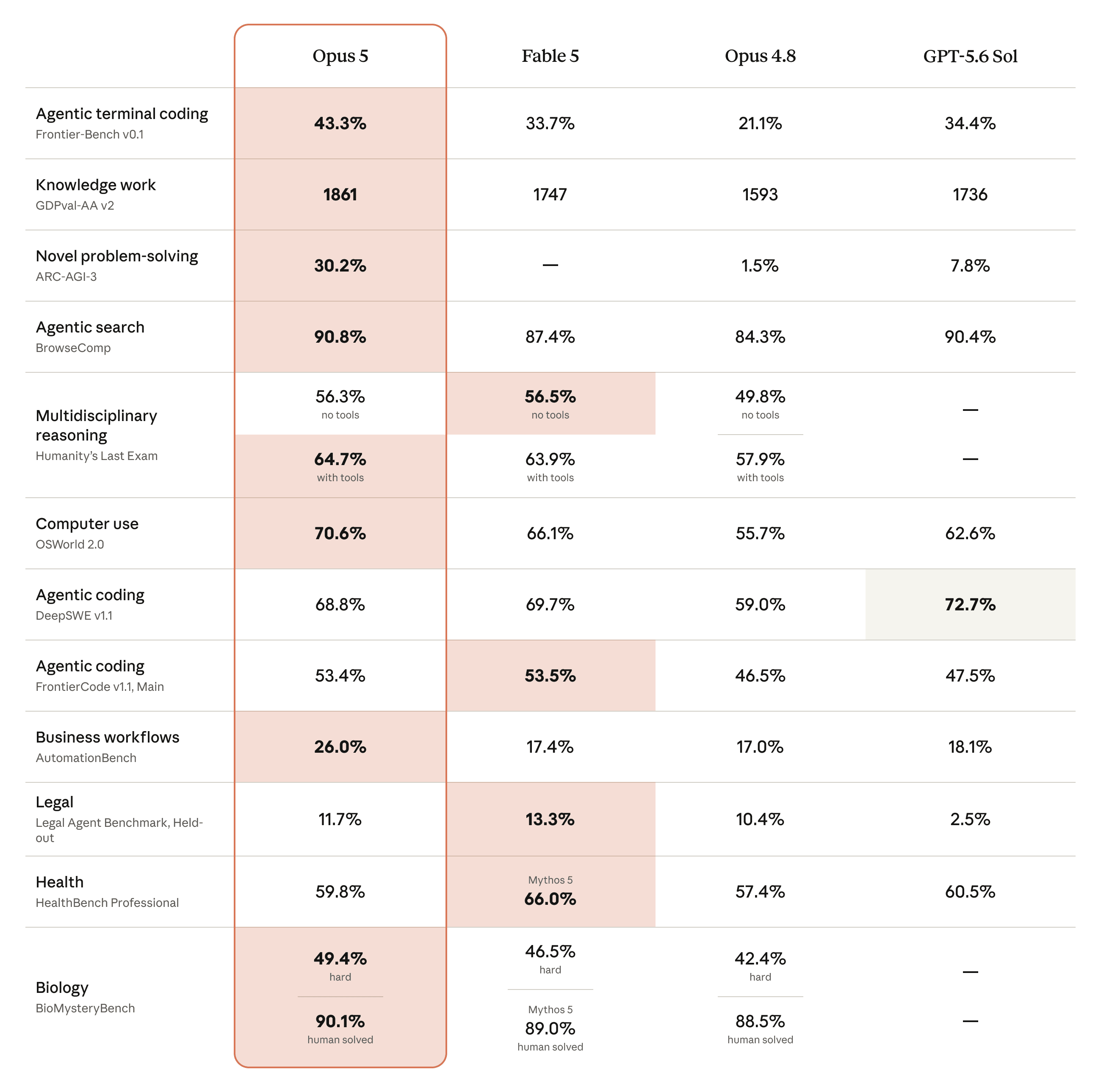
Das ist Anthropics veröffentlichter Vergleich, vollständig transkribiert, einschließlich der Zeilen, bei denen Opus 5 nicht gewinnt[1]. Wenn die Fable 5 Spalte einen anderen Modellnamen trägt, ist das Anthropics eigene Anmerkung.
| Benchmark | Opus 5 | Fable 5 | Opus 4.8 | GPT-5.6 Sol |
|---|---|---|---|---|
| Agentic Terminal Coding (Frontier-Bench v0.1) | 43,3% | 33,7% | 21,1% | 34,4% |
| Knowledge Work (GDPval-AA v2, Elo) | 1861 | 1747 | 1593 | 1736 |
| Novel Problem-Solving (ARC-AGI-3) | 30,2% | — | 1,5% | 7,8% |
| Agentic Search (BrowseComp) | 90,8% | 87,4% | 84,3% | 90,4% |
| Multidisciplinary Reasoning (HLE, no tools) | 56,3% | 56,5% | 49,8% | — |
| Multidisciplinary Reasoning (HLE, with tools) | 64,7% | 63,9% | 57,9% | — |
| Computer Use (OSWorld 2.0) | 70,6% | 66,1% | 55,7% | 62,6% |
| Agentic Coding (DeepSWE v1.1) | 68,8% | 69,7% | 59,0% | 72,7% |
| Agentic Coding (FrontierCode v1.1, Main) | 53,4% | 53,5% | 46,5% | 47,5% |
| Business Workflows (AutomationBench) | 26,0% | 17,4% | 17,0% | 18,1% |
| Legal (Legal Agent Benchmark, held-out) | 11,7% | 13,3% | 10,4% | 2,5% |
| Health (HealthBench Professional) | 59,8% | 66,0% (Mythos 5) | 57,4% | 60,5% |
| Biology (BioMysteryBench, hard) | 49,4% | 46,5% | 42,4% | — |
| Biology (BioMysteryBench, human-solved) | 90,1% | 89,0% (Mythos 5) | 88,5% | — |
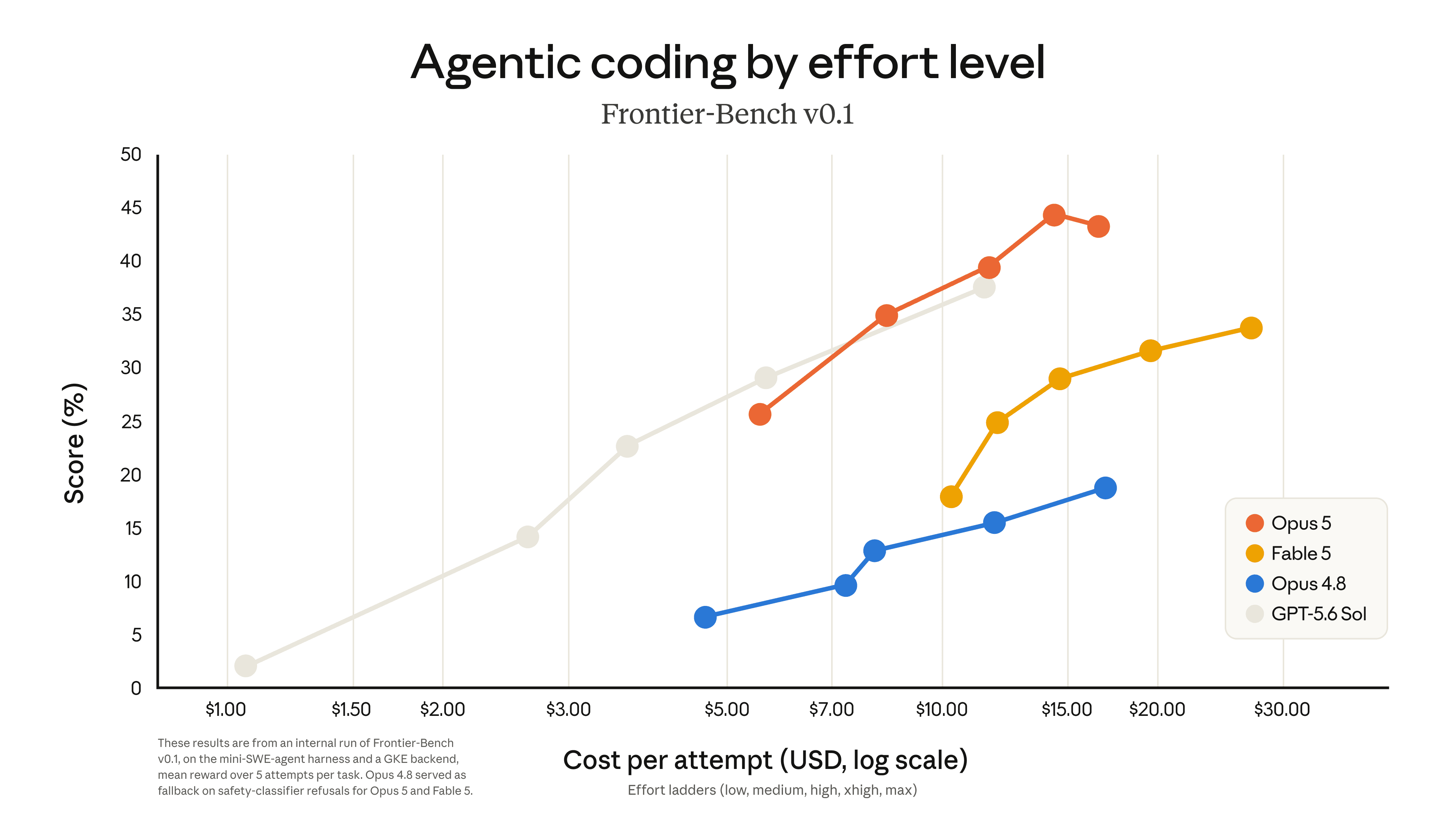
Eine Methode-Anmerkung, bevor irgendjemand diese Zahlen zitiert. Im Begleitchart, das Frontier-Bench nach Effort-Stufe aufschlüsselt, sagt Anthropic, dass diese Ergebnisse aus einem internen Run auf dem Mini-SWE-Agent-Harness mit GKE-Backend kommen, durchschnittliche Belohnung über fünf Versuche pro Task, und dass Opus 4.8 als Fallback diente, wenn Safety Classifier eine Anfrage von Opus 5 oder Fable 5 ablehnten[1]. Das sind Vendor-run Evaluations. Lies sie als Richtungssignal, nicht als neutrale Prüfung.
Wo es gewinnt und wo es verliert
Opus 5 nimmt neun der vierzehn Zeilen. Die Gewinn-Spannweiten sind nicht subtil. Frontier-Bench geht von 21,1 % auf Opus 4.8 auf 43,3 %, leicht mehr als doppelt. ARC-AGI-3 geht von 1,5 % auf 30,2 %, und der nächste Konkurrent in dieser Zeile ist GPT-5.6 Sol bei 7,8 %. AutomationBench sitzt bei 26,0 % gegen ein Cluster von 17 % bis 18%[1].
Es verliert die anderen fünf, und diese sind nützlicher zum Modell-Picking als die Gewinne.
- DeepSWE v1.1, agentic coding: 68,8 % gegen GPT-5.6 Sols 72,7 %. Das ist der klarste Verlust im Board, und er landet auf der Workload, für die Opus 5 vermarktet wird. Anthropic ließ die Zeile drin.
- HealthBench Professional: 59,8 %, hinter Mythos 5 bei 66,0 % und GPT-5.6 Sol bei 60,5 %.
- Legal Agent Benchmark: 11,7 % gegen Fable 5s 13,3 %. Beide Zahlen sind tief genug, dass der Benchmark hauptsächlich Entfernung vom Ziel misst.
- HLE ohne Tools (56,3 % gegen 56,5 %) und FrontierCode Main (53,4 % gegen 53,5 %) sind Unentschieden im Rauschen, aber sie widersprechen dem Claim, Opus 5 dominiert Fable 5 durchgängig.
Das Muster: Opus 5 gewinnt, wenn eine Task lang läuft, Tools nutzt und State über viele Schritte halten muss. Es endet oder verliert bei einzelnen schweren Fragen.
Die Effort-Leiter bestimmt deine Rechnung
Anthropic veröffentlicht die volle Score-versus-Kosten-Leiter statt einer Zahl pro Benchmark, und das Lesen ändert, wie du das Modell konfigurierst[1].
Drei Dinge folgen daraus.
Die oberste Sprosse ist nicht der empfohlene Startpunkt. Anthropics Anleitung ist, mit dem Standard high zu starten und in beide Richtungen basierend auf eigenen Evals anzupassen: runter, wo Qualität hält um Tokens und Latenz zu sparen, rauf für die anspruchsvollste Arbeit[2]. Merke, wo dieser Satz anfängt. Der empfohlene Einstiegspunkt ist die Mitte der Leiter, nicht die Spitze, und Effort trägt jetzt mehr Gewicht, weil Opus 5 zusätzlichen Effort zuverlässiger in bessere Ergebnisse umsetzt als jedes frühere Opus-Modell[2].
Low und Medium sind stärker als früher. Anthropic hebt die Effizienz bei niedrigerer Anstrengung explizit hervor und sagt, low und medium erzeugen starke Qualität zu einem Bruchteil der Tokens und Latenz höherer Einstellungen[2]. Effort-Defaults von Opus 4.8 sind der falsche Startpunkt.
Effort ist der Kostenhebel, nicht der Prompt. Die offizielle Anleitung ist, mit dem Standard high zu starten, dann in beide Richtungen basierend auf eigenen Evals zu bewegen: runter, wo Qualität hält um Tokens und Latenz zu sparen, rauf für die anspruchsvollste Arbeit[2]. Bei xhigh oder max setze ein großes max_tokens, damit das Modell Raum zum Denken und Handeln über Subagents und Tool-Aufrufe hat[2].
Zwei Breaking Changes unter der Haube
Die Request-Oberfläche ist meist von Opus 4.8 geerbt. Sampling-Parameter werden immer noch abgelehnt, feste Thinking-Budgets werden immer noch abgelehnt, und Prefill der letzten Assistant-Turn schlägt immer noch fehl. Zwei Dinge haben sich geändert, und beide brechen unmodifiziert mitgebrachten Code.
Thinking läuft, wenn du den Parameter auslässt. Bei Opus 4.8 lief eine Request ohne thinking-Feld ohne Thinking. Bei Opus 5 denkt dieselbe Request, wobei das Modell bei jedem Turn entscheidet, wann und wie viel[2]. Der Wire-Wert hat sich nicht geändert; thinking: {"type": "adaptive"} ist immer noch gültig und äquivalent zum Standard. Was sich änderte, ist, was passiert, wenn du nichts sagst. Da max_tokens eine Hard Limit auf Thinking plus Response-Text zusammen ist, sagt Anthropic dir, das für jede Workload zu überprüfen, die vorher ohne Thinking lief[2]. Ein für sichtbare Output allein abgestimmtes Budget wird jetzt mitten in der Antwort abbrechen.
Thinking ausschalten braucht Effort high oder niedriger. thinking: {"type": "disabled"} kombiniert mit xhigh oder max gibt 400 zurück. Die Prüfung läuft auf jeder Request, also startet eine Session, die bei high erfolgreich war, fehlschlagend, sobald ein späterer Call Effort erhöht, während Thinking noch ausgeschaltet ist[2].
Anthropic dokumentiert auch, was mit ausgeschaltetem Thinking schief geht: das Modell kann einen Tool-Aufruf in seine Text-Ausgabe schreiben statt einen tool_use-Block auszugeben, oder interne XML-Tags in die sichtbare Response lecken[2]. Der erste Fehlmodus ist der gefährliche in einer Agent-Loop, weil der Turn sauber endet und der Aufruf nie ausführt. Die offizielle Empfehlung ist, Thinking an zu halten und Kosten stattdessen mit einer niedrigeren Effort-Stufe zu kontrollieren.
Drei Ergänzungen sind beachtenswert:
- Mid-Conversation Tool Changes (Beta-Header
mid-conversation-tool-changes-2026-07-01) lassen dich zwischen Turns Tools hinzufügen oder entfernen, während Prompt Cache erhalten bleibt, statt eine Tool-Liste für die Lebensdauer einer Session zu pinnen[2]. - Ein
"default"Fallback-Modus (Beta-Headerserver-side-fallback-2026-07-01) wendet Anthropics empfohlene Fallback-Modelle pro Ablehnung-Kategorie an, statt einer Liste, die du pflegst[2]. - Das Prompt-Cache Minimum ist auf 512 Tokens gefallen von 1.024, also erstellen Prompts, die vorher zu kurz zum Cachen waren, jetzt Cache-Einträge ohne Code-Änderungen[2].
Was wirklich die Rechnung bewegt
Hier ist der komplette offizielle Preisplan[3]:
| Posten | Preis pro MTok |
|---|---|
| Input | 5 $ |
| Output | 25 $ |
| Cache Hits und Refreshes | 0,50 $ |
| Cache Write (5-Minute) | 6,25 $ |
| Cache Write (1-Stunde) | 10 $ |
| Batch Input | 2,50 $ |
| Batch Output | 12,50 $ |
| Fast Mode Input | 10 $ |
| Fast Mode Output | 50 $ |
Die Batch API läuft auf beiden Dimensionen zum halben Standard-Satz, und Fast Mode verdoppelt beides[3]. Anthropic beschreibt Opus 5 als Frontier-Intelligenz bei der Hälfte der Kosten von Claude Fable 5[2], was an der Preisliste überprüft: Fable 5 listet bei 10 $ / 50 $[3].
Drei Hebel zählen mehr als der Per-Token-Satz.
Effort. Der veröffentlichte Kosten-pro-Versuch-Spread über die Leiter ist breit genug, dass eine Route von xhigh zu medium mehr spart als jedes Prompt-Rewrite[1].
Verbosität. Anthropic sagt, dass Standardantworten und geschriebene Liefergegenstände auf Opus 5 länger laufen[2]. Thinking-Tokens zählen als Output, genauso wie die zusätzliche Prosa. Effort zu senken reduziert Thinking, verkürzt aber nicht zuverlässig sichtliche Output, also schreib eine explizite Kürze-Anweisung.
Verifizierungs-Scaffolding, das du jetzt löschen kannst. Opus 5 verifiziert seine Arbeit ohne Aufforderung, und Anthropic sagt, dass von älteren Modellen mitgebrachte Anweisungen wie „include a final verification step" oder „use a subagent to verify" über-Verifizierung verursachen[2]. Sie löschen senkt Token-Ausgaben ohne Qualitäts-Tradeoff, das ist eine seltene Optimierung.
Rate Limits und Priority Tier
Zwei operative Fakten, die Teams beim Rollout einholen.
Priority Tier deckt Claude Opus 5 nicht ab. Anthropics Service-Tier-Dokumentation besagt, dass Priority Tier auf allen verfügbaren Claude Modellen außer Claude Mythos 5, Claude Mythos Preview, Claude Opus 5 und Claude Sonnet 5 unterstützt wird[5]. Wenn deine Capacity-Planung Priority Tier-Abdeckung annahm, gilt das hier nicht.
Opus 5 hat auch seinen eigenen Rate-Limit-Bucket. Die kombinierte Opus-Grenze gilt für Traffic über Opus 4.8, 4.7, 4.6 und 4.5; Opus 5 ist nicht Teil dieses Pools[4]. Das ist gute Nachricht bei einer Migration, da Opus 5 Traffic nicht das Budget isst, auf das deine bestehenden Opus 4.8 Routes angewiesen sind. Fast Mode hat wieder dedizierte Limits, getrennt von Standard Opus Limits, und gibt 429 mit retry-after Header zurück, wenn überschritten[4].
Wie man Claude Opus 5 nutzt: Migrations-Checkliste
Anthropics Migrations-Anleitung reduziert sich auf einen Modell-String-Wechsel plus ein Review der zwei Verhaltensänderungen[2]. In der Praxis ist die Liste etwas länger.
- Wechsle die Modell-String zu
claude-opus-5. - Audit jede Route, die Thinking ausschaltet. Entweder halte Thinking ausgeschaltet und senke Effort zu
highoder darunter, oder halte die Effort-Stufe und entferne dasthinking-Feld. - Erhöhe
max_tokensauf Routes, die nie einthinking-Feld setzen. Sie denken jetzt, und das Budget deckt beides. - Wiederhole einen Effort-Sweep gegen eigene Evals. Starte mit dem Standard
highund bewege dich in beide Richtungen, statt Opus 4.8-Einstellungen zu erben. - Lösche Verifizierungs-Anweisungen aus Prompts und Verifizierungs-Schritte aus Harnesses.
- Füge zu User-facing Routes eine explizite Kürze-Anweisung hinzu.
- Überprüfe kurze Prompts, die du als uncacheable abgebucht hattest, nochmal gegen das neue 512-Token-Minimum.
- Behandle Ablehnung als Responses, nicht als Fehler. Safety Classifier können eine Request ablehnen und einen Stop-Grund statt HTTP-Fehler geben, also bricht Code, der bedingungslos den ersten Content Block liest.
Claude Opus 5 neben deinen anderen Modellen rufen
Alles oben deutet auf das gleiche operative Problem hin. Dieses Modell hat fünf Effort-Stufen, seinen eigenen Rate-Limit-Bucket, kein Priority Tier, und eine Benchmark-Tabelle, wo es agentic Coding zu GPT-5.6 Sol und Health zu Mythos 5 verliert. Die richtige Konfiguration ist nicht eine Einstellung. Das ist eine Routing-Entscheidung pro Workload, und sie ändert sich jedes Mal, wenn ein Vendor neue Ships.
Das ist die Schicht, die es lohnt, absichtlich zu bauen. Ein Code-Review-Pass und ein Bulk-Extraction-Job sollten nicht mit derselben Anstrengung laufen, und eine Route, wo Opus 5 verliert, sollte nicht aus Gewohnheit auf Opus 5 bleiben. Das mit einem SDK Client pro Vendor, einem Key pro Vendor und einer Billing-Oberfläche pro Vendor handzuhaben ist, wo sich die Kosten der Multi-Model-Arbeit wirklich anhäufen.
reAPI exponiert Claude Opus 5 über einen OpenAI-kompatiblen /v1/chat/completions Endpoint, also ruft der Client, den du bereits für GPT und Gemini Calls nutzt, ihn auch:
from openai import OpenAI

client = OpenAI(
    api_key="YOUR_REAPI_KEY",
    base_url="https://api.reapi.ai/v1",
)

resp = client.chat.completions.create(
    model="claude-opus-5",
    messages=[{"role": "user", "content": "Refactor this module and add tests."}],
    max_tokens=16000,
    stream=True,
)
Sätze am Gateway sind 2,40 $ pro Million Input-Token und 12,00 $ pro Million Output-Token, das sind 48 % von Anthropics veröffentlichten 5 $ / 25 $. Die volle Request-Oberfläche, einschließlich output_config.effort und der Thinking-Regeln oben, ist auf der reapi.ai/docs/claude-opus-5 Seite dokumentiert, und aktuelle Sätze leben auf reapi.ai/models/claude-opus-5.
Nichts davon entfernt die Routing-Entscheidung. Es entfernt die Integrations-Steuer auf das Treffen einer.
FAQ
Ist Claude Opus 5 besser als Claude Fable 5?
Auf neun der vierzehn Zeilen in Anthropics veröffentlichter Tabelle, ja, und bei der Hälfte von Fable 5s Listenpreis[3]. Aber Fable 5 nimmt immer noch HLE ohne Tools, FrontierCode Main und das Legal Agent Benchmark, und die HealthBench Professional Zeile geht zu Mythos 5[1].
Kostet Claude Opus 5 mehr als Opus 4.8?
Nein. Beide listen bei 5 $ pro Million Input-Token und 25 $ pro Million Output-Token[3]. Anthropic schiffte den Capability-Sprung ohne Preisänderung[2].
Was ist der größte Breaking Change von Opus 4.8?
Thinking ist standardmäßig an. Eine Request, die das thinking-Feld auslässt, lief ohne Thinking bei Opus 4.8 und denkt bei Opus 5, das ändert sowohl Kosten als auch max_tokens-Verhalten. Zweitens gibt thinking: {"type": "disabled"} jetzt 400 bei Effort xhigh oder max zurück[2].
Welche Effort-Stufe sollte ich nutzen?
Starte mit dem Standard, high, dann sweep in beide Richtungen gegen eigene Evals[2]. Anthropic rahmt max als Top-Tier für tiefst mögliches Denken statt besserem Default, und bemerkt getrennt, dass low und medium mit Bruchteilen der Tokens und Latenz auf diesem Modell halten[2].
Wie groß ist das Claude Opus 5 Context-Fenster?
1 M Tokens, das ist beides Standard und Maximum. Es gibt keine kleinere Context-Variante. Maximale Output sind 128k Tokens[2].
Wird Claude Opus 5 von Priority Tier gedeckt?
Nein. Priority Tier deckt alle verfügbaren Claude Modelle außer Mythos 5, Mythos Preview, Opus 5 und Sonnet 5[5]. Opus 5 sitzt auch in seinem eigenen Rate-Limit-Bucket statt dem kombinierten Opus 4.x Pool[4].
Kann ich Thinking immer noch ausschalten?
Ja, bei Effort high oder darunter. Anthropic rät dagegen, dokumentierend, dass das Modell Tool-Aufrufe in sichtbarem Text schreiben oder interne Tags lecken kann, wenn Thinking ausgeschaltet ist, und empfiehlt stattdessen, Effort zu senken[2].
Wie rufe ich Claude Opus 5 mit dem OpenAI SDK auf?
Zeige den OpenAI Client auf https://api.reapi.ai/v1, setze model zu claude-opus-5, und sende eine normale Chat-Request. Der Endpoint ist OpenAI-kompatibel, also ist kein SDK-Rewrite nötig.
Wähle eine Effort-Stufe und geh weiter
Das Interessante an diesem Release ist, dass die Preisseite der am wenigsten informative Teil davon ist. Der Listenpreis hat sich nicht bewegt, also ist das ganze Delta Verhalten: Thinking standardmäßig an, eine 400, die vorher nicht existierte, ein Cache-Floor halbiert, und eine Effort-Leiter, deren empfohlener Einstiegspunkt die Mitte-Sprosse statt die Spitze ist. Anthropic veröffentlichte auch fünf Benchmark-Zeilen, wo sein neuer Flagship verliert, das lohnt sich mehr als die neun, wo es gewinnt.
Wenn du migrierst, ist die Arbeit klein und spezifisch. Wechsle die Modell-String, audit die Routes, die Thinking ausschalten, erhöhe max_tokens, wo Thinking jetzt implizit ist, lösche die Verifizierungs-Anweisungen, die du für ein älteres Modell schriebst, und sweep Effort gegen eigene Evals, statt eine Einstellung zu erben. So nutzt man Claude Opus 5, ohne für die Top-Sprosse einer Leiter zu zahlen, die aufhört zu klettern.
Referenzen
- Anthropic. Introducing Claude Opus 5 — benchmark comparison table and effort-level cost curves. Retrieved July 2026 from anthropic.com/news/claude-opus-5
- Anthropic. What's new in Claude Opus 5 — behavior changes, new features, availability, and migration. Retrieved July 2026 from platform.claude.com/docs/en/about-claude/models/whats-new-opus-5
- Anthropic. Pricing — token, cache, batch, and fast-mode rates. Retrieved July 2026 from platform.claude.com/docs/en/about-claude/pricing
- Anthropic. Rate limits — per-model buckets and fast-mode limits. Retrieved July 2026 from platform.claude.com/docs/en/api/rate-limits
- Anthropic. Service tiers — Priority Tier model coverage. Retrieved July 2026 from platform.claude.com/docs/en/api/service-tiers
- Anthropic. Release notes — Claude Opus 5 launch entry dated July 24, 2026. Retrieved July 2026 from platform.claude.com/docs/en/release-notes/overview
Weitere Lektüre
- reAPI. What is Claude Opus 4.8? reapi.ai/blog/what-is-claude-opus-4-8
- reAPI. Claude Opus 5 endpoint reference. reapi.ai/docs/claude-opus-5
- reAPI. Model catalog. reapi.ai/models
Autor

Kategorien
Weitere Beiträge
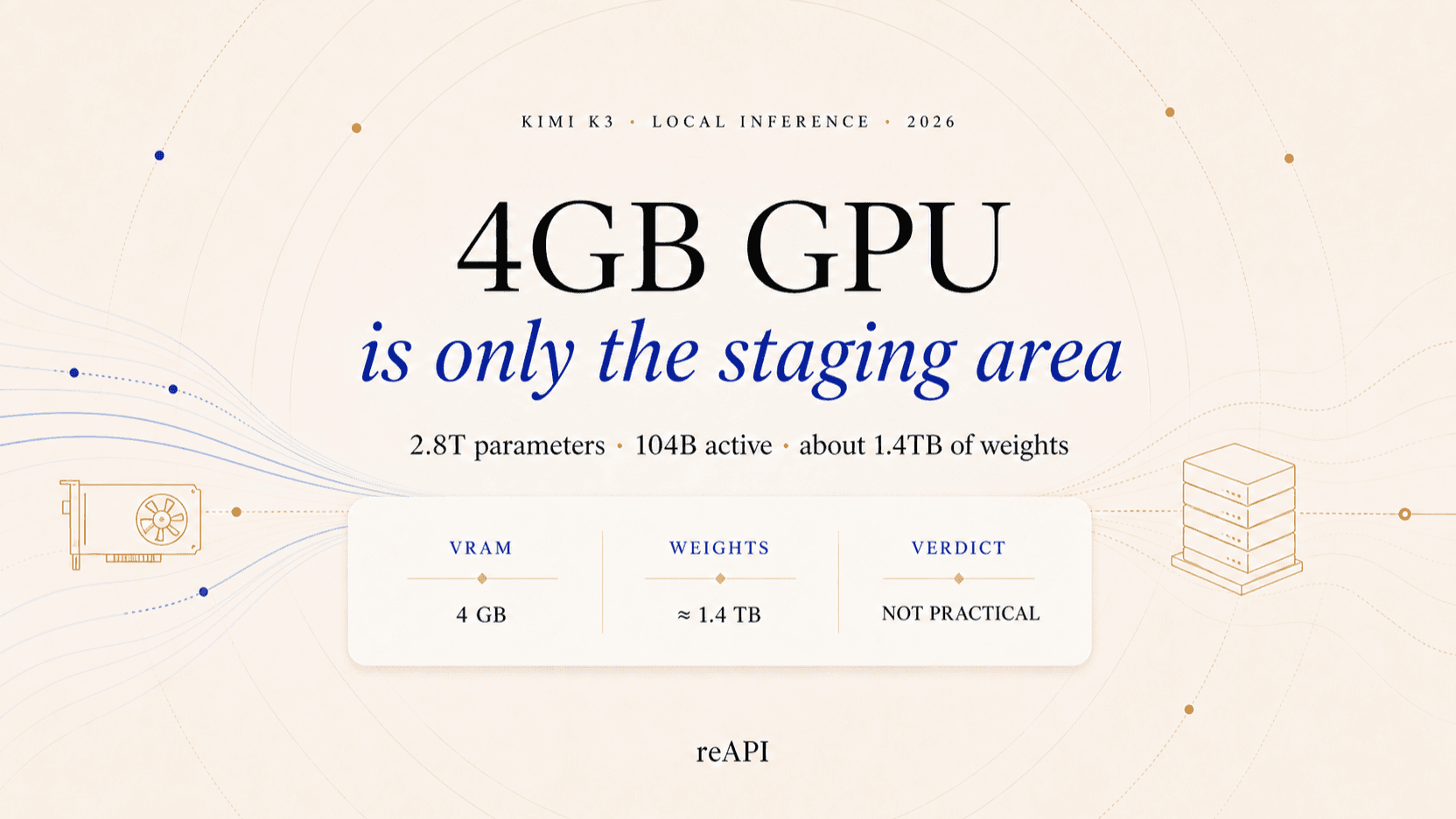
Kimi K3: 2,8 Billionen Parameter auf einer 4-GB-GPU
Läuft Kimi K3 wirklich auf einer 4-GB-GPU? Lerne die 1,4-TB-Gewichtsrechnung, was Layer-Offloading ändert, Tool-Support und die praktische API-Route heute.

KI-Videokamera-Bewegungen mit einer Telefonreferenz steuern
Erfasse natürliche Kamerabewegung mit deinem Telefon, wandle sie in eine Referenz um und lenke dein KI-Videomodell ohne 3D-Animation zu erlernen.
Seedance 2.0 Kosten pro Sekunde: Das echte Abrechnungsmodell
Die Seedance-2.0-Kosten pro Sekunde nach Auflösung und Stufe, der günstigere Tarif nur für hochgeladene Videos und der daraus entstehende Prognosefehler.