Claude Sonnet 5: применение, цена и производительность
Как использовать Claude Sonnet 5: официальные тесты против Opus 4.8, система усилий, плотный токенизатор, миграция кода и новые цены с сентября.
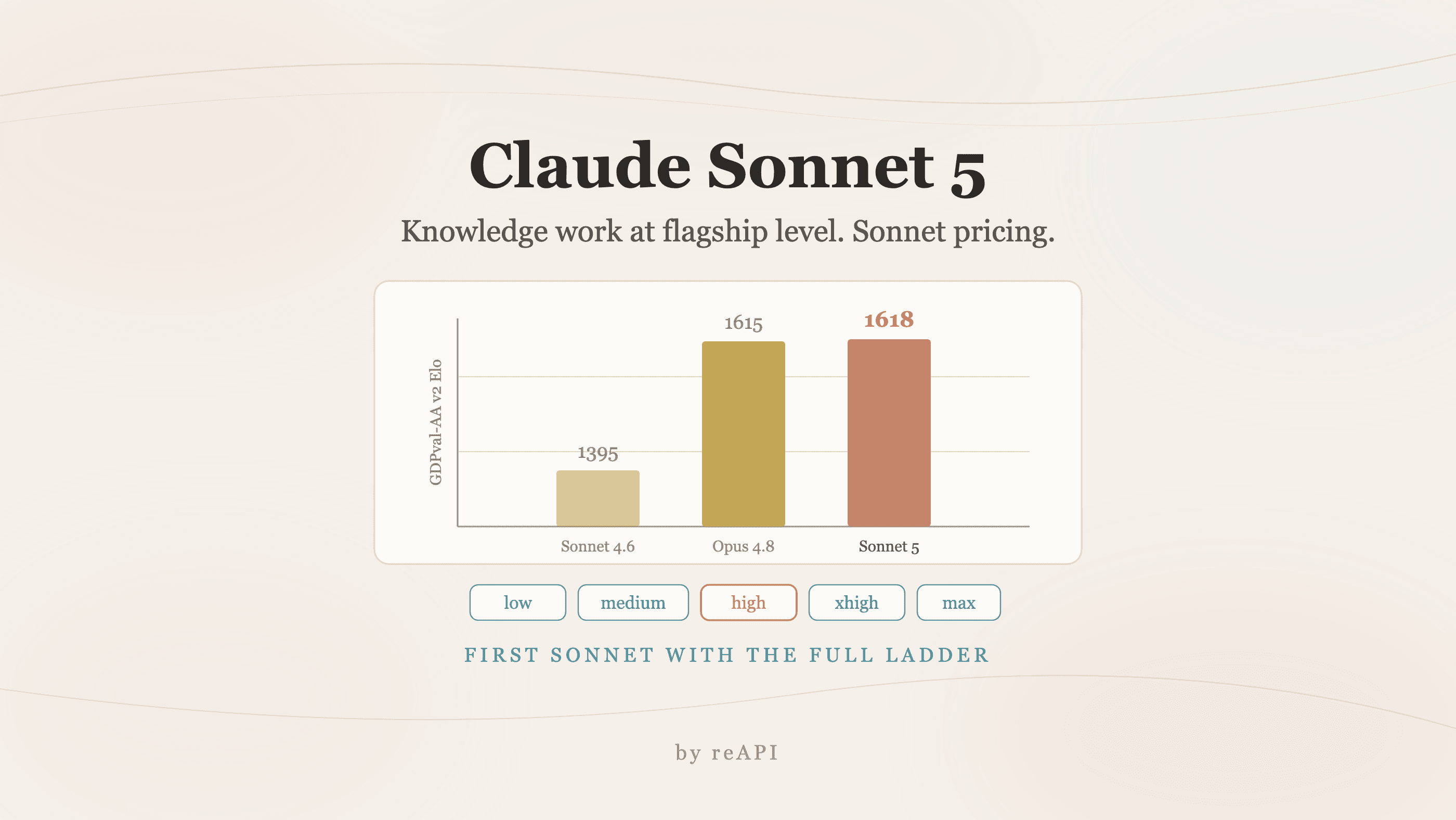
Anthropic выпустила Claude Sonnet 5 30 июня 2026 года с необычно прямым позиционированием: интеллект близко к Opus на задачах кодирования и агентских работ, но по цене Sonnet[1]. Официальные тесты это подтверждают.
Чтобы эффективно использовать Claude Sonnet 5, нужно понимать две вещи, на которые анонс не делает акцент. Система усилий — это рычаг, который делает заявление о цене реальностью, а более плотный токенизатор означает, что одинаковый промпт теперь стоит примерно на 30% больше токенов, чем на Sonnet 4.6. Миграция без переинициализации параметров может тихо изменить счёт и обрезать выход[1].
В этом гайде рассмотрены тесты, где Sonnet 5 вровень с Opus 4.8 и где отстаёт, четыре изменения API, которые ломают старый код, цены с учётом септябрьского повышения, и кому этот модель реально нужна.
TL;DR
- Близко к Opus на знаниевых задачах. GDPval-AA v2 Elo 1618 против Opus 4.8's 1615 — статистически вровень[1].
- Всё ещё отстаёт на сложных задачах. SWE-bench Pro 63.2% против 69.2%, и USAMO 2026 79.5% против 96.7%[1].
- Введённые цены действуют до 31 августа 2026: $2 на входе / $10 на выходе за миллион токенов, с сентября $3 / $15[1].
- Первый Sonnet с полной системой усилий:
low,medium,high(по умолчанию),xhigh,max[1]. - Токенизатор примерно на 30% плотнее. Цены за токен не изменились, поэтому одинаковый запрос стоит дороже, чем на Sonnet 4.6. Переизмерьте расходы перед миграцией[1].
budget_tokensи параметры сэмплирования теперь возвращают 400[1].
Что такое Claude Sonnet 5
Claude Sonnet 5 (claude-sonnet-5) заменяет Sonnet 4.6 как drop-in solution. Anthropic называет его самым агентским Sonnet до сих пор, который может планировать, управлять браузерами и терминалами, и работать автономно длительное время на уровне, который совсем недавно требовал больших и дорогих моделей[1].
Это модель по умолчанию для бесплатных и Pro пользователей на claude.ai и одновременно вышла на Claude API, Amazon Bedrock, Google Cloud Vertex AI и Microsoft Foundry в режиме превью. По умолчанию контекстное окно 1M токенов, максимальный выход 128K[1].
Тесты производительности
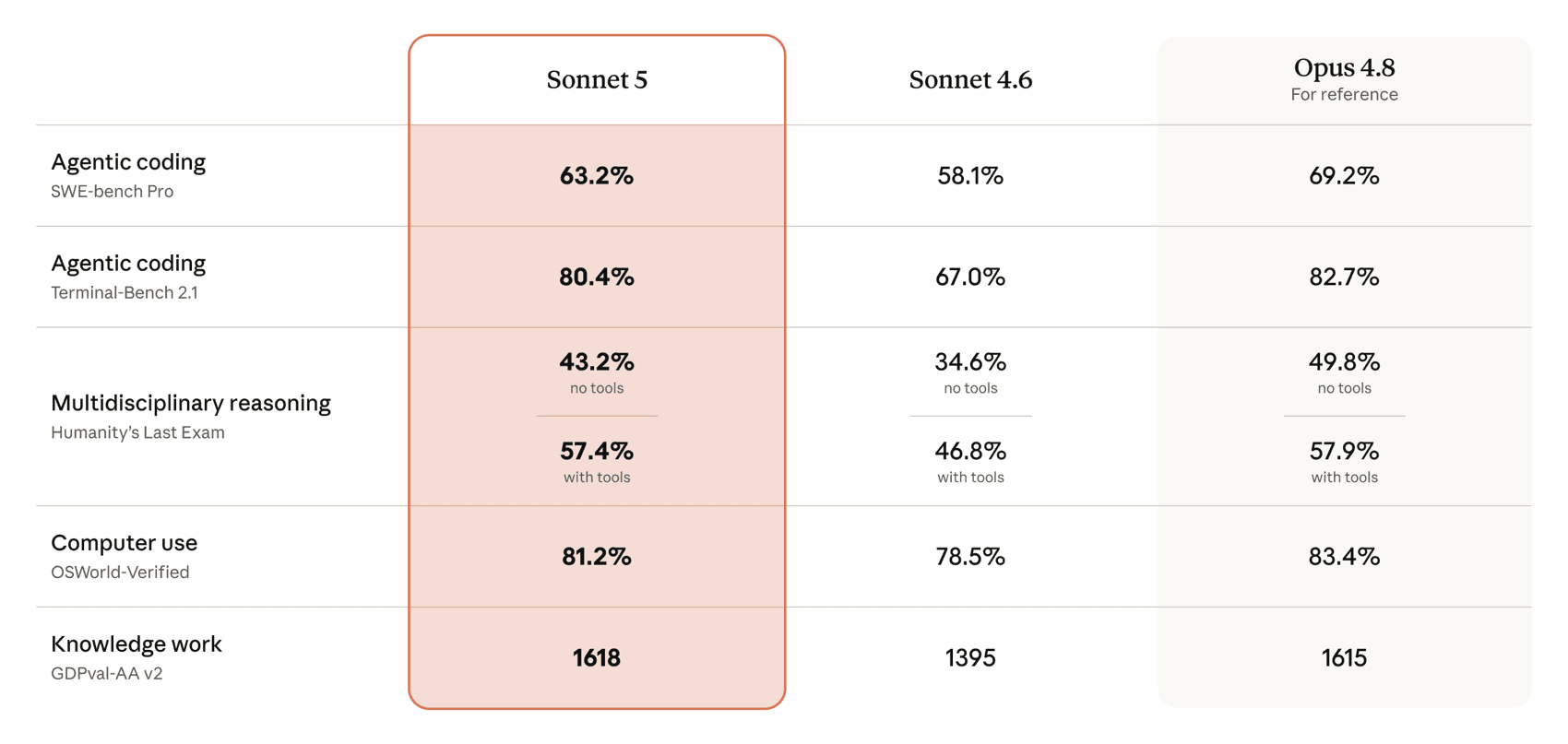
| Тест | Sonnet 5 | Sonnet 4.6 | Opus 4.8 (эталон) |
|---|---|---|---|
| Агентское кодирование (SWE-bench Pro) | 63.2% | 58.1% | 69.2% |
| Агентское кодирование (Terminal-Bench 2.1) | 80.4% | 67.0% | 82.7% |
| Рассуждения (HLE, без инструментов) | 43.2% | 34.6% | 49.8% |
| Рассуждения (HLE, с инструментами) | 57.4% | 46.8% | 57.9% |
| Компьютерное управление (OSWorld-Verified) | 81.2% | 78.5% | 83.4% |
| Знаниевые задачи (GDPval-AA v2, Elo) | 1618 | 1395 | 1615 |
Два момента выделяются. Против Sonnet 4.6 — чистая победа со значительным прыжком: Terminal-Bench поднялся на 13.4 пункта и Elo на знаниях прыгнул на 223. А на знаниях Sonnet 5 номинально обходит Opus 4.8 — 1618 против 1615, то есть вровень — и остаётся в пределах двух-шести пунктов от флагмана на агентском кодировании и компьютерном управлении[1].
Вся ценность в разрыве «в пределах нескольких пунктов, но за треть цены».
Подробнее из карточки системы: 85.2% на классическом подмножестве 500 задач SWE-bench Verified, 78.3% на SWE-bench Multilingual по девяти языкам, и 38.8 на FrontierCode v1 от Cognition, больше чем двойка от Sonnet 4.6's 15.1. Собственная оценка Cursor ставит его на 61.2% на CursorBench против Sonnet 4.6's 49% и Opus 4.8's 63.8%. BrowseComp достигает 84.7% в один агент и 86.6% в мультиагент[1].
Одно честное слабое место: на USAMO 2026 Sonnet 5 даёт 79.5%, большой прыжок от Sonnet 4.6's 55.0% но далеко от Opus 4.8's 96.7%[1]. Сложная формальная математика — не работа этой модели.
Система усилий — это рычаг стоимости
Sonnet 5 первый Sonnet-класса модель, которая открывает полную систему: low, medium, high (по умолчанию), xhigh, и max[1]. Это не косметический переключатель. Это то, что делает заявление о качестве Opus за цену Sonnet реальностью.
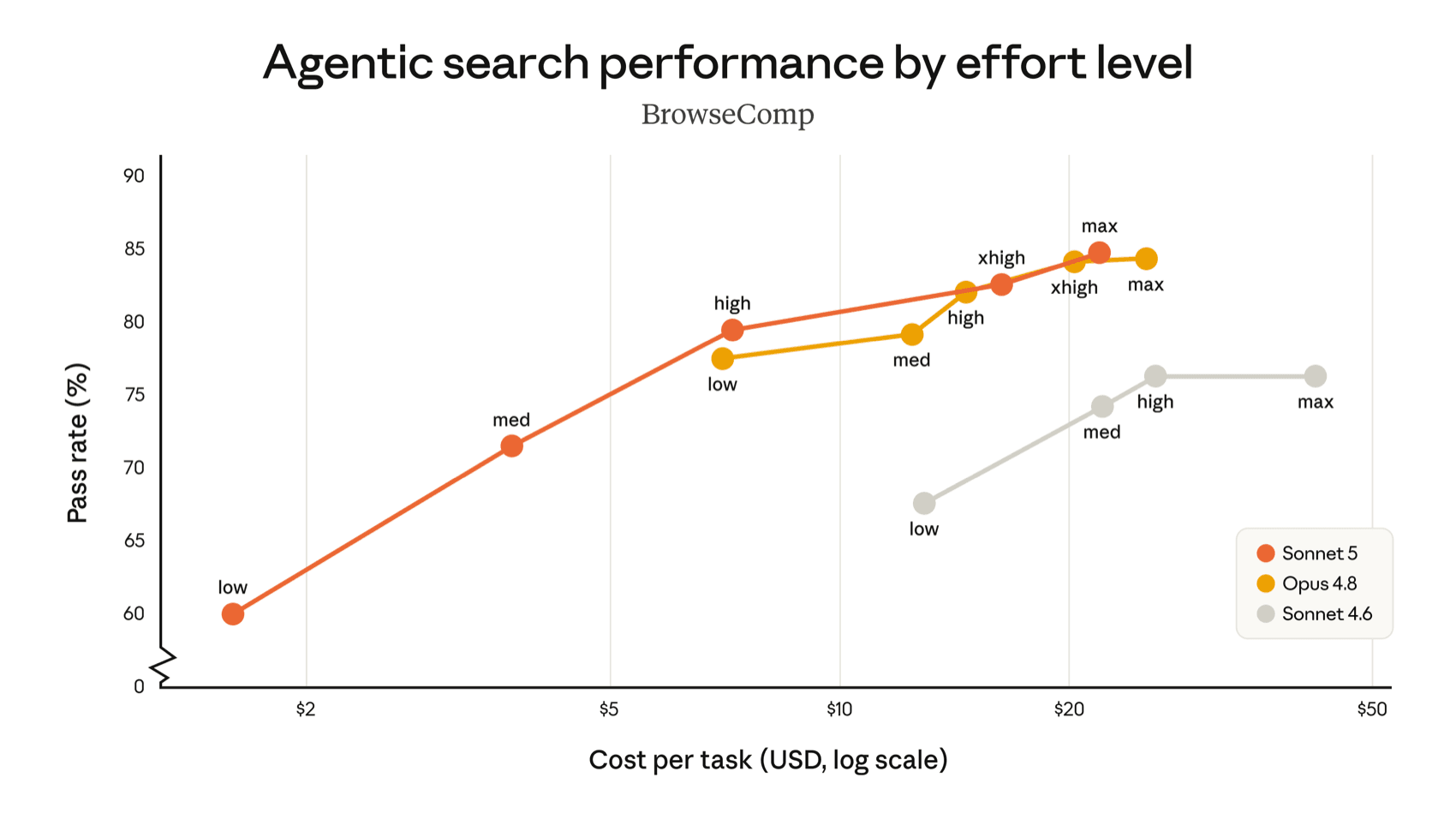
Кривая BrowseComp — самая ясная иллюстрация. Точность Sonnet 5 растёт с примерно 60% на low до около 85% на max, и достигает качества Opus 4.8 значительно дешевле за задачу. Opus 4.8 всё ещё немного выше, но Sonnet 5 получает большую часть пути за гораздо меньше денег, что ровно то, что нужно высокопроизводительному циклу агента[1].
Компьютерное управление рассказывает более трезвую историю.
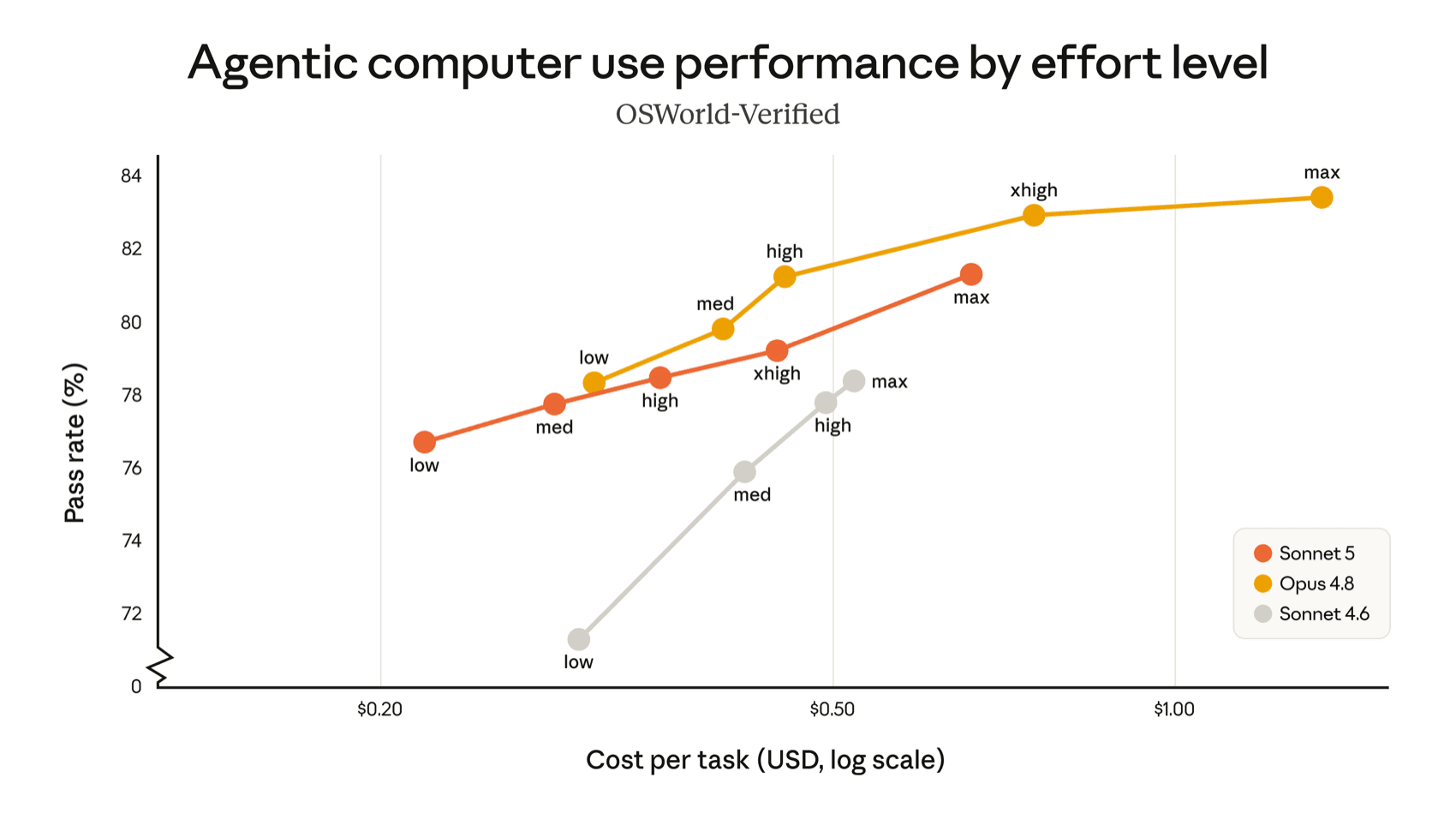
На OSWorld-Verified Opus 4.8 впереди на каждом уровне усилий. Sonnet 5 всё ещё четко побеждает Sonnet 4.6 и остаётся гораздо дешевле, но если управление пиксель-точным интерфейсом — ваша основная рабочая нагрузка, флагман держит реальное преимущество[1].
Практическое правило: xhigh для самых сложных дальнего-горизонта кодирования и агентских задач, high для большей части работы, medium или low для задач, чувствительных к задержке или простых. Настраивайте по маршруту вместо того, чтобы везде использовать max.
Против конкурентов в одном ценовом диапазоне
Карточка системы публикует цифры конкурентов против GPT-5.5 и Gemini 3.5 Flash, что это ценовой диапазон конкурентов, а не абсолютный фронтир. Читайте как «бьёт модели в его ценовом диапазоне», не «бьёт всё»[1].
| Тест | Sonnet 5 | GPT-5.5 | Gemini 3.5 Flash |
|---|---|---|---|
| SWE-bench Pro | 63.2 | 58.6 | 55.1 |
| Terminal-Bench 2.1 | 80.4 | 83.4 | 76.2 |
| HLE (без инструментов) | 43.2 | 41.4 | 40.2 |
| HLE (с инструментами) | 57.4 | 52.2 | n/a |
| OSWorld-Verified | 81.2 | 78.7 | 78.4 |
| FrontierCode v1 | 38.8 | 25.5 | n/a |
| GDPval-AA v2 (Elo) | 1618 | 1509 | 1357 |
| AutomationBench | 13.5 | 12.9 | 14.5 |
| HealthBench Professional | 57.8 | 51.8 | n/a |
Sonnet 5 выигрывает в большинстве прямых тестов против GPT-5.5 и проигрывает тот, который цитируют больше всех: Terminal-Bench 2.1, где GPT-5.5 с Codex CLI даёт 83.4 против 80.4. Против Gemini 3.5 Flash картина шире, AutomationBench единственное исключение. Обратите внимание, AutomationBench оценки низкие везде; это неполные тесты, не решённые[1].
Где вровень Opus 4.8 и где отстаёт
Вровень или впереди: GDPval-AA v2 (1618 vs 1615), агентский поиск на BrowseComp при сопоставимой точности за цену, Real-World Finance v2 (1219 vs 1222), и AA-Briefcase Elo (1393 vs 1352)[1].
Отстаёт: SWE-bench Pro (63.2 vs 69.2), Terminal-Bench 2.1 (80.4 vs 82.7), OSWorld (81.2 vs 83.4), HLE без инструментов (43.2 vs 49.8), CursorBench (61.2 vs 63.8), Toolathlon (54.3 vs 59.9), и USAMO 2026 (79.5 vs 96.7)[1].
Паттерн консистентен. На открытых знаниевых задачах и агентском поиске Sonnet 5 по сути Opus-класса. На самом сложном кодировании, компьютерном управлении и формальной математике Opus 4.8 держит реальное но скромное преимущество. Для рабочих нагрузок, работающих много ходов агента, где стоимость доминирует, Sonnet 5 — рациональный выбор по умолчанию, и Opus — путь к эскалации для сложных случаев.
Как использовать Claude Sonnet 5: четыре изменения, которые ломают старый код
Sonnet 5 принимает интерфейс запроса Opus 4.7/4.8, поэтому миграция это больше чем замена строки[1].
Адаптивное мышление включено по умолчанию. Sonnet 4.6 работал без мышления, если не спросить. Sonnet 5 думает адаптивно сразу, решая в зависимости от запроса сколько рассуждений нужно. Вы всё ещё можете отключить это явно, когда вам нужна чистая скорость.
budget_tokens удалён. Ручные бюджеты мышления теперь возвращают 400. Контролируйте глубину через уровни усилий.
Параметры сэмплирования отвергаются. Не-по-умолчанию temperature, top_p, и top_k возвращают 400. Управляйте через промпты.
Токенизатор примерно на 30% плотнее. Sonnet 5 использует токенизатор, представленный в Opus 4.7, который превращает один и тот же текст примерно в 30% больше токенов. Цена за токен не изменилась, поэтому эквивалентный запрос может стоить больше, чем на Sonnet 4.6, и лимит max_tokens, настроенный на старый токенизатор, может теперь обрезать выход.
Это последнее — дорогой сюрприз. Переизмерьте реальные расходы на ваших промптах вместо того, чтобы предполагать прямое соответствие от Sonnet 4.6.
Одно добавление способности стоит отметить: Sonnet 5 первый Sonnet-класса модель с высокоразрешающим уровнем изображений, до 2576 пиксель на длинном краю и 4784 визуальных токена, против старого 1568-пиксельного лимита. Это активируется автоматически, что важно для плотного понимания документов, диаграмм и скриншотов[1].
Цены
| Позиция | Введённая (до 31 авг 2026) | Стандартная (с 1 сен 2026) |
|---|---|---|
| Вход | $2 / MTok | $3 / MTok |
| Выход | $10 / MTok | $15 / MTok |
| Чтение кэша | ~$0.20 / MTok | ~$0.30 / MTok |
| Batch | $1 / $5 | 50% стандарта |
Против Opus 4.8 на $5 / $25, Sonnet 5 примерно треть стоимости при введённых ставках и около 60% при стандартных[1]. Добавьте регулятор усилий и кэширование промптов и разрыв расширится для хорошо-настроенной агентской рабочей нагрузки.
Две оговорки. Плотный токенизатор означает вам переходить на вычисление реальных расходов вместо доверия к стикер-сравнению. И Priority Tier недоступен на Sonnet 5[1].
Поведение безопасности, которое ваш код должен обрабатывать
Sonnet 5 первая Sonnet-класса модель с реальными кибербезопасностью-гвардами. Запросы, касающиеся запрещённых или высокорисковых кибер и биологических тем, могут быть отклонены, возвращены как успешный HTTP 200 с причиной отклонения вместо ошибки[1].
Если вы строите инструменты безопасности или life-sciences рабочие потоки где доброкачественно-смежные запросы могут спровоцировать классификатор, обработайте эту причину остановки явно вместо предположения, что каждый 200 несёт полезный контент. Anthropic также сообщает о меньших галлюцинациях и сиквёфантии чем Sonnet 4.6, что имеет значение везде где выход доверяется дальше без проверки человеком[1].
Кому нужен Claude Sonnet 5
Это рациональный выбор по умолчанию для высокообъёмных агентских рабочих нагрузок, где стоимость за ход компаундируется: кодирующие агенты, автоматизация браузера и терминала, циклы поиска и исследования. Это подходит для разработчиков продуктов, вставляющих LLM в рабочий функционал, и работа с длинным контекстом где окно 1M и низкая цена за токен делают пакетную обработку жизнеспособной.
Тянитесь к Opus 4.8 или Opus 5 когда задача на сложном хвосте: самое требовательное кодирование, пиксель-точное компьютерное управление, или формальная математика, где несколько пунктов флагмана стоят премии.
Запуск Sonnet-класса модели на reAPI
Чтобы быть честным о покрытии: Claude Sonnet 5 сегодня не на шлюзе reAPI. Sonnet-класса модель, которая есть, это Claude Sonnet 4.6, и Claude модели на шлюзе это Opus 5, Opus 4.8, Opus 4.7, Sonnet 4.6, и Fable 5.
Это важно меньше, чем звучит, потому цены. Sonnet 5 листирует на $3 / $15 с сентября. На reAPI Claude Opus 5 работает на $2.40 / $12.00 и Sonnet 4.6 одинаково. Поэтому модель выше по уровню стоит меньше на шлюзе чем стандартная цена Sonnet 5, и Opus 5 это модель которую Anthropic описывает как доставляющая frontier интеллект за половину цены Fable 5.
from openai import OpenAI

client = OpenAI(
    api_key="YOUR_REAPI_KEY",
    base_url="https://api.reapi.ai/v1",
)

resp = client.chat.completions.create(
    model="claude-opus-5",
    messages=[{"role": "user", "content": "Plan and run this multi-step refactor."}],
    max_tokens=16000,
    stream=True,
)
Точка доступа OpenAI-совместима и родной Anthropic /v1/messages интерфейс тоже доступен. Ставки и формы запроса на reapi.ai/models, и ссылка Opus 5 на reapi.ai/docs/claude-opus-5.
Если ваша оценка специфично требует поведения Sonnet 5 вместо его цены, вызывайте его через Anthropic напрямую.
FAQ
Claude Sonnet 5 лучше чем Opus 4.8?
На открытых знаниевых задачах и агентском поиске они в сущности вровень, и Sonnet 5 чуть впереди на GDPval-AA v2 (1618 vs 1615). На самом сложном кодировании, компьютерном управлении и формальной математике Opus 4.8 держит скромное преимущество[1].
Сколько стоит Claude Sonnet 5?
$2 за миллион входных токенов и $10 за миллион выходных до 31 августа 2026, растёт до $3 / $15 с 1 сентября. Кэширование промптов сокращает чтения кэшированного контекста примерно на 90%, и Batch API режет ставку вполовину[1].
Что такое уровень усилий xhigh?
Настройка усилий между high и max, настроенная для дальнего-горизонта агентских и кодирующих задач. Sonnet 5 первый Sonnet-класса модель поддерживающая полную систему[1].
Почему мои расходы выросли после миграции с Sonnet 4.6?
Токенизатор примерно на 30% плотнее, поэтому один и тот же текст становится примерно на 30% больше токенов при неизменных ценах за токен. Пересчитайте ваши промпты и поднимите max_tokens чтобы длинные выходы не были обрезаны[1].
Claude Sonnet 5 поддерживает контекстное окно 1M-токен?
Да, 1M по умолчанию по стандартной цене за токен без доплаты за длинный контекст, и до 128K выходных токенов[1].
Что ломается при миграции с Sonnet 4.6?
budget_tokens возвращает 400, не-по-умолчанию параметры сэмплирования возвращают 400, адаптивное мышление теперь по умолчанию, и плотный токенизатор меняет и стоимость и поведение обрезания[1].
Claude Sonnet 5 может управлять компьютером?
Да. Он поддерживает использование инструментов, веб-поиск, выборку веб-страниц, выполнение кода и компьютерное управление, давая 81.2% на OSWorld-Verified против Opus 4.8's 83.4%[1].
Claude Sonnet 5 доступен на reAPI?
Нет сейчас. Шлюз несёт Claude Opus 5, Opus 4.8, Opus 4.7, Sonnet 4.6, и Fable 5. Opus 5 на reAPI стоит дешевле за токен чем стандартная ставка Sonnet 5.
Выбор между уровнем и цены точкой
Claude Sonnet 5 доставляет на своё центральное обещание. На кодировании и агентской работе он приземляется близко к Opus 4.8 что, за треть стоимости в введённом окне, становится разумным выбором по умолчанию и резервирует флагман на сложный хвост. Он выигрывает в большинстве прямых тестов с GPT-5.5 и Gemini 3.5 Flash, с честными исключениями на Terminal-Bench, AutomationBench и формальной математике.
Две вещи решают будет ли эта арифметика пережить контакт с вашей рабочей нагрузкой. Септябрьский повышение цены берёт его от трети Opus к около 60%, и плотный токенизатор означает стикер-сравнение недооценивает реальные расходы. Измерьте оба на ваших собственных промптах перед обязательством. Вот как использовать Claude Sonnet 5 без обнаружения токенизатора в счёте, и это также почему метка уровня менее важна чем цифра которую вы реально платите за завершённую задачу.
References
- Anthropic. Introducing Claude Sonnet 5. Retrieved July 2026 from anthropic.com/news/claude-sonnet-5
- Anthropic. Models overview — specs and pricing for all current Claude models. Retrieved July 2026 from platform.claude.com/docs/en/about-claude/models/overview
- Anthropic. Pricing — token, cache, and batch rates. Retrieved July 2026 from platform.claude.com/docs/en/about-claude/pricing
Further reading
- reAPI. How to use Claude Opus 5. reapi.ai/blog/how-to-use-claude-opus-5
- reAPI. How to use Claude Opus 4.8. reapi.ai/blog/how-to-use-claude-opus-4-8
- reAPI. Model catalog. reapi.ai/models
Автор

Категории
xhigh?Почему мои расходы выросли после миграции с Sonnet 4.6?Claude Sonnet 5 поддерживает контекстное окно 1M-токен?Что ломается при миграции с Sonnet 4.6?Claude Sonnet 5 может управлять компьютером?Claude Sonnet 5 доступен на reAPI?Выбор между уровнем и цены точкойReferencesFurther readingЕщё статьи

Seedance 2.5 локально: запуск 2.0 или 2.5 оффлайн?
Можно ли запустить Seedance 2.5 локально? Проверьте официальные веса, отличите узлы API ComfyUI от локального вывода, сравните два загружаемых варианта.

Higgsfield AI цены: тарифы, стоимость API и есть ли бесплатный доступ
Цены Higgsfield AI: тарифы подписки, стоимость в кредитах по моделям, новый API с оплатой по факту, бесплатен ли Higgsfield и где reAPI обходится дешевле.

Gemini Omni против Seedance 2.0: сравнение видеомоделей 2026 года
Gemini Omni и Seedance 2.0 в мае 2026 года: новинка Google I/O против лидера Arena #1. Сравниваем функции, мультикадры, звук и цены.