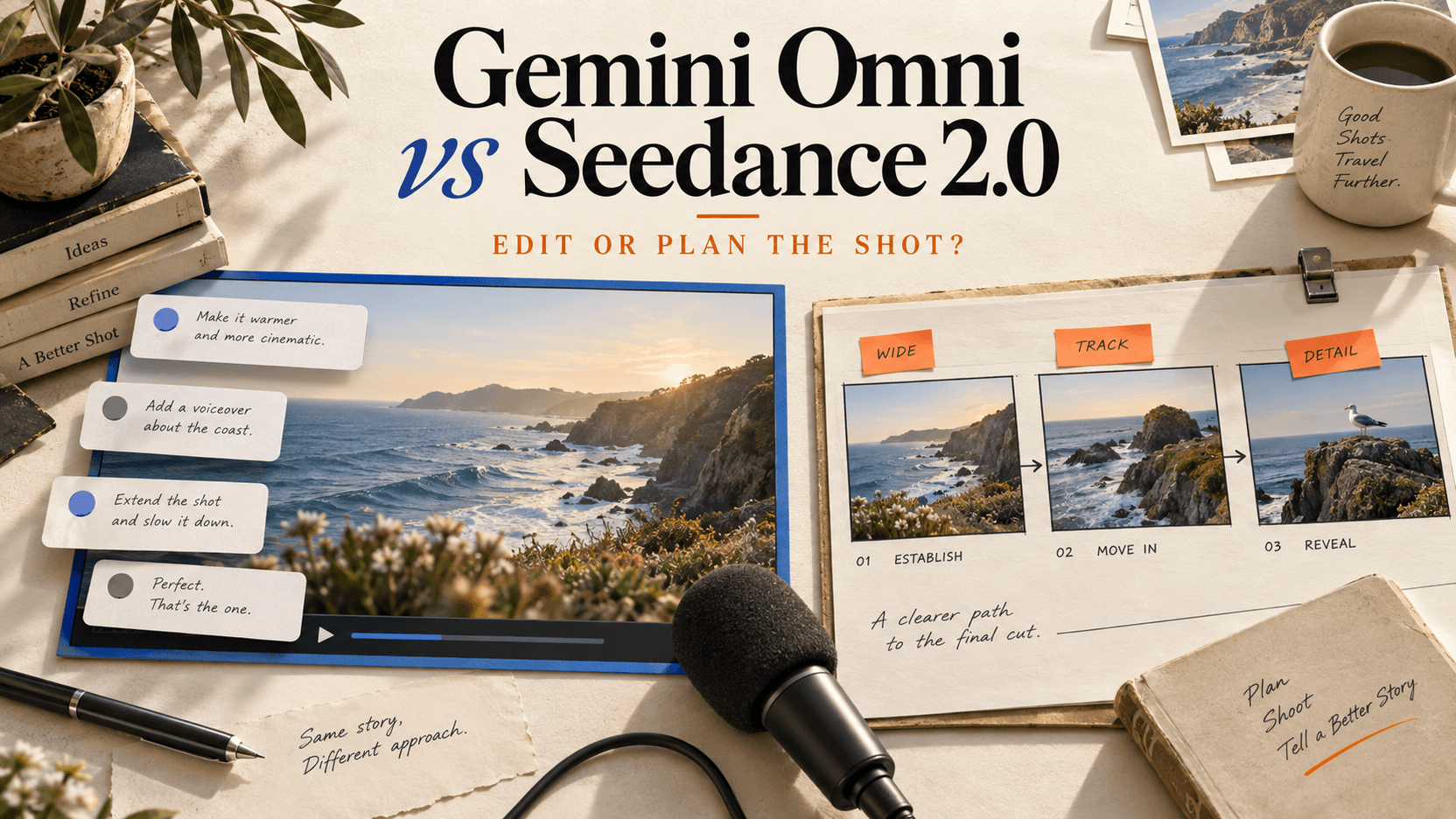
Gemini Omni против Seedance 2.0: сравнение видеомоделей 2026 года
Gemini Omni и Seedance 2.0 в мае 2026 года: новинка Google I/O против лидера Arena #1. Сравниваем функции, мультикадры, звук и цены.
Google выпустила Gemini Omni Flash 19 мая 2026 года на конференции I/O. Seedance 2.0 от ByteDance с февраля удерживает первое место в рейтинге Artificial Analysis Video Arena. Если вы прямо сейчас выбираете между Gemini Omni и Seedance 2.0, то фактически сравниваете первую видеомодель Google с акцентом на рассуждение и редактирование с моделью, которую бенчмарки называют лучшим генератором исходного видео на рынке.
Разделение здесь заметнее, чем в большинстве сравнений «X против Y» в этой категории. Seedance 2.0 за один проход возвращает ролик в 1080p с несколькими сценами и синхронизированным звуком. Gemini Omni Flash создает 10-секундный ролик, который затем можно редактировать в диалоге. Ниже — сравнение возможностей по официальным страницам обоих разработчиков и актуальным ценам reAPI.
Коротко
- Сроки выпуска. Seedance 2.0 вышла 12 февраля 2026 года[5]. Gemini Omni Flash представили 19 мая 2026 года на Google I/O[1].
- Разница в бенчмарках. Seedance 2.0 набрала Elo 1,269 в генерации текста в видео и 1,351 в генерации изображения в видео в Artificial Analysis Video Arena, заняв место #1 в обеих категориях[6]. На момент запуска Gemini Omni в рейтинге не было.
- Максимальное разрешение. Gemini Omni Flash поддерживает 720p, 1080p и 4K[7]. Seedance 2.0 также поддерживает 4K на маршруте Face; Fast Face и Mini ограничены 720p[8].
- Длительность. Gemini Omni Flash создает ролики на 4, 6, 8 или 10 секунд[7]. Seedance 2.0 генерирует от 4 до 15 секунд с монтажными склейками внутри одного ролика[5].
- Референсы. Gemini Omni Flash принимает 0, 1 или 3 входных изображения[9]. Seedance 2.0 принимает до 9 изображений + 3 видеоклипов + 3 аудиоклипов на один запрос[10].
- Подход к редактированию. Gemini Omni построена вокруг многошагового редактирования в диалоге[1]. Seedance 2.0 работает за один проход с большим набором референсов.
- Главное различие. Выбирайте Gemini Omni, если итерации над одним роликом важнее максимального исходного качества. Выбирайте Seedance 2.0, если нужно получить один готовый ролик и перейти к следующему.
Происхождение моделей
Seedance 2.0 разработала команда ByteDance Seed; модель вышла 12 февраля 2026 года[5]. Запуск стал вирусным благодаря фотореалистичным роликам с узнаваемыми знаменитостями, а уже на следующий день Disney направила ByteDance требование прекратить нарушение прав[11]. По умолчанию модель добавляет водяные знаки C2PA. ByteDance описывает ее как «единую мультимодальную архитектуру совместной генерации аудио и видео», которая принимает текст, изображения, видео и аудио и создает видео с нативным звуком и синхронизацией губ более чем на 8 языках.
Gemini Omni Flash — первая модель нового семейства Google DeepMind, представленного на Google I/O 19 мая 2026 года. На сцене Сундар Пичаи связал ее со стратегией Google по развитию моделей мира: «ИИ переходит от предсказания текста к моделированию реальности. Gemini Omni — следующий шаг в этом направлении»[4]. На собственной странице продукта Google указано, что Gemini Omni заменит Veo в приложении Gemini[3]. Результаты получают водяной знак SynthID, который можно проверить через приложение Gemini, Chrome и Google Search[1].
Обе модели доступны через REST-эндпоинт reAPI для медиа POST /api/v1/videos/generations. Для переключения достаточно изменить поле model в теле запроса — остальную инфраструктуру менять не нужно.
Что на практике означают характеристики Gemini Omni и Seedance 2.0
| Возможность | Gemini Omni Flash | Seedance 2.0 |
|---|---|---|
| Текст в видео | да | да |
| Изображение в видео (один референс) | да (1 реф.) | да |
| Изображение в видео (несколько референсов) | до 3 (режим слияния) | до 9 изображений |
| Интерполяция первого и последнего кадров | нет | да (image_with_roles) |
| Референсное видео | нет | до 3 клипов, суммарно ≤15s[10] |
| Референсное аудио | при запуске — только голосовой референс[1] | до 3 клипов, суммарно ≤15s[10] |
| Нативный синтез звука | да | да (совместная генерация, фонемная синхронизация губ)[5] |
| Несколько сцен в одном результате | нет | да, несколько склеек за одну генерацию[5] |
| Многошаговое редактирование в диалоге | да[1] | нет |
| Вывод в 4K | да[7] | да, на Face[8] |
| Варианты длительности | 4 / 6 / 8 / 10s[7] | любое значение от 4 до 15s[10] |
| Соотношения сторон | 16:9, 9:16[9] | 16:9, 9:16, 1:1, 4:3, 3:4, 21:9, адаптивное[10] |
| Водяные знаки | SynthID (Google)[1] | C2PA (по умолчанию включен)[5] |
| Функция аватара | да (на старте только для пользователей)[1] | нет |
Для выбора особенно важны две строки. Seedance 2.0 принимает пакет референсов 9+3+3 в одном запросе. Gemini Omni Flash принимает 0/1/3 референсных изображения и один голосовой референс. Если ваш процесс выглядит так: «вот продукт, вот ролик со стилем бренда, вот музыкальная подложка — теперь собери все вместе», то конвейер Seedance 2.0 создан именно для него[10]. Gemini Omni пока не рассчитана на такой сценарий.
Вторая важная строка — редактирование. У многошагового диалогового редактирования Gemini Omni нет аналога в Seedance. «Сделай скрипку невидимой. Теперь перемести камеру за плечо скрипача. Теперь перенеси скрипача в окружение с изображения» — реальная последовательность инструкций из блога Google[1]. Каждая команда развивает предыдущую, сохраняя целостность персонажа и сцены. Seedance 2.0 работает иначе: вы пишете одну инструкцию с одним набором референсов и получаете один ролик.
Разрыв в бенчмарке, который пока никто не закрыл
Seedance 2.0 занимает место #1 в рейтинге Artificial Analysis Video Arena: Elo 1,269 для текста в видео и 1,351 для изображения в видео[6]. В той же Arena оба результата выше показателей Veo 3.1, Kling 3.0 и Sora 2.
Gemini Omni Flash вышла за четыре дня до публикации этой статьи, и при запуске Google не добавила ее в Arena. Мнения в первых практических обзорах разделились. TechCrunch назвал пользовательские демонстрации по-настоящему впечатляющими, но отметил, что несколько функций на I/O не работали[4]. Независимые авторы, опубликовавшие обзоры на следующий день после запуска, писали, что совокупное исходное качество генерации «отстает» от Seedance 2.0, тогда как рендеринг текста, понимание физики и диалоговое редактирование Omni открывают новые возможности. Пока Arena не соберет достаточно голосов за Omni Flash, честный вывод таков: Seedance 2.0 — подтвержденный лидер исходного качества. Gemini Omni Flash — самая необычная из уже выпущенных систем редактирования.
Одна и та же инструкция запущена в Gemini Omni Flash и Seedance 2.0, результаты показаны рядом. Оцените разницу в исходном качестве своими глазами, прежде чем доверять цифрам Elo.
Если решение о покупке определяет Elo из бенчмарка, сегодня выигрывает Seedance 2.0. Если вы выпускаете продукт, где последовательное уточнение важнее одного идеального кадра, разница в Elo перестает быть правильным критерием.
Редактирование в диалоге или полная композиция заранее
Главная особенность Gemini Omni — диалог. На странице продукта Google сказано прямо: «Gemini Omni делает создание видео таким же простым, как разговор»[3]. В блоге приведен подробный пример: ролик со скрипачом уточняется четырьмя последовательными инструкциями, каждая из которых развивает предыдущую. Персонажи остаются узнаваемыми, физика сохраняется, а сцена помнит прошлые изменения[1]. Это концепция «Nano Banana для видео» и та часть модели, с которой ни одна другая видеомодель 2026 года напрямую не конкурирует.
Gemini Omni Flash опирается на знания Gemini о мире, чтобы обосновать генерацию по одной инструкции. Этап рассуждения отличает результаты Omni от обычного запуска диффузионной модели.
Seedance 2.0 придерживается противоположного принципа: скомпонуйте все заранее. Передайте ей текст + 9 изображений + 3 видео-референса + 3 аудио-референса за один раз, и модель объединит их в единый результат[10]. В подходе ByteDance предполагается, что пользователь знает требования, подготовил материалы и хочет получить готовый ролик без дальнейшего диалога. Система референсов и служит интерфейсом редактирования. Нужен другой результат — меняете референсы и отправляете запрос заново, а не продолжаете итерацию.
Для рекламных роликов брендов и товаров подход Seedance 2.0 с предварительной композицией хорошо соответствует привычным творческим заданиям. Для экспериментов в соцсетях, фанатского монтажа и любых задач, где автор понимает, чего хочет, только после первого варианта, выигрывает диалоговый цикл Gemini Omni.
Два разных значения слова «multi»
Обе модели называют «multi» своим преимуществом, но подразумевают разные вещи.
В Seedance 2.0 «multi» означает несколько сцен в одной генерации: единый 15-секундный результат содержит несколько склеек и переходов, как готовая раскадровка[5]. Вы описываете развитие сцены в инструкции, а модель создает один ролик с уже встроенными монтажными склейками. Это сокращает процесс, который в Veo или Gemini Omni потребовал бы от 3 до 4 вызовов, до одного вызова.
В Gemini Omni «multi» означает многошаговое уточнение одной сцены: каждая новая команда в диалоге изменяет существующий ролик, не теряя контекст[1]. Вы получаете не больше сцен, а более совершенную версию той же сцены. Стоимость накапливается с каждым шагом, зато сохраняется последовательность. Уточнять одну сцену на протяжении 5 шагов — совсем другой продукт, чем создавать 5 разных сцен.
На практике может понадобиться и то и другое. Создайте раскадровку из нескольких сцен в Seedance 2.0, а отдельные моменты уточните за несколько шагов в Gemini Omni. Доступ к обеим моделям через один endpoint превращает такой процесс в изменение на 30 строк вместо миграции между поставщиками.
Расчет цены: 720p / 1080p / 4K со звуком
Seedance 2.0 тарифицируется за секунду, а Gemini Omni Flash — за генерацию, поэтому результат сравнения меняется в зависимости от длительности ролика. В таблице показана стоимость самого дешевого подходящего варианта каждой модели в reAPI для одинаковых параметров результата.
| Параметры результата | Gemini Omni Flash (за генерацию) | Самый дешевый публичный маршрут Seedance 2.0 (без исходного видео) |
|---|---|---|
| 5s, 720p, со звуком | нет (длительность Omni: 4 / 6 / 8 / 10) | $0.410 (Mini)[8] |
| 6s, 720p, со звуком | $0.204[7] | $0.492 (Mini)[8] |
| 8s, 1080p, со звуком | $0.216[7] | $3.060 (Face)[8] |
| 10s, 1080p, со звуком | $0.240[7] | $3.825 (Face)[8] |
| 10s, 4K, со звуком | $0.480[7] | $7.800 (Face)[8] |
Здесь важны два момента. Во-первых, цена одной генерации Gemini Omni Flash лишь немного зависит от длительности в рамках одного уровня разрешения: 4s стоят $0.18, а 10s — $0.24 при 720p/1080p[7]. Посекундная цена Seedance 2.0 растет линейно вместе с длительностью, поэтому чем длиннее ролик, тем больше ценовое преимущество Omni при том же разрешении. Во-вторых, пониженный тариф Seedance 2.0 включается только при наличии настоящего исходного видео. Изображения, первый или последний кадр и аудио остаются на базовом тарифе, а для исходного видео к длительности результата добавляется округленная вверх суммарная длительность исходных роликов[8]. Поэтому в таблице указаны цены без исходного видео.
При ценах из таблицы Gemini Omni Flash дешевле в reAPI для 6-секундного ролика в 1080p со звуком. Если нужна раскадровка из нескольких сцен длительностью более 10 секунд либо результат с включенными референсными видео и аудио, из этих двух моделей это умеет только Seedance 2.0.
Когда какую модель выбирать
Выбирайте Gemini Omni Flash, если:
- Вы последовательно дорабатываете один ролик и хотите редактировать его в несколько шагов без повторного запуска с нуля
- Вам нужен вывод в 4K
- Ограничения в 10 секунд достаточно для вашей задачи (Брихтова сообщила TechCrunch, что это продуктовое решение, а не предел модели[4])
- Фиксированная цена за генерацию упрощает прогнозирование расходов
- Вам нужна генерация аватаров (сейчас она доступна пользователям, а интерфейс API появится позже[1])
Выбирайте Seedance 2.0, если:
- Вы получаете один готовый ролик за вызов без последующих итераций
- Раскадровка из нескольких сцен в одном 15-секундном ролике заменяет процесс из 3–4 вызовов
- Для генерации нужны референсное видео, референсное аудио или оба типа материалов
- Синхронизированный с губами диалог не на английском — обязательное требование
- Нужен сверхширокий формат 21:9 или другое нестандартное соотношение сторон
- Показатель Elo в Arena важен вашим покупателям
Ни одна из моделей не лучше во всем. Выбор между Gemini Omni и Seedance 2.0 становится понятен только тогда, когда известны параметры результата и подход вашей команды к итерациям.
Частые вопросы
Gemini Omni — это обновление Veo 3.1?
На странице продукта Google указано, что Gemini Omni заменит Veo в приложении Gemini[3]. Veo 3.1 останется доступной через Vertex AI, Gemini API и агрегаторы. В пользовательских продуктах — приложении Gemini, Flow и YouTube Shorts — Omni Flash станет новой моделью по умолчанию.
Seedance 2.0 можно использовать бесплатно?
Не через API. У всех поставщиков, которые предлагают Seedance 2.0, она относится к платному уровню. Пользовательские продукты ByteDance (Dreamina и CapCut) включают некоторую квоту Seedance 2.0 в бесплатные тарифы, но получить к ней доступ через API нельзя.
Gemini Omni Flash поддерживает несколько сцен, как Seedance 2.0?
Нет. Gemini Omni Flash создает одну непрерывную сцену длительностью до 10 секунд[7]. Последовательность из нескольких сцен в одном ролике — возможность Seedance 2.0[5]. Чтобы получить раскадровку в Gemini Omni, нужно создать каждую сцену отдельно либо последовательно менять одну сцену с помощью диалогового редактирования.
Можно ли использовать обе модели через один endpoint?
Да. Обе модели работают через POST /api/v1/videos/generations reAPI с одинаковой оболочкой запроса. Чтобы переключиться, измените model с gemini-omni на doubao-seedance-2.0-face и скорректируйте несовпадающие поля (image_urls в Omni принимает 0/1/3 элемента, а Seedance — до 9; у Omni нет video_urls и audio_urls).
У какой модели лучше физика?
Оба разработчика заявляют реалистичную физику как преимущество. В блоге Google сказано, что Omni обладает «улучшенным интуитивным пониманием таких сил, как гравитация, кинетическая энергия и гидродинамика»[1]. В статье ByteDance о Seedance 2.0 рассматриваются сложное движение и физическое взаимодействие. Elo для изображения в видео в Artificial Analysis Arena, где физика часто влияет на голоса, сейчас составляет у Seedance 2.0 1,351 — выше, чем у любой протестированной модели[6]. Пока Omni Flash не наберет достаточно голосов в Arena, подтвержденный вывод звучит так: «Seedance лидирует в физике».
Что насчет рисков, связанных с интеллектуальной собственностью Голливуда?
Для Seedance 2.0 риск реален. 13 февраля 2026 года ByteDance получила от Disney требование прекратить нарушение прав из-за вопросов к обучающим данным[11]. Не указывайте в инструкциях персонажей, фильмы или стили студий, на которые у вас нет прав. Результаты Gemini Omni Flash содержат водяные знаки SynthID, а результаты Seedance 2.0 — C2PA. Это позволяет впоследствии выявлять производные работы обеих моделей.
Когда откроется API Gemini Omni?
Google сообщила, что доступ к API для разработчиков и компаний появится «в ближайшие недели» после запуска 19 мая[4]. reAPI добавила Gemini Omni в стандартный endpoint для видео при запуске, поэтому модель уже можно вызывать, не дожидаясь прямого API Google. Формат запроса описан в документации Gemini Omni, а актуальная цена — на странице модели.
Маршрутизация обеих моделей в одном конвейере
Для большинства команд, выпускающих ИИ-видео в 2026 году, сравнение Gemini Omni и Seedance 2.0 — не разовое решение, а маршрутизация каждого запроса. Seedance 2.0 берет на себя готовый результат за один проход, композиции с несколькими референсами и раскадровки из нескольких сцен внутри одного ролика. Gemini Omni Flash подходит для более дешевого 4K, роликов в 1080p со звуком и всего, что нужно последовательно дорабатывать в диалоге. Обе модели за одним медиашлюзом — это изменение конфигурации на 30 строк, а не миграция к другому поставщику.
Если бы пришлось выбрать одну модель для всех задач, я бы взял Seedance 2.0 для коммерческого результата, который уже сегодня получают платящие клиенты: ее лидерство в Arena подтверждено. Gemini Omni Flash я бы выбрал для любого процесса, где второй вариант важнее первого, а вопрос качества оставил бы до следующего раунда бенчмарков. Разделение между Gemini Omni и Seedance 2.0 — самый наглядный пример 2026 года в генерации видео, где совет «выберите одну и не меняйте» оказывается ошибочным.
Источники
- Google. Представляем Gemini Omni. Корай Кавукчуоглу, 19 мая 2026 года. Просмотрено в мае 2026 года: blog.google/innovation-and-ai/models-and-research/gemini-models/gemini-omni
- Google DeepMind. Gemini Omni — Страница модели. Просмотрено в мае 2026 года: deepmind.google/models/gemini-omni
- Google. Gemini Omni — Обзор генерации видео. Просмотрено в мае 2026 года: gemini.google/overview/video-generation
- Rebecca Bellan. Gemini Omni от Google превращает изображения, аудио и текст в видео — и это только начало. TechCrunch, 19 мая 2026 года. techcrunch.com/2026/05/19/googles-gemini-omni-turns-images-audio-and-text-into-video-and-thats-just-the-start
- ByteDance Seed. Официальный запуск Seedance 2.0. 12 февраля 2026 года. seed.bytedance.com/en/blog/official-launch-of-seedance-2-0
- Artificial Analysis. Рейтинг Video Arena. Просмотрено в мае 2026 года: artificialanalysis.ai/video/arena
- reAPI. Gemini Omni — Страница модели (актуальная цена). Просмотрено в мае 2026 года: reapi.ai/models/gemini-omni
- reAPI. Seedance 2.0 — Страница модели (актуальная цена). Просмотрено в мае 2026 года: reapi.ai/models/seedance-2-0
- reAPI. Gemini Omni — Справочник API. Просмотрено в мае 2026 года: reapi.ai/docs/gemini-omni
- reAPI. Seedance 2.0 — Справочник API. Просмотрено в мае 2026 года: reapi.ai/docs/seedance-2-0
- Участники Wikipedia. Seedance 2.0. Просмотрено в мае 2026 года: en.wikipedia.org/wiki/Seedance_2.0
Дополнительные материалы
- Google. Руководство по инструкциям для Gemini Omni. deepmind.google/models/gemini-omni/prompt-guide
- reAPI. Veo 3.1 против Seedance 2.0: выбор видеомодели в 2026 году. reapi.ai/blog/veo-3-1-vs-seedance-2-0-2026
- reAPI. Самый дешевый API Veo 3.1 в 2026 году. reapi.ai/blog/cheapest-veo-3-1-api-2026
Автор

Категории
Ещё статьи

Цены API Seedance 2.5: fal vs kie vs WaveSpeed vs reAPI
Реальные цены Seedance 2.5 API на четырёх платформах от августа 2026. Разброс 1,8×, счёт за справочное видео отличается, три примера расчётов.

Видео из PDF, DOCX, XLS и веб-страниц: API
Используйте Wan 3.0 для создания видео из PDF, презентации, таблицы, документа или веб-страницы: лимиты, расчёт стоимости и примеры запросов.

API генерации видео с ИИ в 2026: сравнение пяти моделей
Сравниваем Seedance 2.5, MiniMax H3, Kling 3.0, Veo 3.1 и Vidu Q3 по продолжительности, источникам, звуку, разрешению, единице расчёта и применению.