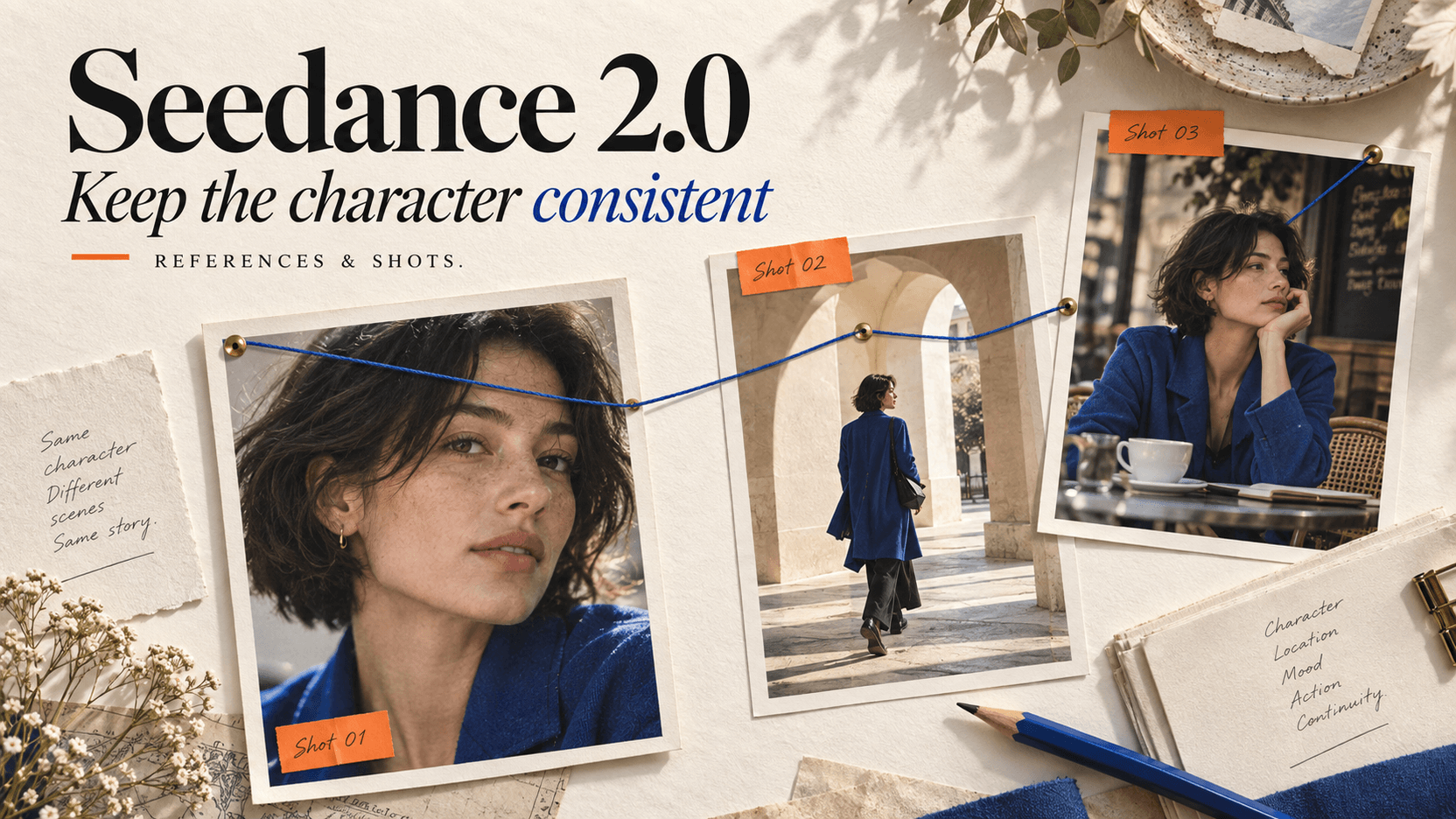
Постоянство персонажей в Seedance 2.0: руководство
Официальный способ сохранить одного персонажа: синтаксис референсов, 12 входных слотов, голос, синхронизация губ и промпты с несколькими планами.
Постоянство персонажей — причина, по которой Seedance 2.0 устроен именно так: за одну генерацию модель принимает в качестве референсов до 9 изображений, 3 видеоклипов и 3 аудиодорожек[1], а в официальном руководстве ByteDance по промптам описан синтаксис, позволяющий привязать объект к конкретным референсным изображениям[2]. Большая часть жалоб в обсуждениях сообщества («тот же персонаж получился другим», «модель проигнорировала второй референс») объясняется правилами, которые на самом деле задокументированы, но которые почти никто не читает.
В этом руководстве собраны такие правила из официальной документации ByteDance по промптам, справочника API и собственных инструкций Dreamina. Здесь также честно обозначены ограничения: для чего не существует официального механизма (закрепление персонажа между запросами, seeds) и к какой платформе относится конкретная возможность (вопрос синхронизации губ).
Кратко
- Входной бюджет Seedance 2.0 — 9 изображений + 3 видео + 3 аудиоклипа. Суммарная длительность видео и аудио ограничена 15 секундами для каждого типа; аудио нельзя отправлять без другого контента[1].
- Официальный синтаксис привязки существует. Определите объект по пронумерованному изображению («subject@image 1») и ставьте самые важные референсы первыми, поскольку порядок влияет на их вес[2].
- ByteDance рекомендует 4–5 референсов, а не максимум. Для каждого персонажа стоит использовать один портрет и одно изображение в полный рост, избегая наборов одного лица с разных ракурсов[2].
- Параметра seed и постоянного ID персонажа нет. Постоянство между роликами достигается повторным использованием идентичного набора референсов и продолжением через
return_last_frame[1][3]. - Рекомендации по голосу реальны, но формулировки о lipsync зависят от платформы. В документации API сказано, что аудиореференсы направляют исполнение[1]; явное обещание «lip-sync» встречается в документации Dreamina, но не API[4].
- Для нескольких планов существует официальный шаблон. Нумеруйте планы («Shot 1… Shot 2… Shot 3…») и не полагайтесь на точный хронометраж каждого из них — об этом предупреждает сама ByteDance[2].
Точный бюджет из 12 слотов для референсов Seedance 2.0
Seedance 2.0 принимает референсы через массив content, где для каждого элемента указывается роль. Документированные ограничения: до 9 референсных изображений (включая JPEG, PNG и WebP; соотношение сторон от 0,4 до 2,5; от 300 до 6 000 пикселей по каждой стороне; менее 30MB на файл), до 3 референсных видео суммарной длительностью не более 15 секунд и до 3 аудиореференсов, также суммарно не более 15 секунд[1]. Аудио — модификатор, а не объект: API отклоняет запросы, в которых аудио отправляется без какого-либо другого контента[1].
Одно структурное правило застает врасплох почти всех: режим первого кадра и режим мультимодальных референсов — взаимоисключающие форматы запроса[1]. Вы либо передаете модели точный начальный кадр для анимации, либо набор референсов, на основе которого она строит результат. Смешивание этих двух подходов в одном запросе — самый быстрый путь к выводу «модель проигнорировала мое изображение».
А вот правило, вызывающее самые непонятные отказы: лица реальных людей нельзя загружать непосредственно в качестве референсов. Это ограничение и разрешенные способы работы с подтвержденным согласием заслуживают отдельного материала — они разобраны в нашем руководстве по ошибке not eligible.
Официальный синтаксис для закрепления персонажа
Руководство ByteDance по промптам необычайно конкретно описывает привязку. Канонический шаблон определяет каждый объект по пронумерованному изображению, используя сокращение, представленное в документации как «subject@image 1»[2]. В статье о запуске такой же формат с @ используется в примерах промптов[5], а руководство Dreamina показывает его в редакторе как @AssetName[6]. Синтаксис устраняет неоднозначность: когда используется несколько референсов, промпт явно указывает, какое изображение отвечает за лицо, какое — за одежду, а какое — за локацию.
Вместе с этим синтаксисом руководство предлагает четыре практических правила[2]:
- Используйте 4–5 референсов, а не 12. Документация не рекомендует заполнять все слоты: каждый дополнительный материал рассеивает внимание.
- Для каждого персонажа используйте один портрет и одно изображение в полный рост. Такая пара лучше закрепляет идентичность, чем набор разных ракурсов.
- Не используйте многовидовые наборы одного человека. ByteDance явно не рекомендует их: вместо предотвращения изменений идентичности они могут их провоцировать.
- Расположите материалы по важности. Чем раньше элемент появляется в промпте, тем сильнее его влияние. Поставьте персонажа перед локацией, а локацию — перед мудбордом.
Вот и весь прием, который большинство видео о «секретах постоянства» перепродают под новым названием: явно определяйте объекты, используйте меньше референсов лучшего качества и продуманно задавайте их порядок.
Один персонаж в нескольких видео
Документация проводит четкую границу, которую не следует размывать ни одному руководству: у Seedance 2.0 нет постоянного ID персонажа, входного значения seed или памяти между запросами. Ни справочник параметров ByteDance, ни API reAPI вообще не предоставляют seed[1][3]. Поэтому на вопрос «использует ли Seedance номера seed?» есть однозначный ответ: нет; управление воспроизводимостью основано на референсах, а не на seed.
Вместо этого в производственном порядке работают следующие приемы:
Зафиксируйте набор референсов. Используйте одни и те же изображения персонажа, в том же порядке и с теми же фразами привязки в каждом запросе. Постоянство Seedance 2.0 обеспечивается идентичными входными данными, поэтому храните набор вместе с промптами и считайте любое изменение новой версией персонажа.
Связывайте клипы через return_last_frame. API может вернуть последний кадр генерации[1]. Передайте его как первый кадр следующего клипа, чтобы сохранить непрерывность между сценами без повторного розыгрыша идентичности в местах склейки.
Повторно используйте сгенерированные лица разрешенным способом. Контент, созданный платформой для вашей учетной записи в течение последних 30 дней, считается доверенным входным материалом даже при наличии лиц[7]. Именно это делает итеративную работу над персонажем возможной в рамках правил о лицах.
В масштабном сравнении технический отчет ByteDance ставит Seedance 2.0 на первое место среди аналогов по постоянству объекта[5]. Описанные выше механизмы позволяют использовать эту возможность в серии, а не только в одном клипе.
Голос, музыка и вопрос синхронизации губ
Аудиореференсы Seedance 2.0 направляют три аспекта: звучание результата, ритм исполнения и характер голоса. API принимает до трех клипов общей длительностью 15 секунд в роли reference_audio[1]. Практический процесс для задачи «пусть мой персонаж исполнит эту песню» выглядит именно так: прикрепите трек (через общедоступный URL на API-платформах), привяжите персонажа по изображениям и опишите исполнение в промпте.
Источники расходятся в формулировках о синхронизации губ, и здесь важно быть точным. Документация API ByteDance описывает совместную генерацию аудио и видео и результат, направляемый аудио; слова «lip-sync» в ней отсутствуют. Это обещание дает документация продукта Dreamina: там сказано, что образец голоса направляет характер речи и «aligns lip-sync, pacing, expressions»[4]. На практике обе платформы работают на одном семействе моделей. Однако если вашему процессу по контракту требуется точное совпадение движений рта, протестируйте собственные материалы вместо того, чтобы ссылаться на страницу документации: формулировки API намеренно обещают меньше.
Постоянство голоса между клипами подчиняется той же логике, что и визуальное: каждый раз повторно используйте один и тот же образец голоса в том же слоте. Закрепляемого voice ID нет, поэтому сам образец и служит ID.
Промпты с несколькими планами, которые выдерживают генерацию
Официальный шаблон для нескольких планов в одном клипе — пронумерованное описание раскадровки: «Shot 1: … Shot 2: … Shot 3: …»[2]. В руководстве есть два прямых предупреждения. Во-первых, точный хронометраж отдельных планов соблюдается ненадежно, поэтому описывайте последовательность и акценты вместо тайм-кодов[2]. Во-вторых, каждый новый план повышает сложность, поэтому правило о меньшем числе референсов в промптах с несколькими планами важно вдвойне.
Для всего, что длиннее одной генерации (Seedance 2.0 ограничен 15 секундами[1]), используйте цепочку: раскадровка → отдельные промпты для клипов с зафиксированным набором референсов → склейки через return_last_frame. Seedance 2.5 теперь поддерживает до 30 секунд за запрос и управление промптами по сегментам. Актуальные продакшен-ограничения собраны в руководстве по статусу Seedance 2.5.
Если вы хотите выполнять все это через API, полный набор возможностей для референсов (изображения, видео, аудио, первый кадр и возврат последнего кадра) доступен на странице Seedance 2.0 в reAPI с посекундной тарификацией. Пониженную ставку включает только фактическое исходное видео; тогда к длительности результата добавляется округлённая вверх до целых секунд суммарная длительность исходных видео[3].
Частые вопросы
Сколько референсных изображений принимает Seedance 2.0?
До 9 изображений, а также 3 видео (в сумме 15 секунд) и 3 аудиоклипа (в сумме 15 секунд) в одном запросе[1]. Сама ByteDance рекомендует использовать 4–5 тщательно подобранных материалов, а не максимум[2].
Как сохранить одного человека в нескольких видео Seedance 2.0?
Зафиксируйте один набор референсов (портрет + полный рост), привяжите его синтаксисом subject@image, одинаково используйте в каждом запросе и связывайте сцены через return_last_frame[1][2]. Отдельного параметра блокировки персонажа нет: блокировкой служит сам набор референсов.
Использует ли Seedance 2.0 номера seed во входных данных?
Нет. Параметр seed отсутствует и в документированной схеме запроса ByteDance, и в API reAPI[1][3]. Повторяемость обеспечивается идентичными референсами и промптами, причем это мягкая, а не побитовая повторяемость.
Может ли Seedance 2.0 синхронизировать губы с песней Suno?
Прикрепите трек как аудиореференс и опишите вокальное исполнение в промпте. API документирует генерацию, направляемую аудио[1], а явное заявление о синхронизации губ содержится в документации Dreamina[4]. Для качества, пригодного к публикации, проверьте синхронизацию на собственном материале.
Сколько аудиоклипов принимает Seedance 2.0?
Три, общей длительностью не более 15 секунд, и никогда отдельно: в запросе аудио должно сопровождать другой контент[1].
Как задать несколько планов в одном клипе Seedance 2.0?
Используйте пронумерованную раскадровку «Shot 1 / Shot 2 / Shot 3», как рекомендует официальное руководство. Оно также предупреждает, что точная длительность каждого плана остается приблизительной[2].
Почему лицо моего персонажа отклонили?
Лица реальных людей нельзя загружать непосредственно как референсы. Это правило уровня модели с документированными исключениями, основанными на согласии[7]. Полный разбор приведен в нашем руководстве по ошибке not eligible.
Схема постоянства в одной строке
Явно привяжите объекты, передайте 4–5 продуманных референсов с персонажем на первом месте, зафиксируйте этот набор для всей серии, соединяйте клипы через последний кадр и повторно используйте один образец голоса, когда важен звук. Все сказанное выше взято из собственной документации ByteDance, а не из слухов, и каждый элемент работает через одну конечную точку reAPI. Так достигается постоянство персонажей в Seedance 2.0 без загадок: меньше референсов, лучше качество, одинаковый способ использования каждый раз.
Источники
- Volcano Engine / BytePlus (ByteDance). Справочник API Seedance 2.0: роли контента, ограничения референсов, взаимоисключение первого кадра, return_last_frame. Получено в июле 2026 года: docs.byteplus.com/en/docs/ModelArk/1520757
- Volcano Engine / BytePlus (ByteDance). Официальное руководство Seedance 2.0 по промптам: синтаксис привязки объекта, количество и порядок референсов, шаблон нескольких планов. Получено в июле 2026 года: docs.byteplus.com/en/docs/ModelArk/2222480
- reAPI. Seedance 2.0: документация API и страница модели. Получено в июле 2026 года: reapi.ai/docs/seedance-2-0
- Dreamina (CapCut). Страница инструмента Seedance 2.0: образец голоса и синхронизация губ. Получено в июле 2026 года: dreamina.capcut.com/tools/seedance-2-0
- ByteDance Seed. Статья о запуске Seedance 2.0 и технический отчет (arXiv:2604.14148). Получено в июле 2026 года: seed.bytedance.com/en/blog/seedance-2-0-official-launch
- Dreamina (CapCut). Руководство по промптам Seedance 2.0: ссылки @AssetName и Multiframes. Получено в июле 2026 года: dreamina.capcut.com/resource/seedance-2-0-prompt
- Volcano Engine / BytePlus (ByteDance). Исключения для доверенных входных данных: сгенерированный контент и материалы с подтвержденным согласием. Получено в июле 2026 года: docs.byteplus.com/en/docs/ModelArk/2291680
Дополнительные материалы
- reAPI. Seedance 2.0 «Not Eligible»: почему это происходит и что работает. reapi.ai/blog/seedance-not-eligible-explained
- reAPI. Что такое Seedance 2.0 и как им пользоваться (руководство 2026 года). reapi.ai/blog/what-is-seedance-2-0-and-how-to-use-it
- reAPI. Статус Seedance 2.5, доступ к API и текущие ограничения. reapi.ai/blog/seedance-2-5-what-we-know-2026
Автор

Категории
Ещё статьи
Wan 3.0 в ComfyUI: шаблоны, API и стоимость генерации
Настройте Wan 3.0 в ComfyUI через официальные шаблоны или адаптер reAPI. Разберите аккаунты, входные файлы, опрос заданий и оценки полной стоимости генерации.

Дата выхода Kling 4.0: запуск в октябре, Flash уже доступна
Дата выхода Kling 4.0 — октябрь 2026 года, Kling 4.0 Flash в раннем доступе с 28 сентября. Официальные характеристики против утечки и когда появится API.

Hailuo AI vs Seedance, Kling, Veo 3.1: сравнение цен
Как Hailuo AI сравнивается с Seedance 2.5, Kling 3.0 и Veo 3.1? MiniMax H3 на сравнение: цена за секунду, длительность, звук и входные параметры.